FROM THE STATELY TO THE SMUTTY: SHIFTING PERCEPTIONS OF THE CRUSADES IN AN ILLUMINATED CHRONICLE
Leson, Robert
Oeuvre, Newsletter of the Department of Art History, University of Wisconsin–Milwaukee Spring (2009)
Abstract
Among the most important sources for the study of the Crusades is a medieval chronicle known as the Historia rerum in partibus transmarinis gestarum (History of Deeds done beyond the Sea) by William, Archbishop of Tyre (ca. 1130-1185). There are 51 extant illuminated manuscripts that contain this chronicle, but only two are found in the United States, both in the collec tion of the Walters Art Museum in Baltimore. One of these manuscripts, a Parisian product of the mid-fourteenth century, boasts the most extensive painted miniature cycle of this text that survives. Its illustrations provide a fascinating perspective on changing attitudes toward the Crusades during the Middle Ages.
Who was William of Tyre? Clergyman, courtier, and chronicler, he was descended from those Crusaders who remained in the Levant in the wake of the First Crusade to fortify the new Latin Kingdom of Jerusalem. He could thus count himself among a small but proud indigenous Latin- Palestinian population—the poulain —whose principal concerns lay in the preserva tion of the fledgling Crusader states precariously located along the Palestinian and Syrian coasts.

FROM THE STATELY TO THE SMUTTY: SHIFTING PERCEPTIONS OF THE CRUSADES IN AN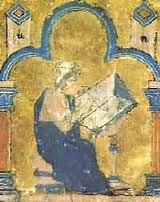 ILLUMINATED CHRONICLE
Leson, Robert
Oeuvre, Newsletter of the Department of Art History, University of Wisconsin–Milwaukee Spring (2009)
Abstract
Among the most important sources for the study of the Crusades is a medieval chronicle known as the Historia rerum in partibus transmarinis gestarum (History of Deeds done beyond the Sea) by William, Archbishop of Tyre (ca. 1130-1185). There are 51 extant illuminated manuscripts that contain this chronicle, but only two are found in the United States, both in the collec tion of the Walters Art Museum in Baltimore. One of these manuscripts, a Parisian product of the mid-fourteenth century, boasts the most extensive painted miniature cycle of this text that survives. Its illustrations provide a fascinating perspective on changing attitudes toward the Crusades during the Middle Ages.
Who was William of Tyre? Clergyman, courtier, and chronicler, he was descended from those Crusaders who remained in the Levant in the wake of the First Crusade to fortify the new Latin Kingdom of Jerusalem. He could thus count himself among a small but proud indigenous Latin- Palestinian population—the poulain —whose principal concerns lay in the preserva tion of the fledgling Crusader states precariously located along the Palestinian and Syrian coasts.
Click here to read this article from Oeuvre
Subscribe to Medievalverse
Related Posts