The Calamitous Fourteenth Century in England: All Doom and Gloom?
Session: Crown and Country in Late Medieval England
George Stow (La Salle University)
This was a fantastic paper given at the Crown and Country in Late medieval England session at KZOO. There were only two papers but both were interesting and enjoyable. This paper delved into the history of science in late medieval England and examined why the fourteenth century, a time that is usually synonymous with doom and gloom, plague and uprising, wasn’t all that bad upon closer observation.
Barbara Tuckman called the fourteenth century, ‘a violent, tormented, bewildered age’. It was an age of crisis, climate change, in heavy rains, cold winters, created severe shortages of food. Wars in Wales and Scotland, the onset of the Hundred Years War and the Black Plague. However, there were good moments. The field of the sciences had a very promising nature during this century. How did Oxford emerge at the fore of science in the fourteenth century? In the twelfth century, scores of scholars came to the universities. Gerard of Cremona translated all of Aristotle’s work on physics. Among theses famous scholars, there were English students of natural science – they hailed from the West Country of England. Adelard of Bath (1080-1150) searched for translations of Greek and Arabic texts. In his famous work, Questions on Natural Science, he asked questions of the natural world, and cast his work in the form of a dialogue between himself and his nephew. He was also interested in mathematics and his translation of Euclid remained a course reader in universities for centuries.
Oxford was a centre for intellectual revival as early as the eleventh century. It called attention to a few of the more notable scholars: Petrus Alphonsi (Adelard’s contemporary) was interested in astronomy. Roger of Hereford was drawn to astronomy of medicine and was the first to come up with a mathematical chart. Edmund of Abington was notable for his teaching at Oxford and was the first abbot consecrated as archbishop in Canterbury. The next stage of Oxford’s scientific development came from the Franciscans. Robert Grosseteste was considered “the first Franciscan scientist”; he dominated the Oxford scene even well into the fifteenth century. He had many contributions to the emergent field of science. Born in Suffolk, Grosseteste spent the early part of his career in the diocese of Hereford. His important work on astronomy and chronology were produced during this period. He was interested in the motions of tides, earthquakes, he studied optics, and was among the earliest of the scholastics to question the authority of Aristotle by examining rainbows and refraction, versus reflection. He made a radical break from Aristotelianism and his ideas were carried forward by Roger Bacon. Bacon stressed the importance of mathematics and felt those who were ignorant of math could not actually be knowledgable of the other sciences. John Duns Scotus and William of Ockham. William argued for extreme Aristotelianism. Stow then examined the Mertonian school. William of Heytesbury (1313-1373) Emerged as an important scientist in applied math and physics and was a known problem solver. He postulated “average speed”, however, he never approved his theory. John of Dumbleton lacked mathematical acumen nevertheless he influenced later science. The Summary of Logic and Natural Philosophy was his most famous work. He made a lasting contribution and challenged Aristotle. The final Merton calculators were Richard Swineshead (1328-1350), and Richard of Wallingford (1292-1336). He was an adjunct faculty member who wrote two important mathematical treatises. He was abbot of the monastery of St. Albans and helped create the St. Albans’ clock, one of the most sophisticated clocks of the Middle Ages. These English scientists’s work was carried over to famous learning centres in places like Paris and presented a rather different and more positive view of what is often considered a rather gloomy century in England.

The Calamitous Fourteenth Century in England: All Doom and Gloom?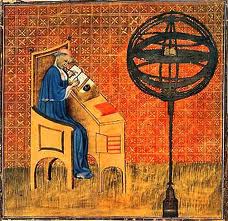
Session: Crown and Country in Late Medieval England
George Stow (La Salle University)
This was a fantastic paper given at the Crown and Country in Late medieval England session at KZOO. There were only two papers but both were interesting and enjoyable. This paper delved into the history of science in late medieval England and examined why the fourteenth century, a time that is usually synonymous with doom and gloom, plague and uprising, wasn’t all that bad upon closer observation.
Barbara Tuckman called the fourteenth century, ‘a violent, tormented, bewildered age’. It was an age of crisis, climate change, in heavy rains, cold winters, created severe shortages of food. Wars in Wales and Scotland, the onset of the Hundred Years War and the Black Plague. However, there were good moments. The field of the sciences had a very promising nature during this century. How did Oxford emerge at the fore of science in the fourteenth century? In the twelfth century, scores of scholars came to the universities. Gerard of Cremona translated all of Aristotle’s work on physics. Among theses famous scholars, there were English students of natural science – they hailed from the West Country of England. Adelard of Bath (1080-1150) searched for translations of Greek and Arabic texts. In his famous work, Questions on Natural Science, he asked questions of the natural world, and cast his work in the form of a dialogue between himself and his nephew. He was also interested in mathematics and his translation of Euclid remained a course reader in universities for centuries.
Oxford was a centre for intellectual revival as early as the eleventh century. It called attention to a few of the more notable scholars: Petrus Alphonsi (Adelard’s contemporary) was interested in astronomy. Roger of Hereford was drawn to astronomy of medicine and was the first to come up with a mathematical chart. Edmund of Abington was notable for his teaching at Oxford and was the first abbot consecrated as archbishop in Canterbury. The next stage of Oxford’s scientific development came from the Franciscans. Robert Grosseteste was considered “the first Franciscan scientist”; he dominated the Oxford scene even well into the fifteenth century. He had many contributions to the emergent field of science. Born in Suffolk, Grosseteste spent the early part of his career in the diocese of Hereford. His important work on astronomy and chronology were produced during this period. He was interested in the motions of tides, earthquakes, he studied optics, and was among the earliest of the scholastics to question the authority of Aristotle by examining rainbows and refraction, versus reflection. He made a radical break from Aristotelianism and his ideas were carried forward by Roger Bacon. Bacon stressed the importance of mathematics and felt those who were ignorant of math could not actually be knowledgable of the other sciences. John Duns Scotus and William of Ockham. William argued for extreme Aristotelianism. Stow then examined the Mertonian school. William of Heytesbury (1313-1373) Emerged as an important scientist in applied math and physics and was a known problem solver. He postulated “average speed”, however, he never approved his theory. John of Dumbleton lacked mathematical acumen nevertheless he influenced later science. The Summary of Logic and Natural Philosophy was his most famous work. He made a lasting contribution and challenged Aristotle. The final Merton calculators were Richard Swineshead (1328-1350), and Richard of Wallingford (1292-1336). He was an adjunct faculty member who wrote two important mathematical treatises. He was abbot of the monastery of St. Albans and helped create the St. Albans’ clock, one of the most sophisticated clocks of the Middle Ages. These English scientists’s work was carried over to famous learning centres in places like Paris and presented a rather different and more positive view of what is often considered a rather gloomy century in England.
~Sandra Alvarez
Subscribe to Medievalverse
Related Posts