Producing the Middle English Corpus: Confession and Medieval Bodies
Meyer, Cathryn Marie
PhD Thesis, The University of Texas at Austin, (2006)
Abstract
“My dissertation explores confession as a form or structure organizing four late-medieval texts: John Gower’s Confessio Amantis, Geoffrey Chaucer’s Legend of Good Women, The Book of Margery Kempe and Robert Henryson’s Testament of Cresseid. I find that in these medieval texts confession functions as a discourse for producing truth and for constructing or inventing textualized bodies. Therefore, in part, I approach confession through the popular medieval analogy of a “the body” to “the book” and thereby consider how confession works to represent “truth” via the figure of a Christian body divided between inner and outer space. In each of the four texts I discuss, memorable bodies emerge as effects of confessional discourse: the senex amans in the Confessio; the suffering women of the Legend ; the chaste body of Margery Kempe; and Cresseid’s leprous body in the Testament. These problematic bodies all bear out the difficulties and frequent failures of confessional representation. Ultimately, during a period of institutional collapse and social, religious, and political upheaval, I demonstrate that desire —for truth, renewal of faith, recuperation of the fallen body, stability, closure—underlies the need to confess.”

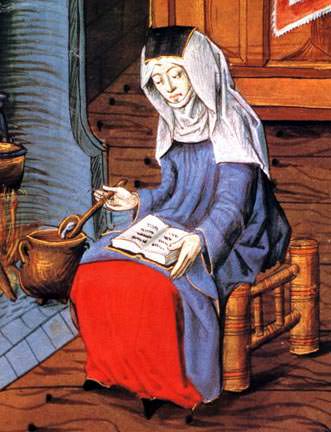
Meyer, Cathryn Marie
PhD Thesis, The University of Texas at Austin, (2006)
Abstract
“My dissertation explores confession as a form or structure organizing four late-medieval texts: John Gower’s Confessio Amantis, Geoffrey Chaucer’s Legend of Good Women, The Book of Margery Kempe and Robert Henryson’s Testament of Cresseid. I find that in these medieval texts confession functions as a discourse for producing truth and for constructing or inventing textualized bodies. Therefore, in part, I approach confession through the popular medieval analogy of a “the body” to “the book” and thereby consider how confession works to represent “truth” via the figure of a Christian body divided between inner and outer space. In each of the four texts I discuss, memorable bodies emerge as effects of confessional discourse: the senex amans in the Confessio; the suffering women of the Legend ; the chaste body of Margery Kempe; and Cresseid’s leprous body in the Testament. These problematic bodies all bear out the difficulties and frequent failures of confessional representation. Ultimately, during a period of institutional collapse and social, religious, and political upheaval, I demonstrate that desire —for truth, renewal of faith, recuperation of the fallen body, stability, closure—underlies the need to confess.”
Click here to read this thesis from The University of Texas at Austin
Subscribe to Medievalverse
Related Posts