A Chivalrous Man is Not a Gentleman: A Look at Chivalry in the Age of Chaucer
Thompson, Bre
Paper given at the Truman State University English Senior Seminar Conference (2009)
Abstract
“Chivalry was the golden dream of possibilities which hovered above the eyes of medieval men and women, ennobling their aspirations, but finding its truest expression less in actual existence than in legend and literature”. Chivalry was a mythical ideal developed during the Middle Ages. It was a creation, a notion, a concept serving people better as an idea than a reality. Chivalry was a belief that that looked good on paper, but never really came to fruition as a noble and pure reality. It was simply a myth with good intentions lacking any substantial support upon which it could thrive in the real world. John Finlayson, Chaucerian scholar, believes that, “…the chivalric romance in its highest form mirrors for the aristocracy its vision of its idealized self – it is comforting, because of its images of noble warriors, beautiful ladies, evils and opponents inevitably vanquished, all in a spring landscape of eternal youth”. According to Finlayson, chivalry is also an escape from the real aristocratic world of politics, undignified violence, and greed for power and wealth to a fantasy world of justice, love, and unselfish activity.


A Chivalrous Man is Not a Gentleman: A Look at Chivalry in the Age of Chaucer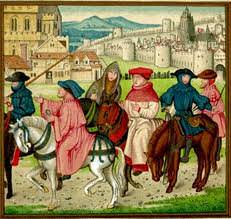
Thompson, Bre
Paper given at the Truman State University English Senior Seminar Conference (2009)
Abstract
“Chivalry was the golden dream of possibilities which hovered above the eyes of medieval men and women, ennobling their aspirations, but finding its truest expression less in actual existence than in legend and literature”. Chivalry was a mythical ideal developed during the Middle Ages. It was a creation, a notion, a concept serving people better as an idea than a reality. Chivalry was a belief that that looked good on paper, but never really came to fruition as a noble and pure reality. It was simply a myth with good intentions lacking any substantial support upon which it could thrive in the real world. John Finlayson, Chaucerian scholar, believes that, “…the chivalric romance in its highest form mirrors for the aristocracy its vision of its idealized self – it is comforting, because of its images of noble warriors, beautiful ladies, evils and opponents inevitably vanquished, all in a spring landscape of eternal youth”. According to Finlayson, chivalry is also an escape from the real aristocratic world of politics, undignified violence, and greed for power and wealth to a fantasy world of justice, love, and unselfish activity.
Click here to read this paper from Truman State University
Subscribe to Medievalverse
Related Posts