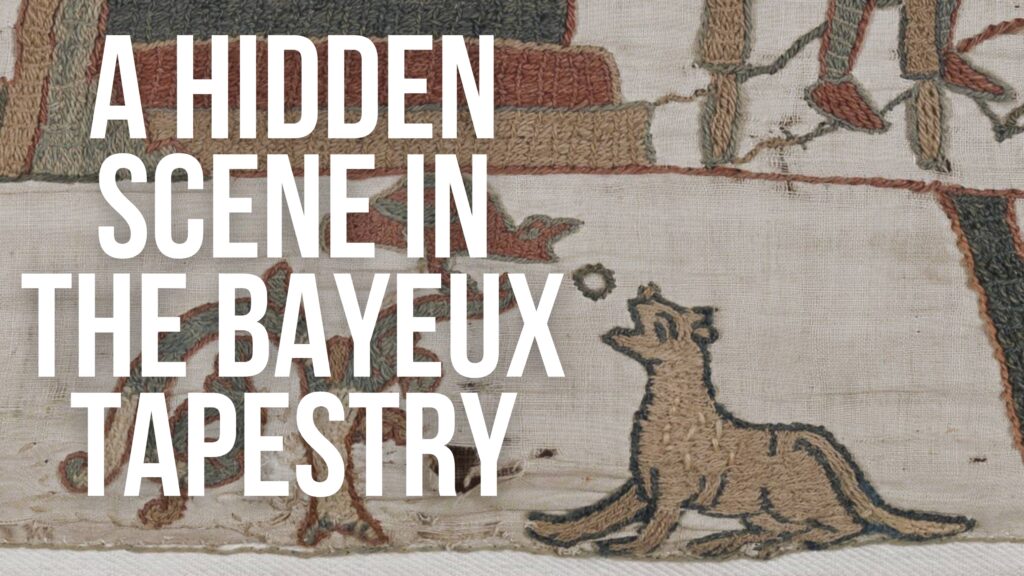
The Seagull, the Dog and the Cockle: A Hidden Scene in the Bayeux Tapestry
One interpretation of a curious scene in the Bayeux Tapestry suggests a seagull using a dog to open a cockle—offering a rare glimpse of everyday life on the Norman beaches before the 1066 invasion.
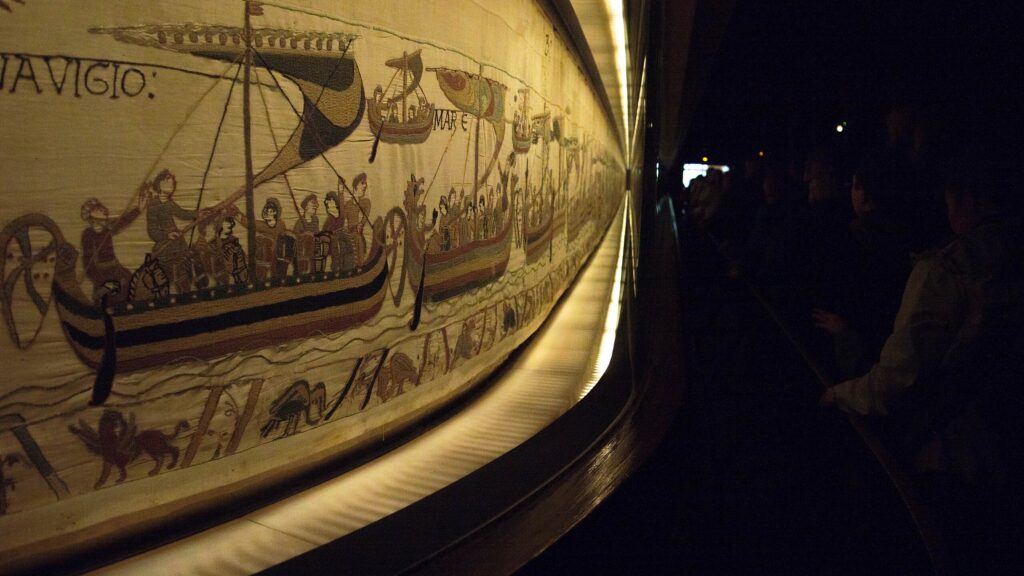
A Medieval Exchange: Bayeux Tapestry to Visit Britain While UK Treasures Travel to France
Britain and France agree on historic cultural loan involving the Bayeux Tapestry, Sutton Hoo treasures, and Lewis Chessmen.

The Bayeux Tapestry Begins Major Conservation Project Ahead of Museum Expansion
For the first time in over 40 years, the Bayeux Tapestry will be removed from its display as part of an ambitious conservation and museum redevelopment project.

Archaeologists Identify ‘Lost’ Anglo-Saxon Site Depicted in the Bayeux Tapestry
A team of archaeologists has uncovered evidence that a private home in England may stand on the site of a long-lost residence belonging to Harold Godwinson, the last Anglo-Saxon King of England. Their findings suggest that this location, depicted in the Bayeux Tapestry, was a major centre of power before the Norman Conquest.

10 Little Details in the Bayeux Tapestry You May Have Missed
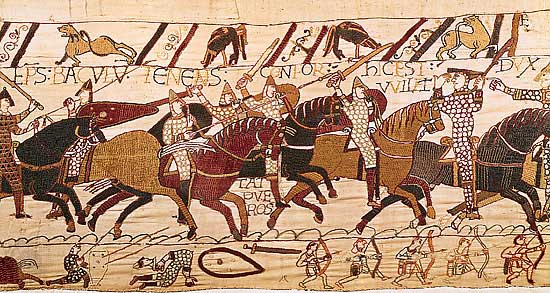
The designer of the Bayeux Tapestry also included little details that the casual viewer might miss. Here are ten images to take a second look at.
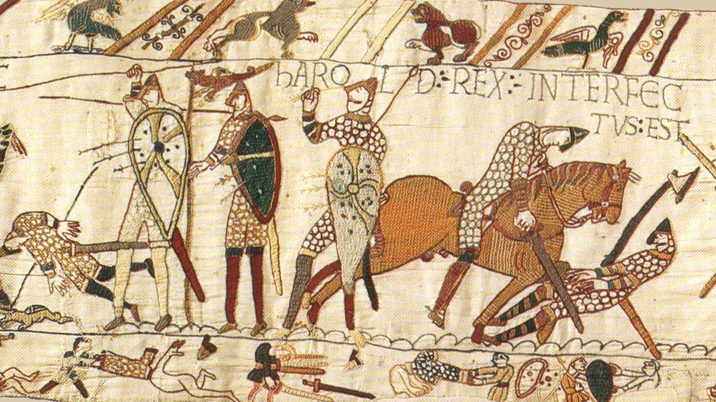
Viewing the Bayeux Tapestry, Now and Then
In attempting to trace the history of the Bayeux Tapestry, it has always been the case that the simplest explanation, the one that involves the fewest imponderables and requires the fewest assumptions, is that it was designed for Bayeux cathedral.

Beech Trees in the Bayeux Tapestry: an Ecological Perspective
There are 37 trees or groups of trees on the tapestry and it has been widely noticed that trees are used as scene endings.

Scroll through the Bayeux Tapestry with this facsimile edition
Our friends at Facsimile Finder have created this video that shows them scrolling through a special facsimile version of the Bayeux Tapestry.
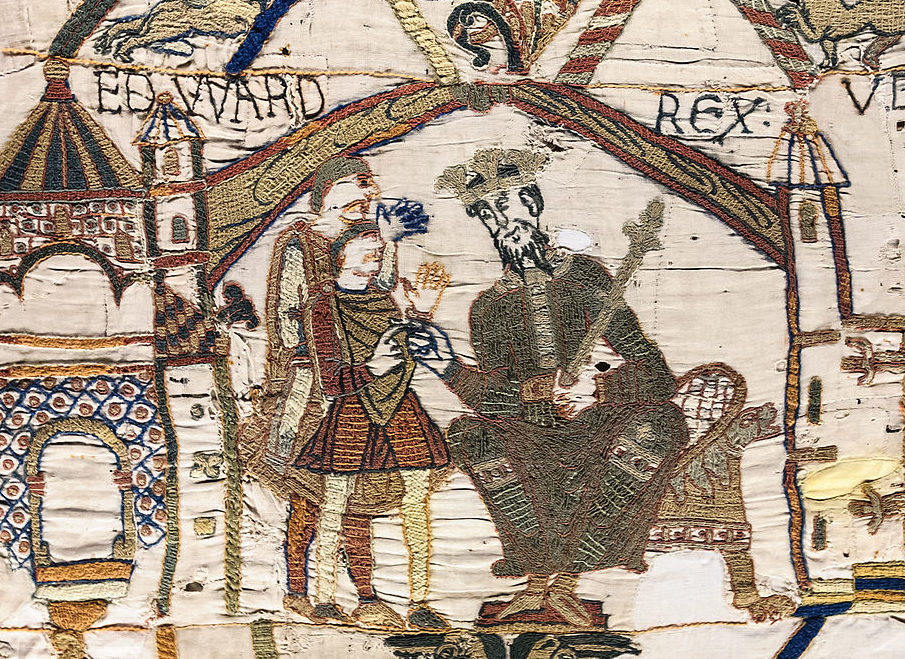
Is the Bayeux Tapestry coming to Britain?
Reports suggest the Bayeux Tapestry – one of the most famous pieces of medieval art – will be loaned to the British Museum for several months.

Kingship-in-Death in the Bayeux Tapestry
The interpretation of the purpose of the Bayeux tapestry hinges on two key scenes, Harold’s oath-taking at Bayeux and the death-bed of King Edward.
The Bayeux Tapestry: Author, Art and Allegory
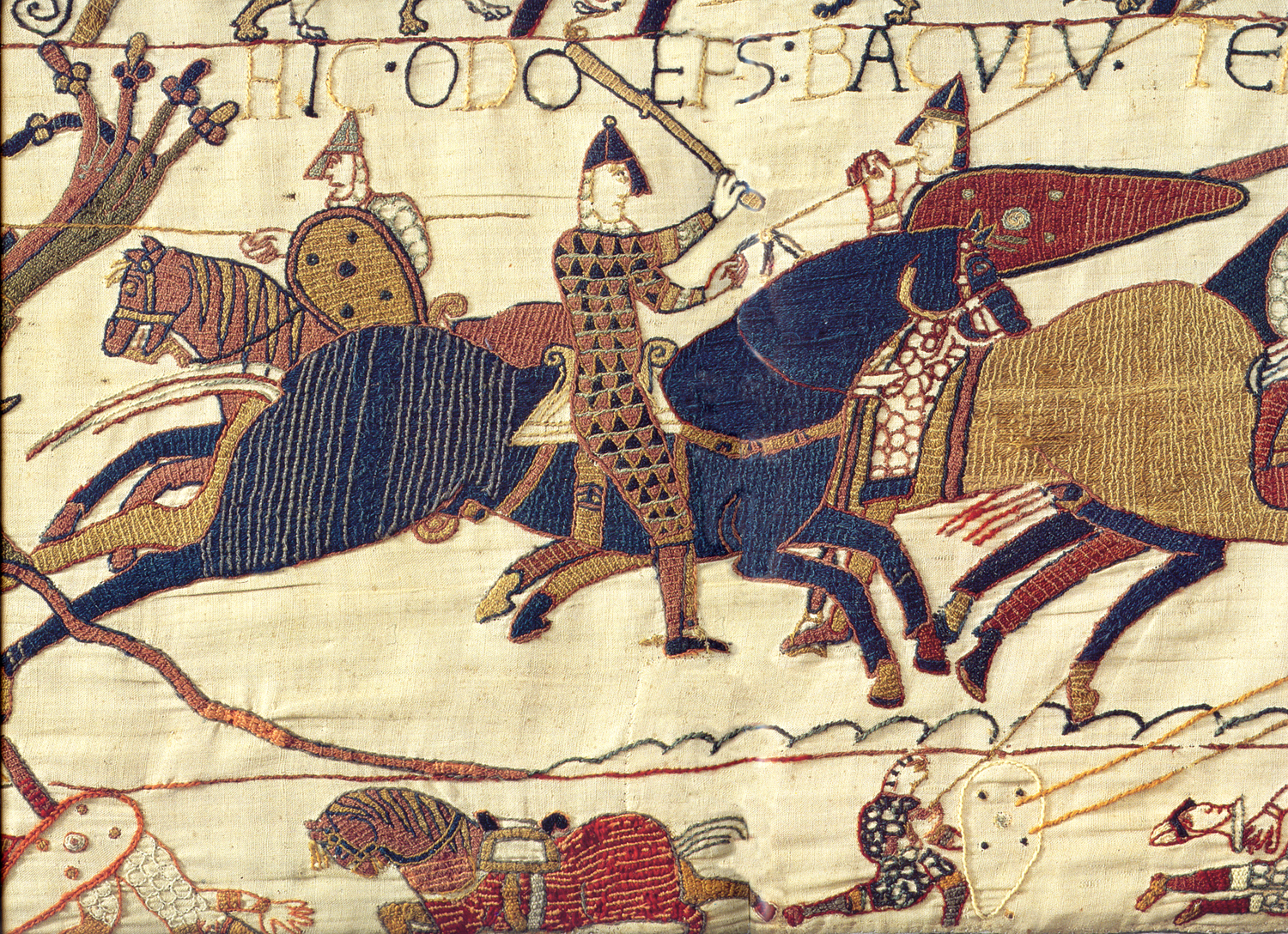
The Bayeux Tapestry is a complex visual history of the Norman Conquest of England. Its creation and the story it weaves were defined by its dichotomous authorship, its physical form as textile art and its analogous narrative imagery.

The Bayeux Tapestry: The Case of the Phantom Fleet
There is a large bibliography of secondary works concerning the Bayeux Tapestry, but when one reads much of the published material it is clear that a high proportion of this comment, as one would expect, copies and builds on previous authors.
Aelfgyva: The Mysterious Lady of the Bayeux Tapestry
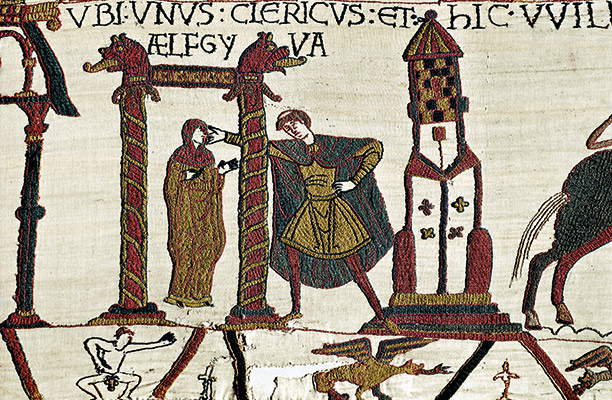
One of the most intriguing of these puzzles centers upon a scene in that initial segment of the Tapestry treating with Earl Harold Godwinson’s famed and controversial visit to the court of the Norman duke
Ten Things You May Not Have Noticed in the Bayeux Tapestry
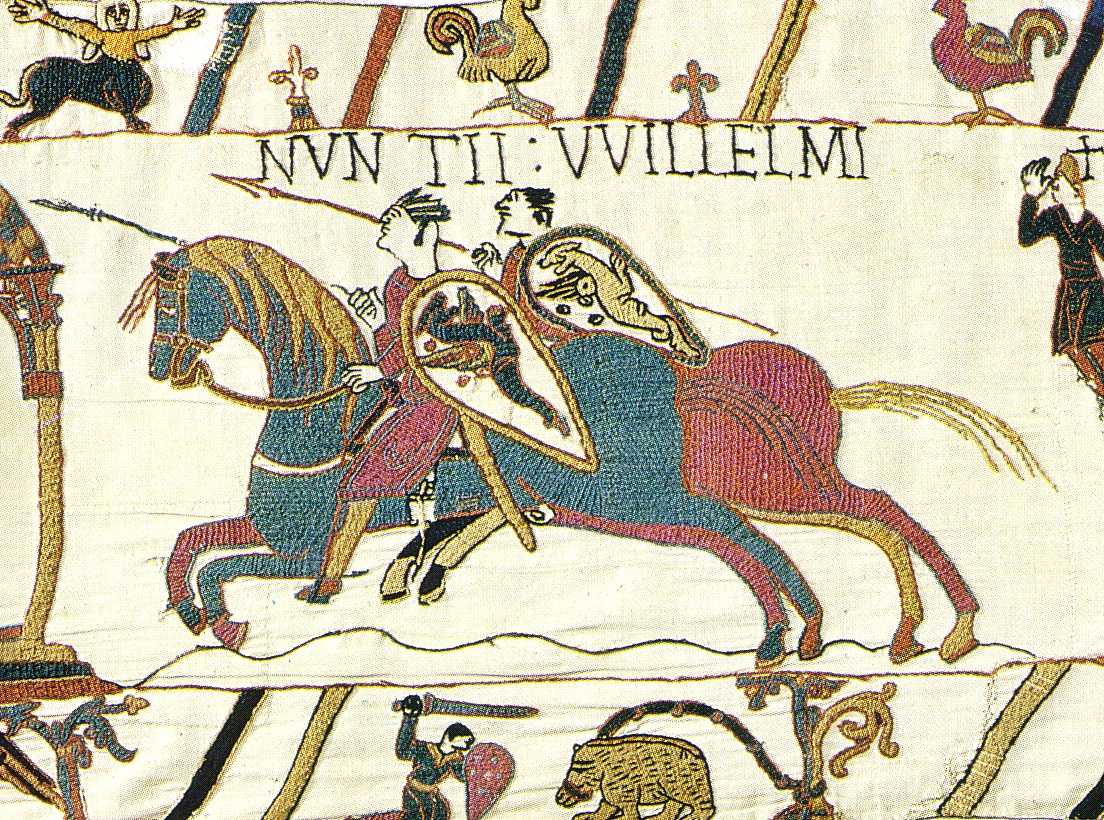
The designer of the Bayeux Tapestry also included little details that the casual viewer might miss. Here are ten images to take a second look at.

Could Duke Phillip the Good of Burgundy have owned the Bayeux tapestry in 1430?
An entry in the Inventory of the Bayeux cathedral treasury records that in 1476 the church owned the following: Item une tente tres longue et estroicte de telle a broderie d’ymages et escripteaulx, faisans representation du Conquest d’Angleterre, laquelle est tendu environ la nefde l’église le jour et par l’octave des reliques (l). Not until the 1720 ‘s did scholars first find and appreciate the potential importance of this brief entry.

A Feast for the Eyes: Representing Odo at the Banquet in the Bayeux Embroidery
This paper will therefore investigate Odo’s role in the banquet as a way to ask larger questions about how patronage has been portrayed in the literature on the Bayeux Embroidery as a whole.
Designer of the Bayeux Tapestry identified
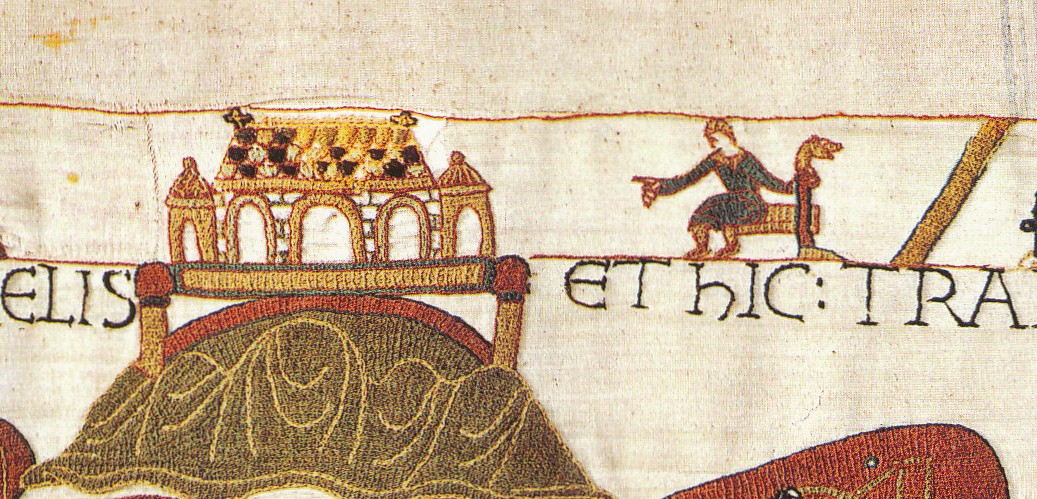
The Bayeux Tapestry was designed by Scolland, Abbot of St.Augustine’s monastery in Canterbury, according to research by Howard Clarke of University College, Dublin.
A stitch in time
Who commissioned the tapestry? Who made it, where and when? Where was the Tapestry first displayed? Was the message of the Tapestry outright Norman propaganda or a more evenhanded attempt at Anglo-Norman reconciliation?
