Judging Female Judges: Sir John Fortescue’s Vision of Women as Judges in De Natura Legis Naturae
Emma Hawkes
Limina, Volume 8, (2002)
Abstract
The fifteenth-century English legal commentary, De Natura Legis Naturae, is probably the most obscure of Sir John Fortescue’s renowned writings. Fortescue’s text examines female authority more explicitly than his other writings, there has, however, been an almost complete absence of feminist analysis of his thoughts on female judges. Fortescue draws on fifteenth-century ideas of public and private spheres to support his contention that female judges were usually, but not invariably, undesirable. This article maintains that despite Fortescue’s reluctance to support the concept of female judges, a tension existed in his argument in that traditionally the figure of Justitia, in Northern European art, was depicted as female.
In the rules of the lawe thus it is written: Women are removed frome all civile and publicke office, so that they nether may be iudges, nether may they occupie the place of the magistrate, nether yet may they be speakers for others.
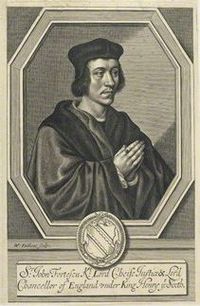
Women could not act as judges in the higher courts of the common law, equity or ecclesiastical jurisdictions of fifteenth-century England. Despite this, a fifteenth-century legal theorist, Sir John Fortescue, entertained the possibility of female judges. In this work I explore his conceptions of women as judges, as givers of justice. I examine Fortescue’s De Natura Legis Naturae, a late-medieval legal text which considered the possibility that a woman could act as the supreme judge in the network of English common law courts.

Emma Hawkes
Limina, Volume 8, (2002)
Abstract
The fifteenth-century English legal commentary, De Natura Legis Naturae, is probably the most obscure of Sir John Fortescue’s renowned writings. Fortescue’s text examines female authority more explicitly than his other writings, there has, however, been an almost complete absence of feminist analysis of his thoughts on female judges. Fortescue draws on fifteenth-century ideas of public and private spheres to support his contention that female judges were usually, but not invariably, undesirable. This article maintains that despite Fortescue’s reluctance to support the concept of female judges, a tension existed in his argument in that traditionally the figure of Justitia, in Northern European art, was depicted as female.
In the rules of the lawe thus it is written: Women are removed frome all civile and publicke office, so that they nether may be iudges, nether may they occupie the place of the magistrate, nether yet may they be speakers for others.
Women could not act as judges in the higher courts of the common law, equity or ecclesiastical jurisdictions of fifteenth-century England. Despite this, a fifteenth-century legal theorist, Sir John Fortescue, entertained the possibility of female judges. In this work I explore his conceptions of women as judges, as givers of justice. I examine Fortescue’s De Natura Legis Naturae, a late-medieval legal text which considered the possibility that a woman could act as the supreme judge in the network of English common law courts.
Click here to read this article from Limina
Subscribe to Medievalverse
Related Posts