Fama et Memoria: Portraits of Female Patrons in Mosaic Pavements of Churches in ByzantinePalestine and Arabia
Britt, Karen C.
Medieval Feminist Forum, 44, no. 2 (2008)
Abstract
When we think of portraits that memorialize the contributions of female donors to the construction and adornment of Byzantine churches, or to support their liturgical functions, the images that come to mind are likely lavish, impressive, and imperial. These portraits, found in a small number of well-preserved churches, were executed in mosaic on the walls in carefully chosen locations within the building. Two well-known examples are the Theodora panel from San Vitale in Ravenna and the portrait of the Emperor Constantine IX and Empress Zoe in the southern gallery of Hagia Sophia in Constantinople. The women in such portraits are customarily depicted with male members of the imperial family, which gives visual representation to the social reality that their status, identity, and wealth were linked with men. Given the level of prestige associated with these donors and their donations, even without their portraits we would likely know a good deal about them and their acts of patronage from literary sources. In contrast, female donor portraits in average churches (which neither received imperial funding nor attracted the attention of historians) are a valuable source of information concerning women’s patterns of patronage in small towns and villages throughout the Byzantine Empire.

Fama et Memoria: Portraits of Female Patrons in Mosaic Pavements of Churches in Byzantine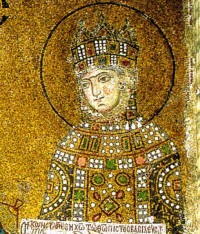 Palestine and Arabia
Britt, Karen C.
Medieval Feminist Forum, 44, no. 2 (2008)
Abstract
When we think of portraits that memorialize the contributions of female donors to the construction and adornment of Byzantine churches, or to support their liturgical functions, the images that come to mind are likely lavish, impressive, and imperial. These portraits, found in a small number of well-preserved churches, were executed in mosaic on the walls in carefully chosen locations within the building. Two well-known examples are the Theodora panel from San Vitale in Ravenna and the portrait of the Emperor Constantine IX and Empress Zoe in the southern gallery of Hagia Sophia in Constantinople. The women in such portraits are customarily depicted with male members of the imperial family, which gives visual representation to the social reality that their status, identity, and wealth were linked with men. Given the level of prestige associated with these donors and their donations, even without their portraits we would likely know a good deal about them and their acts of patronage from literary sources. In contrast, female donor portraits in average churches (which neither received imperial funding nor attracted the attention of historians) are a valuable source of information concerning women’s patterns of patronage in small towns and villages throughout the Byzantine Empire.
Click here to read this article from Medieval Feminist Forum
Subscribe to Medievalverse
Related Posts