Theory, practice and chivalric identity : the French contribution to the later crusades
Savinetskaya, Irina
MA Thesis in Medieval Studies, Central European University, May (2009)
Abstract
At the end of the fourteenth century crusade was still a prominent idea in France. Crusade, praised in general, was often criticized in particular. The battle of Nilopolis (1396), the greatest crusading enterprise of its time, showed the weaknesses of the French knighthood and brought about an extensive critique of French chivalry. Participation in the crusades was paired with financial expenses and was usually considered a slightly marginal activity (if not organized by the king or propagated by him) in regard to service to the country. Despite all these contrasting treatments of the later crusades a large number of French knights left France each year in order to take part in crusading campaigns. The goal of this research is to investigate the motivations of knights participating in crusades and to establish if the crusaders were united by a special Crusader Identity. The sources for this work are French chronicles, treatises on crusading theory, the biography of Jean le Meingre II Boucicaut, and the works of Eustache Deschamps. The first chapter deals with crusading theory as it existed in France at the end of the fourteenth century. The second focuses on several organizational aspects of the crusades. The last part is dedicated to the social interactions among crusaders. The research brought me to the conclusion that one cannot speak about a Crusader Identity, but about Crusader Consciousness, which was constituted from the following motivations of the crusaders: 1) the crusade was still a prestigious activity and a religious exercise; 2) crusade played an important role in the social interactions among knights, which contributed to the success of noblemen at court; 3) crusades were a sort of a “knightly package tour” with various entertainment activities.

Theory, practice and chivalric identity : the French contribution to the later crusades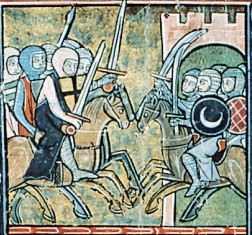
Savinetskaya, Irina
MA Thesis in Medieval Studies, Central European University, May (2009)
Abstract
At the end of the fourteenth century crusade was still a prominent idea in France. Crusade, praised in general, was often criticized in particular. The battle of Nilopolis (1396), the greatest crusading enterprise of its time, showed the weaknesses of the French knighthood and brought about an extensive critique of French chivalry. Participation in the crusades was paired with financial expenses and was usually considered a slightly marginal activity (if not organized by the king or propagated by him) in regard to service to the country. Despite all these contrasting treatments of the later crusades a large number of French knights left France each year in order to take part in crusading campaigns. The goal of this research is to investigate the motivations of knights participating in crusades and to establish if the crusaders were united by a special Crusader Identity. The sources for this work are French chronicles, treatises on crusading theory, the biography of Jean le Meingre II Boucicaut, and the works of Eustache Deschamps. The first chapter deals with crusading theory as it existed in France at the end of the fourteenth century. The second focuses on several organizational aspects of the crusades. The last part is dedicated to the social interactions among crusaders. The research brought me to the conclusion that one cannot speak about a Crusader Identity, but about Crusader Consciousness, which was constituted from the following motivations of the crusaders: 1) the crusade was still a prestigious activity and a religious exercise; 2) crusade played an important role in the social interactions among knights, which contributed to the success of noblemen at court; 3) crusades were a sort of a “knightly package tour” with various entertainment activities.
Click here to read this article from Central European University Budapest
Subscribe to Medievalverse
Related Posts