“Mediterranean Falconry as a Cross-Cultural Bridge: Christian – Muslim Hunting Encounters”
Among the spectacular Eastern hunting techniques which could become the object of interest and envy of the Europeans, one easily adapted to the natural conditions of Europe was undoubtedly the falconry. In fact, it became not only a great fancy of medieval and renaissance Europe, but also a kind of cross-cultural bridge across ideological gaps.
Vikings not alone when they crossed the North Atlantic – mice hitched a ride too
New research has revealed that when the Vikings sailed across the North Atlantic to places like Iceland, Greenland and Newfoundland, they brought with them the common house mouse.

The Medieval Horse Harness: Revolution or Evolution? A Case Study in Technological Change
Medieval historians have considered the role of technology for some time; it is perhaps now appropriate to reexamine conclusions reached by early historians of technology.
The Art of Slicing Fish and Fowl in Medieval Japan
In Western eyes, the delicately cut piece of food is often regarded as central to traditional Japanese cooking. The skilful use of the knife is indeed one of the most prominent features of the Japanese kitchen, and mastery of various cutting-techniques is a matter of course to the Japanese chef as well as to the ambitious homemaker.
Alternate fortunes? The role of domestic ducks and geese from Roman to Medieval times in Britain
In this paper the relative frequency of duck and goose bones found in archaeological sites of Roman and medieval times in Britain will be discussed.

Famine for Profit: Food Surpluses in Medieval Germany
A reading of Malthus’s text reveals that his argument was essentially religious—violation of his “principle” of population was a violation of god’s will…
The Law is an Ass: Reading E.P. Evans’ The Medieval Prosecution and Capital Punishment of Animals
In this essay I address a little-known chapter in the lengthy history of crimes against (nonhuman) animals. My focus is not crimes committed by humans against animals, as such, but a practical outcome of the seemingly bizarre belief that animals are capable of committing crimes against humans.
Biological Exchange and Biological Invasion in World History
For millions of years, most species stayed home. Geographic barriers, such as oceans and mountain chains, inhibited migrations and divided the earth into distinct biogeographical provinces. Only birds, bats, and flying insects bucked the trend consistently.
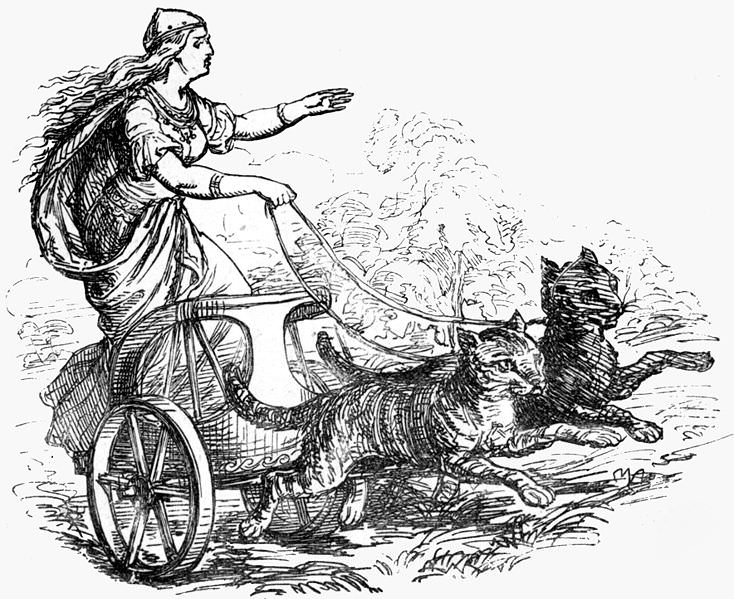
The role of the feline in the medieval society of the North Atlantic region
Were the cats utilised specifically for pest control or is there conclusive proof of a creature having been wholly cared for?
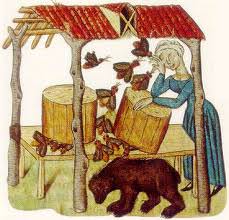
Traditional healing with animals (zootherapy): medieval to present-day Levantine practice
Since ancient times animals and products derived from different organs of their bodies have constituted part of the inventory of medicinal substances used in various cultures; such uses still exist in ethnic folk medicine.
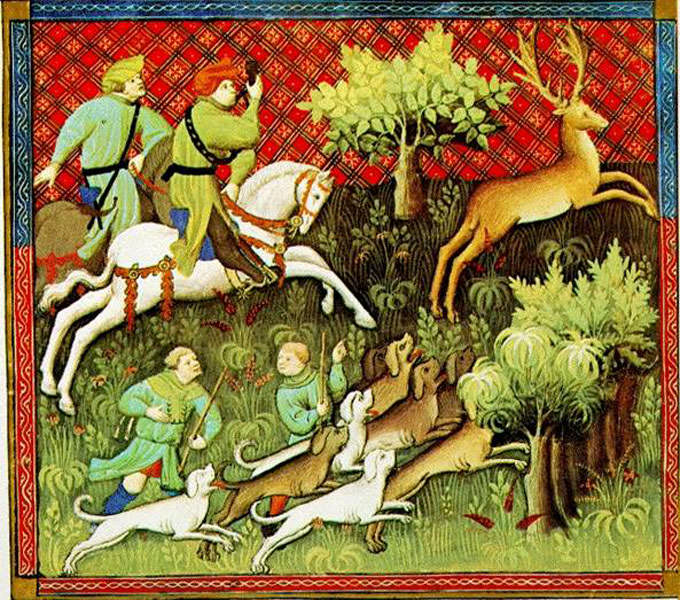
The Woodland Economy of Kent, 1066-1348
At the time of Domesday Book a great part of the county, perhaps a third, or even more, was tree clad, and while by the thirteenth century the proportion had fallen.
On the properties of wild men: the bestiary men of De proprietatibus rerum and Shakespeare’s Caliban
The purpose of this article is therefore to draw attention to the wild men and hybrids of the DPR less as unobserved analogues for the figure of Caliban but as types of figurative and illustrative beings, and thus to contextualise him in their mode of ‘animal other’.

Horses as Status Symbols: Medieval Icelandic horses as symbols of masculine honor in a one-sexed world
Horses, the unsung heroes of the Viking age, have been overlooked all too often in the study of medieval Iceland and its culture.
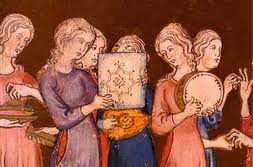
Human/non-human: Gender dynamics and the female/animal condition in medieval culture
This paper will analyze some of the medieval representations of the female element in its proximity to the animal nature in order to reflect on the relationship between the social construction of women and the oppression of animals.
How to Swing a Mouse: Intersections of Female and Feline in Medieval Europe
Though not persuasive enough by itself to forge a decisive affinity, similarity of physiology and temperament between women and cats did not escape notice in the Middle Ages.
Symbolism and Iconography of the Hawk in the Main Panel of the Bayeux Tapestry
Symbolism and Iconography of the Hawk in the Main Panel of the Bayeux Tapestry By Makra Péter Published Online (2001) Introduction: The main…
Kingdoms and Beasts: The Early Prophecies of Hildegard of Bingen
Kingdoms and Beasts: The Early Prophecies of Hildegard of Bingen Czarski, Charles M. JOURNAL OF MILLENNIAL STUDIES, VOLUME I, ISSUE 2, Winter (1998) Abstract The…
The beast within? Breaching human-animal boundaries in Anglo-Saxon paganism
Animals feature widely in early Anglo-Saxon and Scandinavian culture; both domestic and wild species are recovered in varying proportions from archaeological contexts, they appear in later literature, in personal names, and dominate indigenous art in the latter half of the the first millennium AD.
Dogs: God’s Worst Enemies?
In a broad survey of negative and hostile attitudes toward canines in pagan, Jewish, Christian, and Muslim traditions, the author posits that warm ties between humans and canines have been seen as a threat to the authority of the clergy and indeed, of God.
Walrus Hunting and the Ivory Trade in Early Iceland
The use of walrus ivory in Iceland’s past cannot be overlooked: Future research into settlement period sites should field further evidence of the nature of the ivory trade in medieval Iceland.