A conversation with Alicia Walker on the pseudo-Arabic inscriptions (or pseudo-kufic) that appear on a number of tenth- and eleventh-century churches in Greece, most notably at the monastery of Hosios Loukas. What did the Arabic script signify in Orthodox culture at the time if not tension with Islam?
Alicia Walker is Professor of History of Art at Bryn Mawr College. The conversation is based on Alicia’s essay ‘Letters from the Edge: Mapping Pseudo-Arabic between Byzantium and the Near East,’ in E. Bolman et al., eds., Worlds of Byzantium: Religion, Culture, and Empire in the Medieval Near East (Cambridge University Press 2024).
Byzantium & Friends is hosted by Anthony Kaldellis, a Professor at the University of Chicago. You can follow him on his personal website. You can listen to more episodes of Byzantium & Friends through Podbean, Spotify or Apple Podcasts.

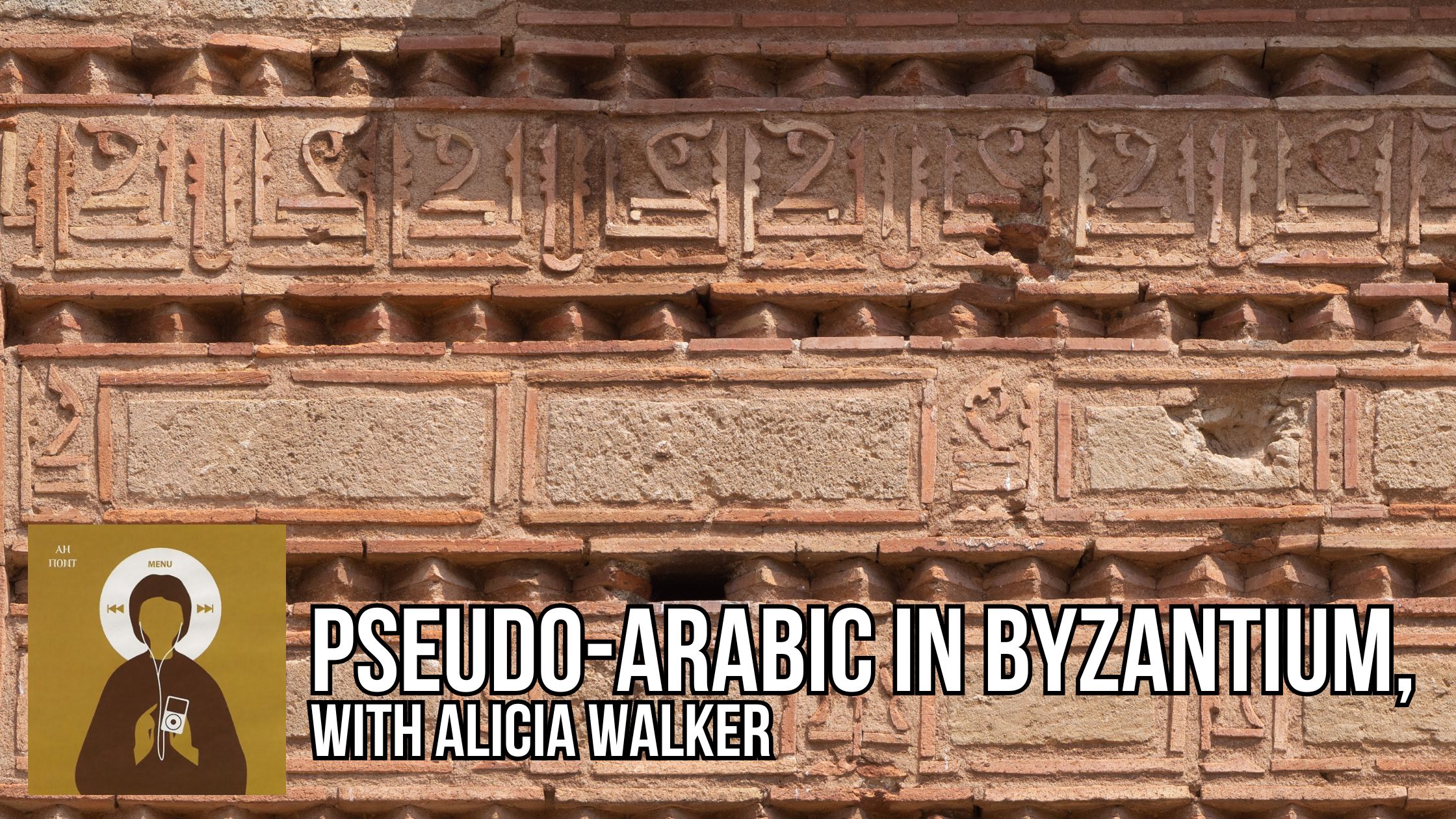
A conversation with Alicia Walker on the pseudo-Arabic inscriptions (or pseudo-kufic) that appear on a number of tenth- and eleventh-century churches in Greece, most notably at the monastery of Hosios Loukas. What did the Arabic script signify in Orthodox culture at the time if not tension with Islam?
Alicia Walker is Professor of History of Art at Bryn Mawr College. The conversation is based on Alicia’s essay ‘Letters from the Edge: Mapping Pseudo-Arabic between Byzantium and the Near East,’ in E. Bolman et al., eds., Worlds of Byzantium: Religion, Culture, and Empire in the Medieval Near East (Cambridge University Press 2024).
Byzantium & Friends is hosted by Anthony Kaldellis, a Professor at the University of Chicago. You can follow him on his personal website. You can listen to more episodes of Byzantium & Friends through Podbean, Spotify or Apple Podcasts.
Subscribe to Medievalverse
Related Posts