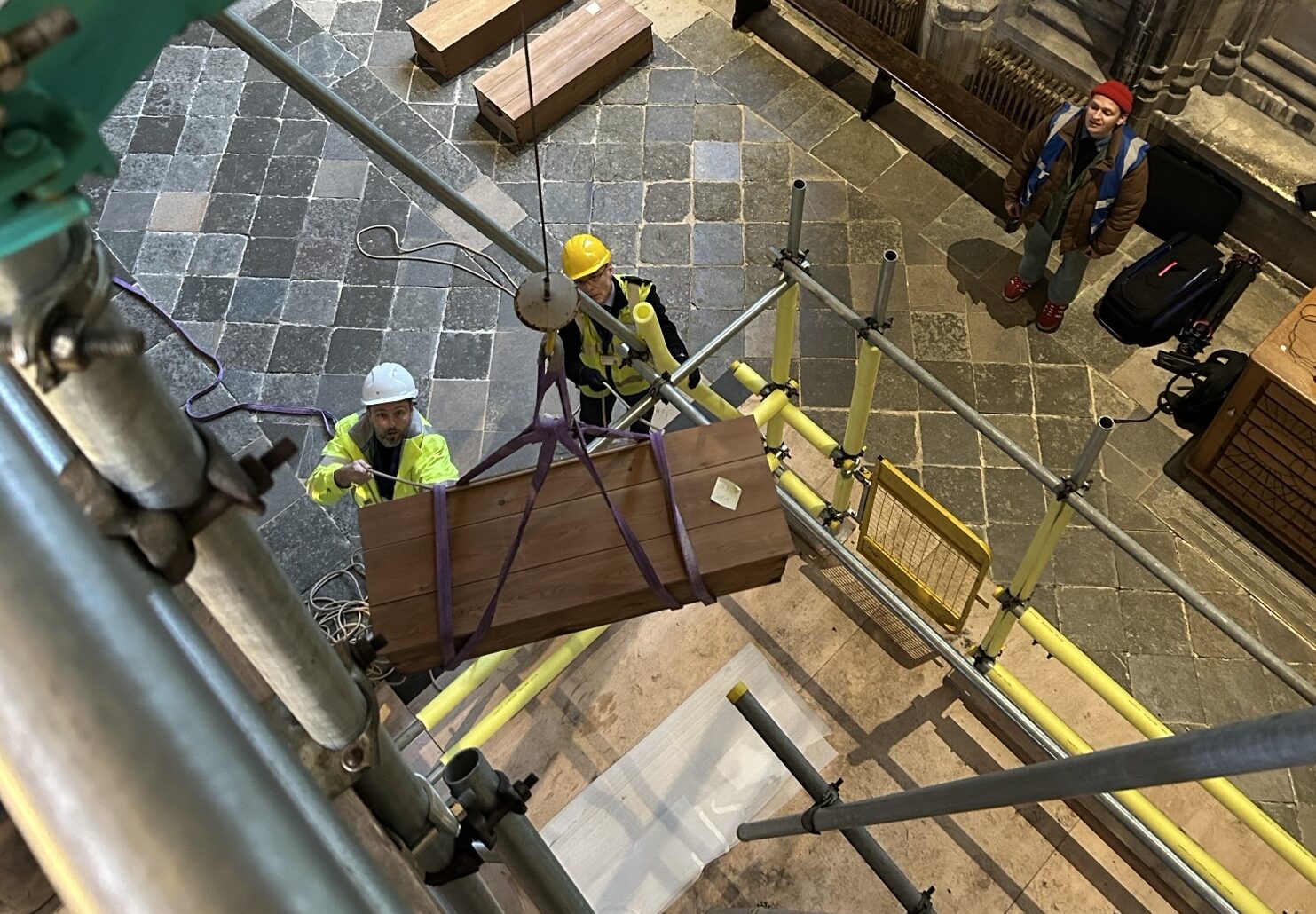
High on the walls of Winchester Cathedral in southern England, six painted mortuary chests have long carried a promise — that the bones inside might belong to some of the most famous rulers and churchmen of early medieval England. Now, after more than a decade of scientific testing and careful reorganisation, the cathedral says the remains are being reinterred in the chests.
Work on the Mortuary Chests Project began in 2012 and has involved specialist academics, conservators, cathedral staff, and volunteers. The cathedral describes it as one of its longest and most ambitious modern research initiatives.
The reinterment has been guided first by radiocarbon dating, with individuals from broadly similar periods placed together in the same chest. The remains inside the chests date from roughly the 7th to the 12th centuries, and many are believed to have been originally buried in the Anglo-Saxon Old Minster, which once stood next to the present cathedral.
Winchester Cathedral Curator, Eleanor Swire, says: “This project demonstrates the combined power of science, the study of human remains and historical research to discover new information about the six mortuary chests and their occupants which would not have been available to us a generation ago.”
Photo courtesy Winchester Cathedral
Latin names painted on the chests include the kings Cynegils, Cynewulf, Ecgbert, Aethelwulf, Eadred, Edmund, Cnut, William Rufus, as well as Bishop Wine, Bishop Alwine, and Queen Emma — though the cathedral notes that other early medieval individuals not listed are also likely to be among the remains.
The chests were reportedly toppled during the English Civil War in 1642, after which the bones were gathered up and returned to the chests without any way to match individuals to specific remains.
The cathedral says findings on the likely identities of those interred are expected later in 2026, while the wider project is planned to reach its conclusion by 2027. It has also received permission to commission two new chests to house some of the bones, with more details expected this summer.

High on the walls of Winchester Cathedral in southern England, six painted mortuary chests have long carried a promise — that the bones inside might belong to some of the most famous rulers and churchmen of early medieval England. Now, after more than a decade of scientific testing and careful reorganisation, the cathedral says the remains are being reinterred in the chests.
Work on the Mortuary Chests Project began in 2012 and has involved specialist academics, conservators, cathedral staff, and volunteers. The cathedral describes it as one of its longest and most ambitious modern research initiatives.
The reinterment has been guided first by radiocarbon dating, with individuals from broadly similar periods placed together in the same chest. The remains inside the chests date from roughly the 7th to the 12th centuries, and many are believed to have been originally buried in the Anglo-Saxon Old Minster, which once stood next to the present cathedral.
Winchester Cathedral Curator, Eleanor Swire, says: “This project demonstrates the combined power of science, the study of human remains and historical research to discover new information about the six mortuary chests and their occupants which would not have been available to us a generation ago.”
Latin names painted on the chests include the kings Cynegils, Cynewulf, Ecgbert, Aethelwulf, Eadred, Edmund, Cnut, William Rufus, as well as Bishop Wine, Bishop Alwine, and Queen Emma — though the cathedral notes that other early medieval individuals not listed are also likely to be among the remains.
The chests were reportedly toppled during the English Civil War in 1642, after which the bones were gathered up and returned to the chests without any way to match individuals to specific remains.
The cathedral says findings on the likely identities of those interred are expected later in 2026, while the wider project is planned to reach its conclusion by 2027. It has also received permission to commission two new chests to house some of the bones, with more details expected this summer.
Subscribe to Medievalverse
Related Posts