The continuity of Roman water supply systems in post-Roman Spain: the case of Valentia, a reliable example?
Jiménez, Javier Martínez
Revista Arkeogazte, No.1, pp. 125-144, año 2011, Recepción: 27-V-2011; Revisión: 19-VII-2011; Aceptación: 27-VII-2011
Abstract
Even if the general assumption is that Roman water supply systems (aqueducts in particular) ceased to function during the late Roman period, and that these were not present in medieval cities, recent archaeological research is proving that this was not always the case. Several cities in Spain show archaeological continuity in their water supply systems into the Visigothic period, and one of these seems to be Valencia. There is archaeological evidence to suggest a functioning aqueduct until the eleventh century, probably linked to episcopal patronage or, less probable, due to royal intervention. The information available comes from the excavations at L’Almoina, c/ Cavallers and c/ Quart, in which not only sections of the
aqueduct with complete preserved stratigraphy have been retrieved, but also important water-consuming structures. Valencia is also a unique example of the reparation of Roman water supply systems in the Umayyad period.
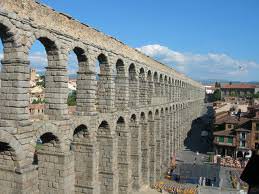
Rome was famous for its aqueducts, and the Romans were renowned for their hydraulic engineering. The construction of aqueducts was something so clearly Roman that it is difficult to imagine these lofty-arched structures in any other time period. But these were too big and too useful to be simply destroyed once the Roman Empire had fallen, and still it is difficult to imagine a medieval city with an aqueduct. This seeming nonsense is the main focus of my doctoral research, in which I try to identify those aqueducts that continue to function into the Visigothic period and beyond, reasoning why this happened and how it affected late antique urbanism. When I was offered to contribute to the first issue of Arkeogazte.

The continuity of Roman water supply systems in post-Roman Spain: the case of Valentia, a reliable example?
Jiménez, Javier Martínez
Revista Arkeogazte, No.1, pp. 125-144, año 2011, Recepción: 27-V-2011; Revisión: 19-VII-2011; Aceptación: 27-VII-2011
Abstract
Even if the general assumption is that Roman water supply systems (aqueducts in particular) ceased to function during the late Roman period, and that these were not present in medieval cities, recent archaeological research is proving that this was not always the case. Several cities in Spain show archaeological continuity in their water supply systems into the Visigothic period, and one of these seems to be Valencia. There is archaeological evidence to suggest a functioning aqueduct until the eleventh century, probably linked to episcopal patronage or, less probable, due to royal intervention. The information available comes from the excavations at L’Almoina, c/ Cavallers and c/ Quart, in which not only sections of the
aqueduct with complete preserved stratigraphy have been retrieved, but also important water-consuming structures. Valencia is also a unique example of the reparation of Roman water supply systems in the Umayyad period.
Click here read this article from Revista Arkeogazte
Subscribe to Medievalverse
Related Posts