The Queen of troubadours goes to England: Eleanor of Aquitaine and 12th Century Anglo-Norman Literary Milieu
Although her importance in the growth of courtly love literature in France has been sufficiently stated, little attention has been paid to her patronising activities in England.
Reassessing the Roles of Women as ‘Makers’ of Medieval Art and Architecture
This two-volume set proposes a renewed way of framing the debate around the history of medieval art and architecture to highlight the multiple roles played by women.
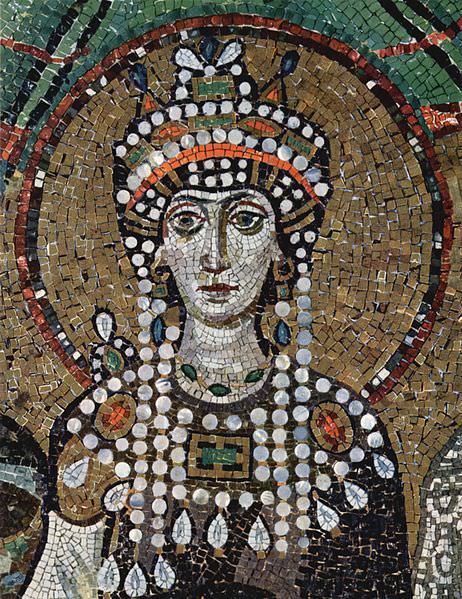
Women and the Transmission of Power in Medieval Byzantium
Information about Byzantine women of power and influence who lived in the eastern capital during its long history from AD 330-1453 is often concealed in references that either minimize or demonize women (a familiar problem).
The Uncommon Commonality of Eleanor of Aquitaine
Eleanor lived at the junction of these two phenomena. She was raised on the foundation of a reforming western world that her people, aesthetically speaking, pioneered in many ways. The history of her, fact and fiction, result from that background.
The daughters of Henry II and Eleanor of Aquitaine: a comparative study of twelfth-century royal women
This thesis is the first study of the daughters of Henry II and Eleanor of Aquitaine which considers them in a dynastic context.
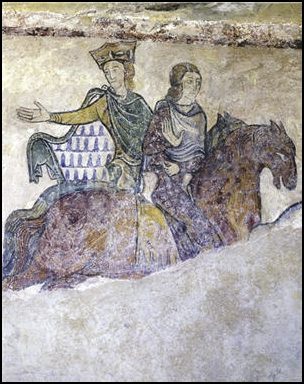
Partners in Rule: A Study of Twelfth-Century Queens of England
The queens of twelfth-century England provide a prime example of how the queen was not, in fact, powerless in the rule of her realm, but rather a significant governmental official who had the opportunity to take a complementary part in royal rule that suited her strengths.
An Inconvenient Princess
On November 11th, 1480, a child was baptized in the Palace of Eltham with all solemnity and grandeur, as was fitting for a royal princess of the House of York. The child was named Bridget, after the 14th century Swedish saint who wrote of personal visions of Christ and founded a religious order.
The Art of a Reigning Queen as Dynastic Propaganda in Twelfth-Century Spain
This study, however, will focus on Urraca of Leon-Castile (reigned 1109-26) to examine the unusual role of a reigning queen, that is, the king’s daughter and heir to his throne, whose position carried a greater dynastic weight than did a queen consort’s.
The uses of luxury: some examples from the Portuguese courts from 1480 to 1580
Whereas women accumulated objects in direct relation with their spirituality (with the exception of Queen Catarina), men favoured the possession of religious objects as a strategy in order to reinforce political power and authority.
The Education of Princess Mary Tudor
The Education of Princess Mary Tudor Pierret Perkins, Katherine Lee M.A. Thesis, History, Louisiana State University, December(2007) Abstract Mary Tudor, the first officially…
Talking about history in eleventh century England: the Encomium Emmae Reginae and the court of Harthacnut
Talking about history in eleventh century England: the Encomium Emmae Reginae and the court of Harthacnut Tyler, Elizabeth M. Early Medieval Europe, 13…
Beyond the Castle Gate: The Role of Royal Landscapes in Constructions of English Medieval Kingship and Queenship
Beyond the Castle Gate: The Role of Royal Landscapes in Constructions of English Medieval Kingship and Queenship By Amanda Richardson Concilium medii aevi,…
The Unknown Empress: Theodora As a Victim of Distorted Images
We have had a long tradition of attempts to replace her historical image with an idealized, uncritical glossy picture or to denigrate her utterly.
Politics, power and prestige : the historiography of medieval English queens, 1821-1998
Politics, power and prestige : the historiography of medieval English queens, 1821-1998 Forget, Natalie Erica (The University of Guelph) Thesis: M.A. Arts, University…
Women in the Gesta Stephani
Women in the Gesta Stephani By Sarah Williams Published Online (2011) Introduction: The Gesta Stephani chronicles the turbulent reign of King Stephen (1135-1154),…
All the Queen’s Men: Perceptions of Women in Power
All the Queen’s Men: Perceptions of Women in Power Burkett, Mona Master’s Thesis, University of Minnesota, (2009) Abstract Throughout the middle Ages, women…
Mother, wife, temptress, virgin and tyrant: defining images of feminine power in medieval queenship and modern politics
Mother, wife, temptress, virgin and tyrant: defining images of feminine power in medieval queenship andmodern politics Curwen, Emma B.A. Thesis, Regis University, May (2009)…
The Queen as ‘social mannequin’. Consumerism and expenditure at the Court of Isabeau of Bavaria, 1393–1422
The Queen as ‘social mannequin’. Consumerism and expenditure at the Court of Isabeau of Bavaria, 1393–1422 Gibbons, Rachel C. Journal of Medieval History, Vol. 26,…
Philippa of Lancaster, queen of Portugal (1360-1415)
Philippa of Lancaster, queen of Portugal (1360-1415) By Manuela Santos Silva The Rituals and Rhetoric of Queenship: Medieval to Early Modern, edited by…
Website Profile: On the Tudor Trail
For Natalie Grueninger, editor of On the Tudor Trail, the start of her interest in the Tudors, and Anne Boleyn in particular, started…
Joanna, Queen of Sicily
Joanna, Queen of Sicily By Dana Cushing The Plantagenet Connection, v. 8 n. 1 (Summer 2000) Introduction: In my studies of the Third…
Monastery and Monarchy: The Foundation and Patronage of Santa María la Real de Las Huelgas and Santa María la Real de Sigena
Monastery and Monarchy: The Foundation and Patronage of Santa María la Real de Las Huelgas and Santa María la Real de Sigena By…
Empress Agnes of Poitou (1043-1077). Reflections on the Legal Basis of Her Regency
Empress Agnes of Poitou (1043-1077). Reflections on the Legal Basis of Her Regency By Eva-Maria Butz Less Favored – More Favored: Proceedings from…
Less Favored – More Favored: Queenship and the Special Case of Margrete of Denmark, 1353-1412
Less Favored – More Favored: Queenship and the Special Case of Margrete of Denmark, 1353-1412 By Grethe Jacobsen Less Favored – More Favored:…
Queening: Chess and Women in Medieval and Renaissance France
This work explores the correlation between the game of chess and social conditions for women in both medieval and Renaissance France.


