If you follow the advice of Caterina Sforza, “you will see that thing become so narrow that you yourself will be in admiration.”
That striking promise appears in the Experimenta, a collection of recipes attributed to the Renaissance noblewoman Caterina Sforza. Best known as the formidable ruler of Imola and Forli and a fierce opponent of the Borgia family, Sforza also cultivated a keen interest in medicine, alchemy, and cosmetics. Her manuscript preserves hundreds of formulas aimed at transforming the body and the material world—ranging from cures for lice to beauty treatments and even techniques for making coins appear more golden.
In her article, “Impotence and Corruption: Sexual Function and Dysfunction in Early Modern Italian Books of Secrets”, Meredith K. Ray examines how texts like Sforza’s dealt with matters of sexuality. Her research focuses on a popular Renaissance genre known as the libri di segreti, or books of secrets. These works circulated widely in sixteenth-century Italy and combined recipes for alchemy, medicine, cosmetics, perfumery and household management. Unlike older scholarly texts written in Latin, these manuals were often composed in the vernacular and aimed at a broader audience, emphasizing practical experimentation and useful results.
Within these compilations, sexual health was treated much like any other bodily concern. Problems such as impotence, infertility, or the loss of virginity were presented as physiological conditions that could potentially be treated through remedies, substances, and carefully prepared mixtures.
A Warlord with a Book of Secrets
Lady of the Jasmin by Lorenzo di Credi. This late 15th-century painting is thought to be a portrait of Caterina Sforza
The Experimenta is a dense compilation of more than 300 recipes and formulas—alchemy, medicine, cosmetics—assembled in the spirit of practical, results-driven experimentation. Ray notes that Sforza’s collection has been described as “the most complete and important document” of its kind for the early sixteenth century. By combining various foods, herbs, plants, minerals and precious stones, she says they can deliver all kinds of cures and marvels, from getting rid of lice to making coins appear more golden. She adds that her beauty recipes will even allow a 70-year-old to look like she is 20.
The manuscript reflects a shared culture of early modern self-help remedies, circulating through oral transmission, manuscript copying, and printed books that responded to a growing demand for practical knowledge.
Recipes for ‘Restoring’ Virginity
Sforza’s Experimenta includes several recipes that claim to restore—or at least convincingly simulate—virginity. The simplest involves distilling sage and water in an alembic, a basic step in the alchemical process, and then applying the resulting liquid over time. According to the instructions, the treatment will return the body to a virginal condition.
Other recipes are more elaborate. One formula calls for a preparation involving more than ten ingredients and requires over two weeks to complete. It promises a dramatic result, assuring the user that “you will see that thing become so narrow that you yourself will be in admiration.”
Another remedy involves a pessary made from pulverized carnations mixed with wine. Inserted into the body, it supposedly allows women or girls “of any age” who have been “corrupted” to once again appear as “the most natural and perfect virgin.”
Like many formulas in books of secrets, these remedies draw on ideas borrowed from alchemy, where substances could be transformed through processes such as distillation and heating. In the same way that alchemists tried to change the appearance of metals or improve cosmetic preparations, these recipes promised to alter the body itself.
As Ray notes, such recipes appear frequently in early modern books of secrets and reflect a broader fascination with transformation and simulation. In this context, the goal was not necessarily to restore virginity in a biological sense, but to recreate the physical signs associated with it—something that could carry significant social importance in a culture where reputation and marriage prospects were closely tied to female chastity.
Testing Virginity
Caterina Sforza, reproduction of a medal created c. 1488 – photo by Saliko / Wikimedia Commons
Meanwhile, Caterina Sforza also offers a way to tell if a woman is still a virgin. She writes:
How to tell if a woman is a virgin, or rather corrupt. Take sal ammoniac and dissolve in water and give it to drink to whoever you wish. If she is a virgin, it will have no effect; if she has been corrupted, she will urinate immediately.
This test was not unique to Sforza’s collection. Ray explains that similar methods appear in medieval and early modern medical writings. Sal ammoniac (ammonium chloride) was commonly used as a mild diuretic, and some writers believed that differences in how the body expelled the liquid could reveal whether a woman had been “corrupted.”
Such recipes attempted to produce an external sign for what was otherwise difficult to observe. The hidden nature of the female reproductive system meant that writers often relied on indirect tests or bodily reactions to infer internal conditions.
Remedies for Men
Her Experimenta also offers recipes for men to give them better sexual performance (and to make sure that their women do not seek another lover). She even partially encrypts these instructions (but provides the key to the code in the manuscript) to produce recipes that were either to be drunk or applied directly to the penis. Using items such as satyrion root, wild boar fat, pepper or a skink (a small type of lizard), she says a man can make his member larger or have sex longer. In one recipe, which promises that a man stay erect all night long, Caterina writes, “you will be able to go to bed with a woman and you will see that you will stay erect and be able to do anything you want and enjoy yourself.”
Ray adds that “whether presenting recipes for determining female virginity or formulas for correcting male impotence, these compilations approach matters of sex through the lens of commonplace knowledge, contemporary medical culture and familiar alchemical principles of transformation and simulation in order to enhance healthy physiological function. At the same time they also serve to uphold social and sexual custom by seeking to contain sexual activity – for women at least – within the confines of marriages, thereby protecting men from the prospect of cuckoldry.”
Ray’s article, “Impotence and Corruption: Sexual Function and Dysfunction in Early Modern Italian Books of Secrets” appears in Cuckoldry, Impotence and Adultery in Europe (15th–17th century), edited by Sara Matthews-Grieco. You can find it on her Academia.edu page.

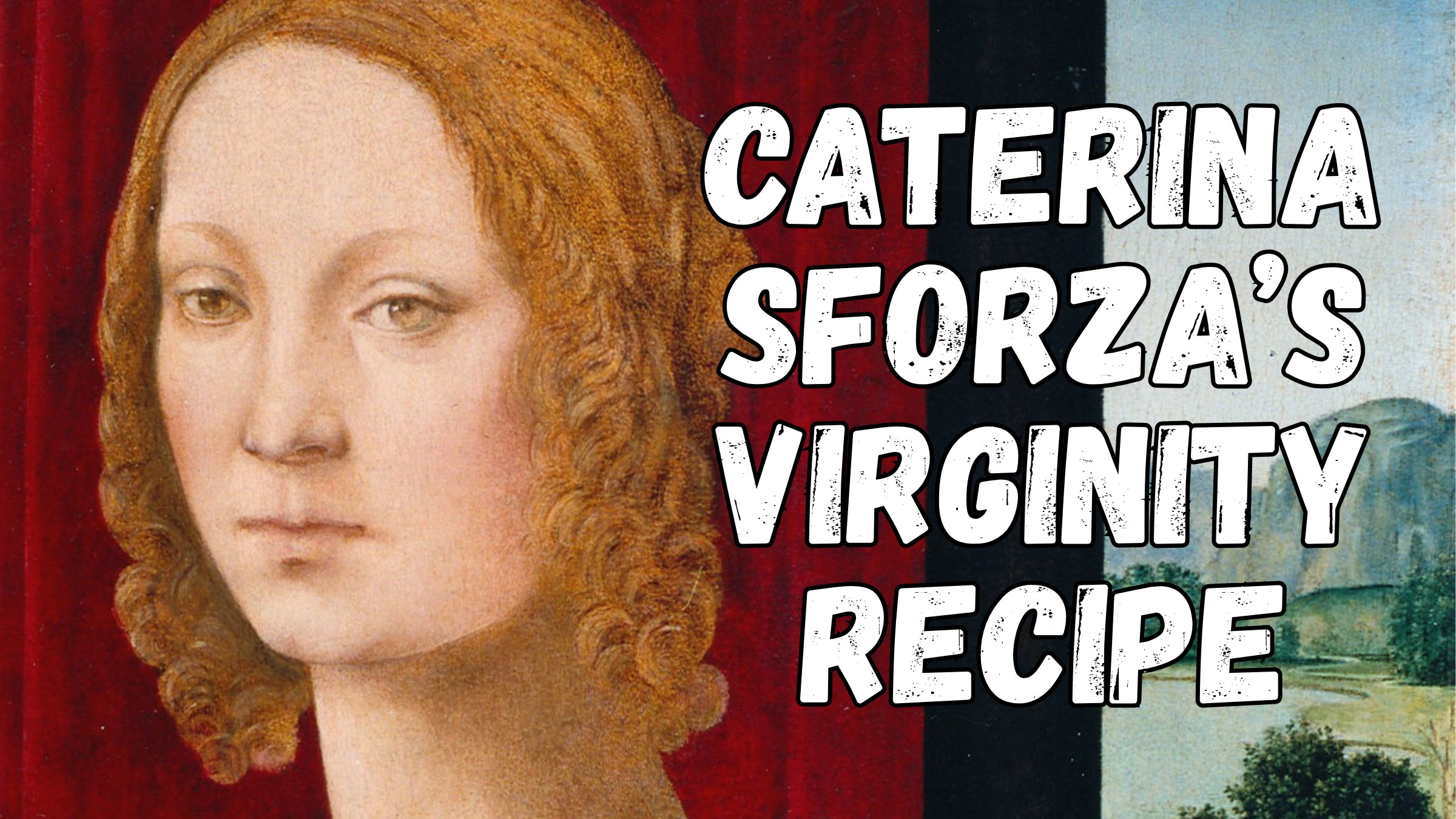
If you follow the advice of Caterina Sforza, “you will see that thing become so narrow that you yourself will be in admiration.”
That striking promise appears in the Experimenta, a collection of recipes attributed to the Renaissance noblewoman Caterina Sforza. Best known as the formidable ruler of Imola and Forli and a fierce opponent of the Borgia family, Sforza also cultivated a keen interest in medicine, alchemy, and cosmetics. Her manuscript preserves hundreds of formulas aimed at transforming the body and the material world—ranging from cures for lice to beauty treatments and even techniques for making coins appear more golden.
In her article, “Impotence and Corruption: Sexual Function and Dysfunction in Early Modern Italian Books of Secrets”, Meredith K. Ray examines how texts like Sforza’s dealt with matters of sexuality. Her research focuses on a popular Renaissance genre known as the libri di segreti, or books of secrets. These works circulated widely in sixteenth-century Italy and combined recipes for alchemy, medicine, cosmetics, perfumery and household management. Unlike older scholarly texts written in Latin, these manuals were often composed in the vernacular and aimed at a broader audience, emphasizing practical experimentation and useful results.
Within these compilations, sexual health was treated much like any other bodily concern. Problems such as impotence, infertility, or the loss of virginity were presented as physiological conditions that could potentially be treated through remedies, substances, and carefully prepared mixtures.
A Warlord with a Book of Secrets
The Experimenta is a dense compilation of more than 300 recipes and formulas—alchemy, medicine, cosmetics—assembled in the spirit of practical, results-driven experimentation. Ray notes that Sforza’s collection has been described as “the most complete and important document” of its kind for the early sixteenth century. By combining various foods, herbs, plants, minerals and precious stones, she says they can deliver all kinds of cures and marvels, from getting rid of lice to making coins appear more golden. She adds that her beauty recipes will even allow a 70-year-old to look like she is 20.
The manuscript reflects a shared culture of early modern self-help remedies, circulating through oral transmission, manuscript copying, and printed books that responded to a growing demand for practical knowledge.
Recipes for ‘Restoring’ Virginity
Sforza’s Experimenta includes several recipes that claim to restore—or at least convincingly simulate—virginity. The simplest involves distilling sage and water in an alembic, a basic step in the alchemical process, and then applying the resulting liquid over time. According to the instructions, the treatment will return the body to a virginal condition.
Other recipes are more elaborate. One formula calls for a preparation involving more than ten ingredients and requires over two weeks to complete. It promises a dramatic result, assuring the user that “you will see that thing become so narrow that you yourself will be in admiration.”
Another remedy involves a pessary made from pulverized carnations mixed with wine. Inserted into the body, it supposedly allows women or girls “of any age” who have been “corrupted” to once again appear as “the most natural and perfect virgin.”
Like many formulas in books of secrets, these remedies draw on ideas borrowed from alchemy, where substances could be transformed through processes such as distillation and heating. In the same way that alchemists tried to change the appearance of metals or improve cosmetic preparations, these recipes promised to alter the body itself.
As Ray notes, such recipes appear frequently in early modern books of secrets and reflect a broader fascination with transformation and simulation. In this context, the goal was not necessarily to restore virginity in a biological sense, but to recreate the physical signs associated with it—something that could carry significant social importance in a culture where reputation and marriage prospects were closely tied to female chastity.
Testing Virginity
Meanwhile, Caterina Sforza also offers a way to tell if a woman is still a virgin. She writes:
How to tell if a woman is a virgin, or rather corrupt. Take sal ammoniac and dissolve in water and give it to drink to whoever you wish. If she is a virgin, it will have no effect; if she has been corrupted, she will urinate immediately.
This test was not unique to Sforza’s collection. Ray explains that similar methods appear in medieval and early modern medical writings. Sal ammoniac (ammonium chloride) was commonly used as a mild diuretic, and some writers believed that differences in how the body expelled the liquid could reveal whether a woman had been “corrupted.”
Such recipes attempted to produce an external sign for what was otherwise difficult to observe. The hidden nature of the female reproductive system meant that writers often relied on indirect tests or bodily reactions to infer internal conditions.
Remedies for Men
Her Experimenta also offers recipes for men to give them better sexual performance (and to make sure that their women do not seek another lover). She even partially encrypts these instructions (but provides the key to the code in the manuscript) to produce recipes that were either to be drunk or applied directly to the penis. Using items such as satyrion root, wild boar fat, pepper or a skink (a small type of lizard), she says a man can make his member larger or have sex longer. In one recipe, which promises that a man stay erect all night long, Caterina writes, “you will be able to go to bed with a woman and you will see that you will stay erect and be able to do anything you want and enjoy yourself.”
Ray adds that “whether presenting recipes for determining female virginity or formulas for correcting male impotence, these compilations approach matters of sex through the lens of commonplace knowledge, contemporary medical culture and familiar alchemical principles of transformation and simulation in order to enhance healthy physiological function. At the same time they also serve to uphold social and sexual custom by seeking to contain sexual activity – for women at least – within the confines of marriages, thereby protecting men from the prospect of cuckoldry.”
Ray’s article, “Impotence and Corruption: Sexual Function and Dysfunction in Early Modern Italian Books of Secrets” appears in Cuckoldry, Impotence and Adultery in Europe (15th–17th century), edited by Sara Matthews-Grieco. You can find it on her Academia.edu page.
Meredith K. Ray, who is Professor of Italian Studies at John Hopkins University, recently wrote Twenty-Five Women Who Shaped the Italian Renaissance. See also her website Women in Early Modern Italy: Science, Literature, Culture
Gigi Coulson has translated 24 of Caterina’s beauty recipes in Caterina Sforza’s Gli Experimenti: A Translation
Subscribe to Medievalverse
Related Posts