A new climate study argues that a run of severe drought across parts of Eastern Europe coincided with—and may have helped shape—the Mongol Empire’s rapid westward expansion in the 1230s. By reconstructing summer moisture conditions over more than a millennium, the researchers say the environmental “backdrop” along key routes of advance created advantages for mobile cavalry forces while putting extra pressure on settled agrarian societies.
The research, published in Fundamental Research, reconstructs summer water balance on the East European Plain from 943 to 2019 CE using tree-ring evidence and related climate data.
The international team of researchers frame their findings as part of the wider effort to understand how climate variability can interact with human decisions and political circumstances—without reducing major historical events to weather alone.
Reconstructing a millennium of summer dryness and wetness
The East European Plain shown on a modern map – Wikimedia Commons
To build their long record, the team used tree-ring data from European part of Russia, combining sequences from living trees with archaeological wood to extend the chronology back into the tenth century.
They then reconstructed summer (June–August) moisture conditions using the self-calibrating Palmer Drought Severity Index(scPDSI), a commonly used drought metric, focusing on how precipitation and temperature affect water availability.
The result is a year-by-year view of shifting dry and wet conditions across a huge region—one that allows the researchers to place short episodes of stress within a much longer context. In their view, that context matters: an unusually long drought can be disruptive even in regions that tend to be relatively moist overall.
The 1230s: “one of the driest periods” in the record
One of their most important findings is of a nine-year drought beginning in 1230. The reconstruction indicates that 1230 from 1238 was among the driest multi-year stretches on the East European Plain over the last roughly thousand years.
Why does that matter for the Mongol campaigns? The authors argue that prolonged aridity could reshape both the landscape and the balance of vulnerability. Drought, they suggest, contributes to harder, flatter grassland conditions that improve the speed and manoeuvrability of mounted forces and, at the same time, also weakening less mobile agricultural societies, especially when other political or social tensions already exist.
Map of the Mongol invasion – image by Qiushufang / Wikimedia Commons
They also point to historical scholarship linking adverse climate conditions in Eastern Europe with lower grain yields, famine, conflict, and weakened livestock and horse populations in some states, circumstances that could have compounded instability in areas facing invasion.
The researchers conclude, “our findings underscore the complex interplay between climate variability and societal change, and provide an integrative framework that bridges paleoclimatic evidence, model projections, and historical analysis to better understand the multifaceted role of climate in shaping human history and guiding future adaptation strategies.”
The article, “Drought facilitated the westward expansion of the Mongol Empire in the 1230s,” by Weipeng Yue, Feng Chen, Olga Solomina, Jan Esper, Nicole K. Davi, Ulf Büntgen, Shijie Wang, Vladimir Matskovsky, Caroline Leland, Leonid Agafonov, Max C.A. Torbenson, Magdalena Opała-Owczarek, Mao Hu, Marina Gurskaya, Zulfiyor Bakhtiyorov, Xiaoen Zhao, Yang Xu, Heli Zhang, Youping Chen and Fahu Chen, appears in Fundamental Research. Click here to read it.

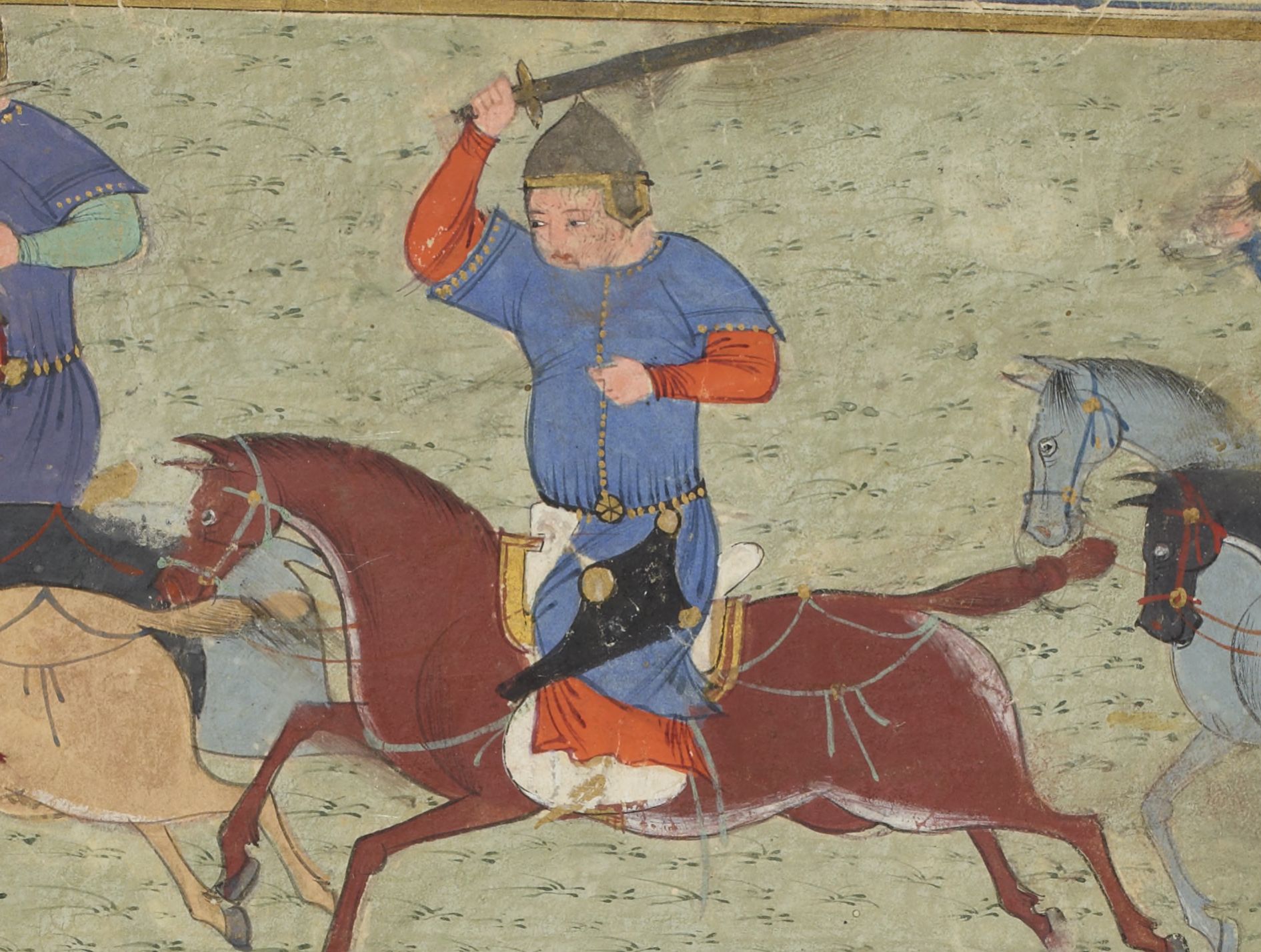
A new climate study argues that a run of severe drought across parts of Eastern Europe coincided with—and may have helped shape—the Mongol Empire’s rapid westward expansion in the 1230s. By reconstructing summer moisture conditions over more than a millennium, the researchers say the environmental “backdrop” along key routes of advance created advantages for mobile cavalry forces while putting extra pressure on settled agrarian societies.
The research, published in Fundamental Research, reconstructs summer water balance on the East European Plain from 943 to 2019 CE using tree-ring evidence and related climate data.
The international team of researchers frame their findings as part of the wider effort to understand how climate variability can interact with human decisions and political circumstances—without reducing major historical events to weather alone.
Reconstructing a millennium of summer dryness and wetness
To build their long record, the team used tree-ring data from European part of Russia, combining sequences from living trees with archaeological wood to extend the chronology back into the tenth century.
They then reconstructed summer (June–August) moisture conditions using the self-calibrating Palmer Drought Severity Index (scPDSI), a commonly used drought metric, focusing on how precipitation and temperature affect water availability.
The result is a year-by-year view of shifting dry and wet conditions across a huge region—one that allows the researchers to place short episodes of stress within a much longer context. In their view, that context matters: an unusually long drought can be disruptive even in regions that tend to be relatively moist overall.
The 1230s: “one of the driest periods” in the record
One of their most important findings is of a nine-year drought beginning in 1230. The reconstruction indicates that 1230 from 1238 was among the driest multi-year stretches on the East European Plain over the last roughly thousand years.
Why does that matter for the Mongol campaigns? The authors argue that prolonged aridity could reshape both the landscape and the balance of vulnerability. Drought, they suggest, contributes to harder, flatter grassland conditions that improve the speed and manoeuvrability of mounted forces and, at the same time, also weakening less mobile agricultural societies, especially when other political or social tensions already exist.
They also point to historical scholarship linking adverse climate conditions in Eastern Europe with lower grain yields, famine, conflict, and weakened livestock and horse populations in some states, circumstances that could have compounded instability in areas facing invasion.
The researchers conclude, “our findings underscore the complex interplay between climate variability and societal change, and provide an integrative framework that bridges paleoclimatic evidence, model projections, and historical analysis to better understand the multifaceted role of climate in shaping human history and guiding future adaptation strategies.”
The article, “Drought facilitated the westward expansion of the Mongol Empire in the 1230s,” by Weipeng Yue, Feng Chen, Olga Solomina, Jan Esper, Nicole K. Davi, Ulf Büntgen, Shijie Wang, Vladimir Matskovsky, Caroline Leland, Leonid Agafonov, Max C.A. Torbenson, Magdalena Opała-Owczarek, Mao Hu, Marina Gurskaya, Zulfiyor Bakhtiyorov, Xiaoen Zhao, Yang Xu, Heli Zhang, Youping Chen and Fahu Chen, appears in Fundamental Research. Click here to read it.
Subscribe to Medievalverse
Related Posts