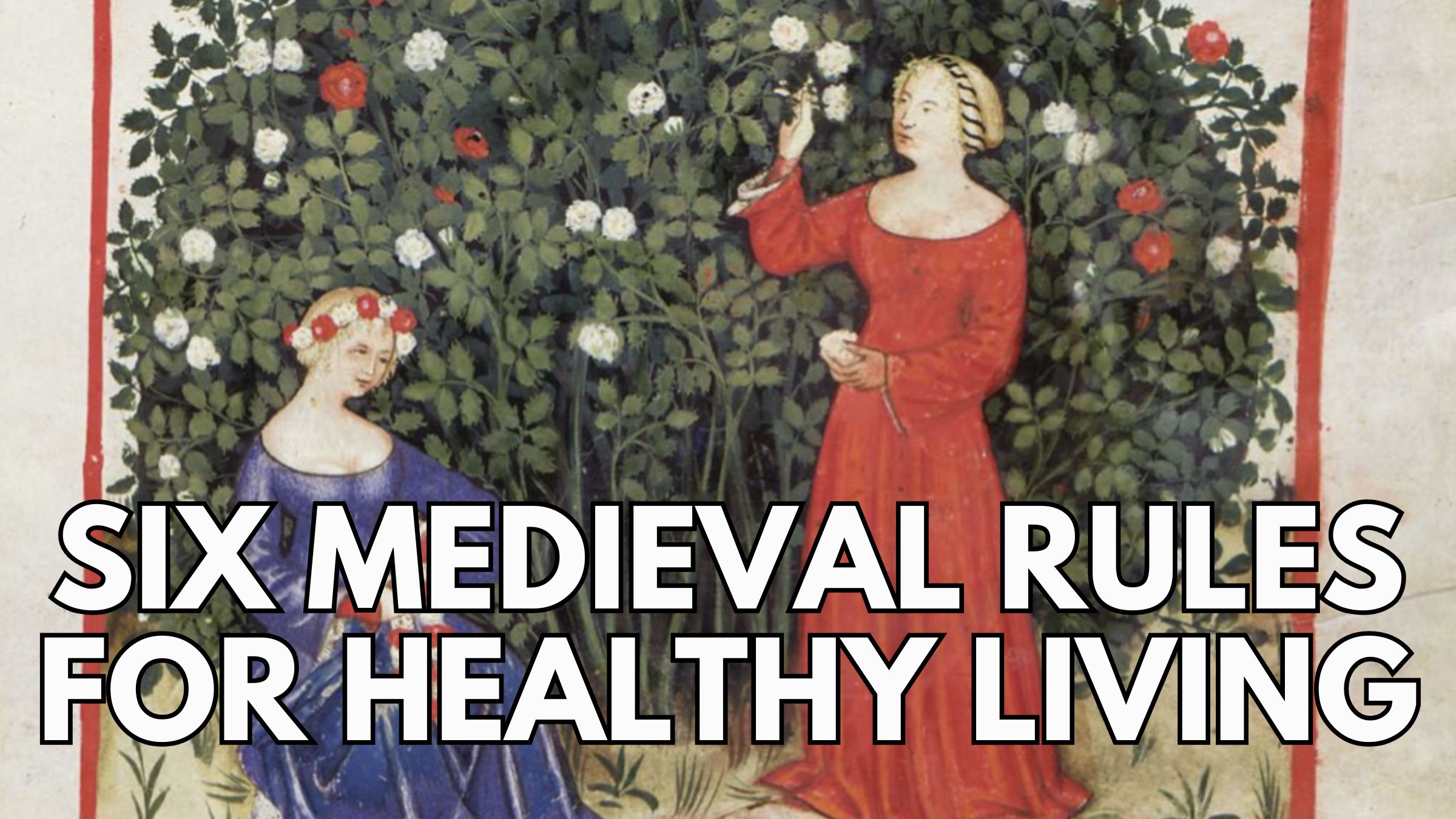
Fresh air, balanced food, regular exercise, emotional moderation—this might sound like modern wellness advice, but medieval physicians were already promoting these ideas centuries ago. One popular medieval text even reduced healthy living to just six simple rules.
The Theatre of Health (Theatra Sanitatis) was a widely read work in medieval Europe between the twelfth and fifteenth centuries. Better known as Tacuinum Sanitatis, the original version of this work was by Ibn Butlan, a physician who worked in Baghdad during the eleventh century. Designed as a practical guide rather than a theoretical treatise, the text sets out what it considered the essential foundations of good health:
The first rule is always to breathe good fresh air.
The second is to consume the right food and drink.
The third is regular activity and repose.
The fourth is to refrain from too much sleep and from too much wakefulness.
The fifth concerns the retention and expulsion of the humours.
The sixth is to be moderate in joy, in fear and in anxiety.
Balancing the Body
Biblioteca Casanatense, Ms. 4182 fol. 83
The Theatre of Health does not go into great detail about these rules. In fact, it makes a point of being brief, explaining that “men want to know only the conclusive results of what concerns them, not demonstrations and definitions.” Five of the six rules would sound perfectly familiar to a modern reader, but the fifth—concerning the humours—requires some explanation.
Humours were a medical theory dating back to ancient Greece and Rome that held the human body to be composed of four vital fluids: blood, phlegm, yellow bile, and black bile. Health depended on keeping these fluids in proper balance. If they were not, a person could become ill or develop disease. For example, an excess of black bile was thought to cause depression. Like nearly all physicians in the Middle Ages—and well into the seventeenth and eighteenth centuries—Ibn Butlan believed that maintaining this balance depended largely on diet, lifestyle, and moderation.
Biblioteca Casanatense, Ms. 4182 fol. 163
The text then turns to food, discussing the health benefits of dozens of common items, including apples, mushrooms, spinach, and wheat. Each entry is brief, usually just a few lines, but enough to outline the effects a food was believed to have on the body. Grapes, for instance, are praised for “nourishing and fattening the body while keeping the bowels free,” while peaches “relieve burning fevers because of their cold-moist nature, and they lubricate the stomach.”
The work also cautions that foods could have drawbacks. Chestnuts, for example, are described as “highly nutritious; they stimulate sexual intercourse, but they make the stomach swell and bring on headaches.” The author adds that these negative effects can be prevented if the chestnuts are boiled in water. Black olives are similarly double-edged: “although they sharpen the appetite they may bring on headaches and sleeplessness, and because they rot quickly they tend to upset the stomach. Eye trouble sometimes follows.”
The Theatre of Health ultimately offers a concise guide to improving and maintaining physical well-being. Its advice centres on balance—eating sensibly, staying active without excess, resting properly, and keeping emotions in check. Far from being exotic or outdated, much of this medieval medical guidance would not be out of place in a modern discussion of healthy living.
Theatra Sanitatis is essentially a version of Tacuinum Sanitatis, and can be found in the manuscript Biblioteca Casanatense, Ms. 4182. You can view the manuscript here.

Fresh air, balanced food, regular exercise, emotional moderation—this might sound like modern wellness advice, but medieval physicians were already promoting these ideas centuries ago. One popular medieval text even reduced healthy living to just six simple rules.
The Theatre of Health (Theatra Sanitatis) was a widely read work in medieval Europe between the twelfth and fifteenth centuries. Better known as Tacuinum Sanitatis, the original version of this work was by Ibn Butlan, a physician who worked in Baghdad during the eleventh century. Designed as a practical guide rather than a theoretical treatise, the text sets out what it considered the essential foundations of good health:
Balancing the Body
The Theatre of Health does not go into great detail about these rules. In fact, it makes a point of being brief, explaining that “men want to know only the conclusive results of what concerns them, not demonstrations and definitions.” Five of the six rules would sound perfectly familiar to a modern reader, but the fifth—concerning the humours—requires some explanation.
Humours were a medical theory dating back to ancient Greece and Rome that held the human body to be composed of four vital fluids: blood, phlegm, yellow bile, and black bile. Health depended on keeping these fluids in proper balance. If they were not, a person could become ill or develop disease. For example, an excess of black bile was thought to cause depression. Like nearly all physicians in the Middle Ages—and well into the seventeenth and eighteenth centuries—Ibn Butlan believed that maintaining this balance depended largely on diet, lifestyle, and moderation.
The text then turns to food, discussing the health benefits of dozens of common items, including apples, mushrooms, spinach, and wheat. Each entry is brief, usually just a few lines, but enough to outline the effects a food was believed to have on the body. Grapes, for instance, are praised for “nourishing and fattening the body while keeping the bowels free,” while peaches “relieve burning fevers because of their cold-moist nature, and they lubricate the stomach.”
The work also cautions that foods could have drawbacks. Chestnuts, for example, are described as “highly nutritious; they stimulate sexual intercourse, but they make the stomach swell and bring on headaches.” The author adds that these negative effects can be prevented if the chestnuts are boiled in water. Black olives are similarly double-edged: “although they sharpen the appetite they may bring on headaches and sleeplessness, and because they rot quickly they tend to upset the stomach. Eye trouble sometimes follows.”
The Theatre of Health ultimately offers a concise guide to improving and maintaining physical well-being. Its advice centres on balance—eating sensibly, staying active without excess, resting properly, and keeping emotions in check. Far from being exotic or outdated, much of this medieval medical guidance would not be out of place in a modern discussion of healthy living.
You can read an English translation of The Theatre of Health in Herbarium: Natural Remedies from a Medieval Manuscript, by Adalberto Pazzini and Emma Pirani (Rizzoli International Publications, 1980).
Theatra Sanitatis is essentially a version of Tacuinum Sanitatis, and can be found in the manuscript Biblioteca Casanatense, Ms. 4182. You can view the manuscript here.
Subscribe to Medievalverse
Related Posts