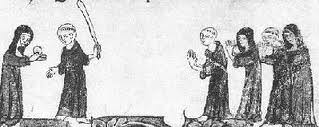
From Jongleur to Minstrel: The Professionalization of Secular Musicians in Thirteenth- and Fourteenth-Century Paris
This study asks: how did jongleurs professionalize over the course of the thirteenth and fourteenth centuries and incorporate themselves into society as legitimate, productive members?
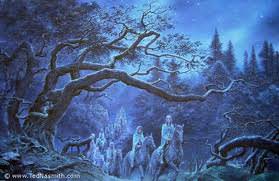
Running Widdershins Round Middle Earth: Why Teaching Tolkien Matters
Returning to Tolkien’s allegory, it is clear that he suggests that his fellow medievalists have taken a work of great imaginative and artistic power, and instead of using it to “see the sea”, they have mined it for words and phrases, and pulled it apart, looking for bits and pieces from other ancient works, and even reworked it after their own notions of how it “ought” to be built.

The Rare Oxford Machzor Vitry: A Rosh Hashana essay
The Machzor Vitry work is, as mentioned above, not just a prayer book but includes much more, including many laws and a commentary. It consists of three portions; the halakhic legal portion, the liturgical formulae, and commentaries to the prayers taken from the aggadah.
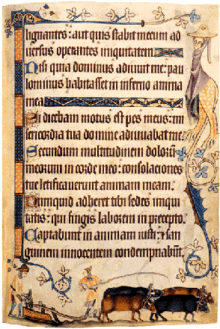
The Virtuous Pagan in Middle English Literature
From the first through the fourteenth centuries, a succession of solutions to the problem of these virtuous pagans evolved. For the Early Church, an attractive solution was that Christ descended into Hell to convert the souls he found there.
What Was Viking Poetry For?
The most characteristic kind of verse that has been preserved from the Viking Age is praise poetry — praise either of the living or of the recently dead…

The True Characters of Criseyde and of Diomede in Chaucer’s Troilus and Criseyde: A Restoration of the Reputations of Two Misunderstood Characters Unjustly Maligned in Literary Criticism
This is a defence of the characters of Criseyde and of Diomede based, inter alia, on a close textual analysis.

The Virtues of Balm in the Late Medieval Period
The nature of balsam and its qualities, especially the ability to act as an extraordinarily effective preservative, demands further inquiry. Is this Lydgate’s invention, or instead a reflection of late medieval ideas about a particular natural substance?

Re-forging the smith: an interdisciplinary study of smithing motifs in Völuspá and Völundarkviða
In this dissertation I examine key smithing motifs in the eddic poems Võluspá and Võlundarkviña in relation to the socio-cultural role of smithing techniques and sites in early medieval Scandinavia.

Triangles of the Sacred Sisterhood
In courtly works, the resolution is generally in favour of the status quo as a courtly adulterous affair rarely works out, while in the fabliau the marriage is generally left intact, although a deceitful wife may be given carte blanche to philander.

Hopkins and Early English Riddling: Solving The Windhover?
In this article I will demonstrate that The Windhover has strong formal similarities with early English riddling. This genre, which has very little in common with modern riddles, has a range of distinctive formal conventions which, I argue, are also present in The Windhover, including an “entitled solution,” “kennings” and the use of formulae.

Lewis Morris and the Mabinogion
Lewis Morris (1700/1-1765) was regarded as the foremost Welsh antiquary and authority on Welsh literature of his day. A founding member of the Honourable Society of Cymmrodorion in 1751his expertise on Welsh literature and history was solicited by Welsh poets and antiquaries alike.

Madness and Gender in Late-Medieval English Literature
Madness has been long misrepresented in medieval studies. Assertions that conceptions of mental illness were unknown to medieval people, or that all madmen were assumed to be possessed by the devil, were at one time common in accounts of medieval society.

“Be waar, Hoccleue, I rede thee”: Intertextual Subjectivity in Thomas Hoccleve’s Petitioning Poetry
The way these operate can be seen in the section of La Male Regle from which I excerpted my paper’s title. It comes about three-quarters of the way through the poem when the narrator relates a first-hand account of how he and his Privy-Seal Office colleagues handle a night of drinking.

ARABIC CONFLUENCE FROM CONSTANTINE TO HERACLIUS: The Preparation for a 7th Century Religio-Racial Explosion
This paper’s argument is purposeless without the reader knowing the seventh century events of the so-called explosion of Islam, and the interpretation of which I find so contentious. Thus a brief description of the episode is necessary.
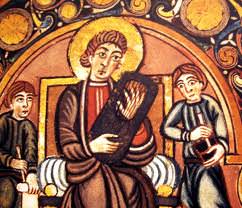
The Myth of the Anglo-Saxon Oral Poet
There are at least two reasons why the search for the Anglo-Saxon oral poet is worth reopening. To begin with, current thinking about oral poetry and poetics in the Anglo-Saxon period has been indelibly stamped by the classic Parry/Lord thesis, well known in its evolution from the 1950s to more recent years,

The Pseudo-Amphilochian Vita Basilii: An Apocryphal Life of Saint Basil the Great
There is yet another aspect of Basil’s greatness which is none of his making: of Basil it is possible to know more and to know it more surely, than it is of any other person, with the possible exception of Julian
the Apostate, who lived in the first millennium A.D. The physical relics may have disappeared, but the literary remains constitute a remarkable dossier of high historical value.

Transposition of Stanzas in Mediaeval Poetry, a Method of Analysis: Poems VII and X of Arnaut Daniel
A valid alternative is to attempt to understand the reason for the existence of the different versions and to use this knowledge in the choice of a version.

‘How Can His Word Be Trusted?’: Speaker and Authority in Old Norse Wisdom Poetry
This dissertation concerns the presentation of compilations of wisdom in Old Norse eddic poetry: how it was that the dozen poems one might classify, however tentatively, as wisdom poetry legitimized and put across their content.
The negotiation of gender and power in medieval German writings
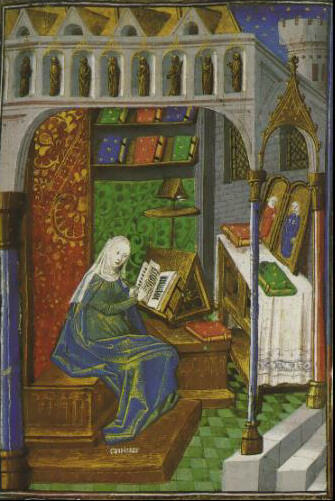
The Christian religion plays a most important role in the internalization and re-enforcement of patriarchy in the Western world. As will be seen later in this thesis, the relationship between a patriarchal God and his “children” is reflected in the relationship between the male head of the family and his wife, children and servants.
The Prince and the Poet
In this essay, I will discuss the historical importance of panegyric poetry as a performative act, representing a component of a lord’s self-perception. I will limit myself, for the sake of time and for the sake of presenting a clear picture, to the poetry of the age of the Gogynfeirdd or not-so-early poets (about 1100 to 1282), representing the strongest tradition of patronage of poetry and a period of increased Welsh political independence.
Imagining Samarkand: Fruitful Themes in 13th-16th Century Literature on a Silk Road City
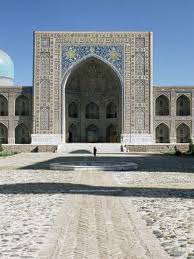
… Samarkand was seen as the last great urban Islamic stop.4 Perhaps because of this, the period between the Arab invasion of Samarkand and the Mongol invasion in 1220 fomented many of the mythologies about the city which will feature prominently in this paper.

Queer Pedagogy (A Roundtable)
A roundtable discussion on teaching Queer Theory with Susannah Mary Chewning (Union County College) Lisa Weston (California State University–Fresno); and Michelle M. Sauer, (University of North Dakota)
Constructions of Gender in Medieval Welsh Literature
The discussion of gender in medieval literary criticism is generally considered
to be a relatively new field, having achieved real momentum only in the latter half of the twentieth century. However, since it was the early fifteenth century when Christine de Pisan wrote a response to Jean de Meun’s Romance of the Rose, it cannot really be imagined that the medieval audience was too primitive to be fully aware of the subtext inside their stories.

Love, Mercy, and Courtly Discourse: Marguerite de Navarre Reads Alain Chartier
Love, Mercy, and Courtly Discourse: Marguerite de Navarre Reads Alain Chartier Frelick, Nancy (University of British Columbia) Mythes à la cour, mythes pour la four (2010).…