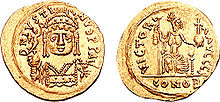
Western Turks and Byzantine gold coins found in China
In general, before the 1980’s, most scholars treated these finds as evidences for the frequent connection between Byzantine and China, which could be further associated with the seven-times visits of Fulin (Rum) emissaries recorded in Tang literature. However, after the 1980’s, more and more researchers tended to take these gold coins as a result of prosperous international trade along silk road.

Did medieval sailors reach Australia?
Archaeologists hope to unravel the mystery of how coins dating back to the 10th century were found off the shores of Australia.
How the Medieval World Adapted to Rise of Islam
Historian from the University of Cincinnati examines how border areas and frontiers of the past adapted to major political, cultural and social shifts, specifically in terms of the rise of Islam in Asia and the Middle East.
European Written Sources on the Counterfeiting of Coins in the Middle Ages
Counterfeiting of coins is mentioned in a multitude of medieval written sources, manuscripts and books, starting with the Laws of the Visigoths in the mid 7th century, through the Visitation of the Chapter of Esztergom in 1397, to the Inferno, first part of Dante Alighieri’s most important work, the Divina Comedia.
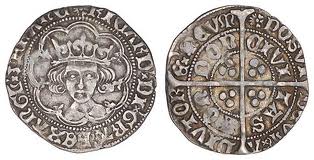
The Proportions of the denominations in English mint outputs, 1351-1485
This article will combine the evidence of mint indentures, pyx trials, numbers of dies and hoards in an investigation of the problem of the proportions from 1351 to the end of the reign of Richard III in 1485.
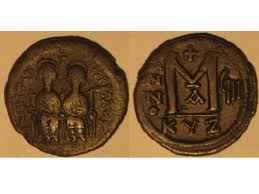
The Empress in Late Antiquity and the Roman Origins of the Imperial Feminine
This thesis seeks to explore the construction and conceptualization of the Byzantine imperial feminine, up until the sixth century AD.
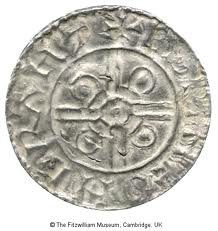
THE MINT OF AYLESBURY
As these numbers suggest, Aylesbury seems to have made a comparatively minor contribution to the Late Saxon coinage pool. Basing his calculations on a total of some 44,350 English coins, Petersson estimated that, in each issue for which its coins were known, Aylesbury was responsible for only 0.1% or 0.2% of the recorded coins of the issue…

The coinage of Aethelred I (865-71)
The coinage of England in the third quarter of the ninth century was extensive. Dominated by the Lunettes type struck by a number of authorities (Kings of Wessex, Burgred of Mercia and Archbishop Ceolnoth of Canterbury) it presents a daunting quantity of material. However, the authors believe that focusing on the coinage of iEthelred I and Archbishop Ceolnoth provides the opportunity to concentrate on a key five to six year period in the devel- opment of the Anglo-Saxon coinage and specifically of the Lunettes type.
Anglo-Saxon law and numismatics: A reassessment in the light of Patrick Wormald’s the Making of English Law
In this article, I wish to return to the references to coinage in the Anglo-Saxon laws in the light of Patrick Wormald’s important research on the laws, especially his The Making of English Law: King Alfred to the Twelfth Century, which has made this difficult evidence much more penetrable to the non-specialist.

The Stamford and Peterborough mints
The Stamford mint has received considerable attention from several numismatists and historians, some of whom, including the Rev. Rogers Ruding, Francis Peck, the Stamford annalist, and Samuel Sharp, a Northamptonshire numismatist and antiquary, located the mint at Stamford Baron, Northamptonshire.

A Model of the monetary system of Medieval Europe
In this paper we build a model of a commodity money system with a limited number of types of coins and show how the choices of coin type influences economic welfare through the distribution of wealth and output.
‘Imaginary’ or ‘Real’ Moneys of Account in Medieval Europe? An Econometric Analysis of the Basle Pound, 1365–1429
‘Imaginary’ or ‘Real’ Moneys of Account in Medieval Europe? An Econometric Analysis of the Basle Pound, 1365–1429 By Ernst Juerg Weber Explorations in…
Cache of Crusader gold coins discovered in Israel
Archaeologists working in the ruins of the Crusader town of Arsuf have uncovered a cache of more than 100 gold coins, worth more than $100 000.
Money and Power in the Viking Kingdom of York, c.895 – 954
The aim of this thesis is to use numismatic evidence to help understand the political aims and achievements of the Viking kings of York, c.895-954.
Marco Polo really did go to China, new study finds
A thorough new study of Chinese sources by University of Tübingen Sinologist Hans Ulrich Vogel dispels claims that Venice’s most famous traveler never truly went as far as China.
Byzantine Coins from the 6th and the 7th Century Found in Poland and their East Central European Context
In principle, the location of coins from the 6th and the 7th century in Poland corresponds to geographic distribution of the oldest finds related with the Slavs; the coins were found in South-Eastern Poland.
Great Sites: Hamwic
Helena Hamerow on excavations at Southampton, which reshaped our views of the origins of English towns and of long-distance trade in the 8th/9th centuries.
The Normans: Three Centuries of Achievement, AD 911-1204
The Normans (Northmen) were Scandinavians who, after decades of foreign campaigns in France and the British Isles, settled in 911 with their leader, Rollo, in north-west France.
The Social Stratigraphy of Coin and Credit in Late Medieval England
The money that the medieval English made conducted matters of state into the heart of society. The concerted quality of value – the fact that creating a currency connected public authority with every individual holding it – made that unavoidable.

The Weight Standard of the English Coinage 1158-1279
In 1279 ‘The Form of the New Money’ (Forma nove monete) and the indenture of William de Turnmire both described the weight standards of Edward I’s new coinage. 243 pennies were to be struck from a tower pound of silver (5,400 troy grains) and the new round farthing was to be made in slightly debased silver at a heavier standard.

Relations between the Late Roman World and Barbarian Europe in the Light of Coin Finds
And so, during a period of well developed exchange between the Roman Empire and the Barbaricum, coinciding with the Golden Age and the House of Antonine, Roman coins started to flow more intensively in the reign of the last two Antonine emperors.
Viking Hoard discovered in England
Now known as the Silverdale Viking Hoard, the collection cotnains a total of 201 silver objects and a well preserved lead container. Of particular interest is the fact that the hoard contains a previously unrecorded coin type, probably carrying the name of an otherwise unknown Viking ruler in northern England.
