
The Image of the City in Peace and War in a Burgundian manuscript of Jean Froissart’s Chronicles
The present essay, which complements a study scheduled for publication in 2000 in a volume arising from a colloquium on the theme Regions and Landscapes held in July 1997 at the International Medieval Congress, Leeds, attempts to build on this work.

Edward III and the Hundred Years War
The period historians call the Hundred Years War, stretching from 1337-1453, brought about a number of changes to England and France.

The Uses Made of History by the Kings of Medieval England
The kings of medieval England, besides using history for the entertainment of themselves and their courts, turned it to practical purposes. They plundered history-books for precedents and other evidences to justify their claims and acts. They also recognised its value as propaganda, to bolster up their positions at home and strengthen their hands abroad.

Great Medieval Fiction 2013!
For those of you who enjoy some fantasy or a historical novel – this list is for you!
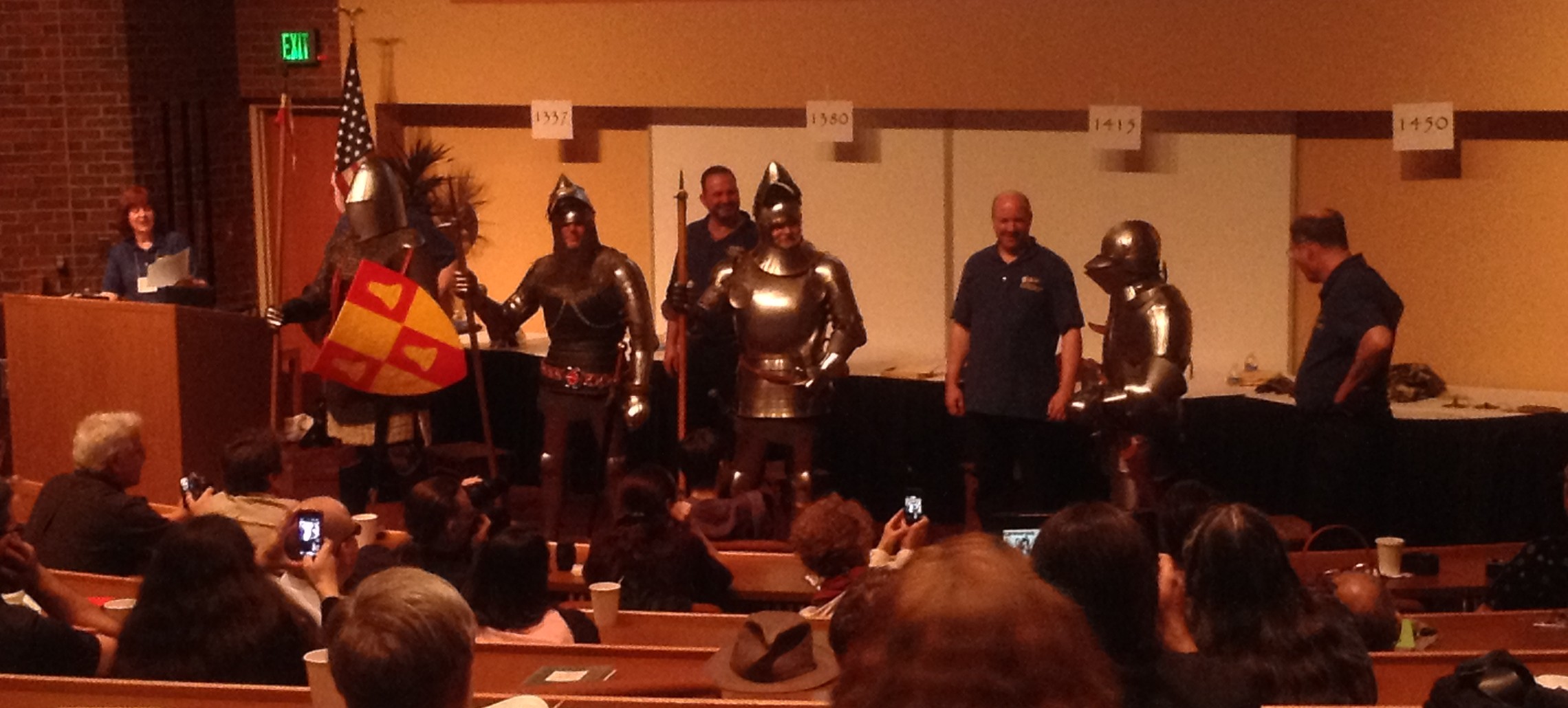
How Shall a Man Be Armed? Evolution of Armor during the Hundred Years War
Special presentation at the 2013 International Congress on Medieval Studies

The Battle of Agincourt: An Alternative Location?
A recent archaeological survey on the Agincourt battlefield has, however, failed to find positive artefactual evidence of the conflict on the officially designated battlefield site.
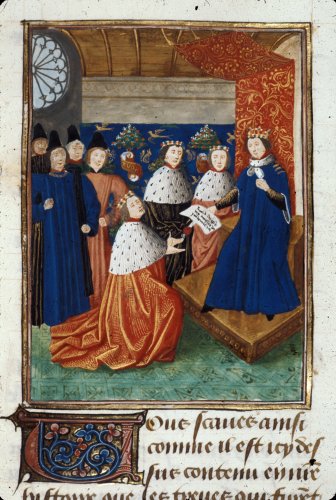
English Royal Minorities and the Hundred Years War
It has become commonplace in modern textbooks to base any brief account of the Hundred Years War on the contention that the chief cause was the dynastic dispute over the French throne between Edward III and Philip of Valois.
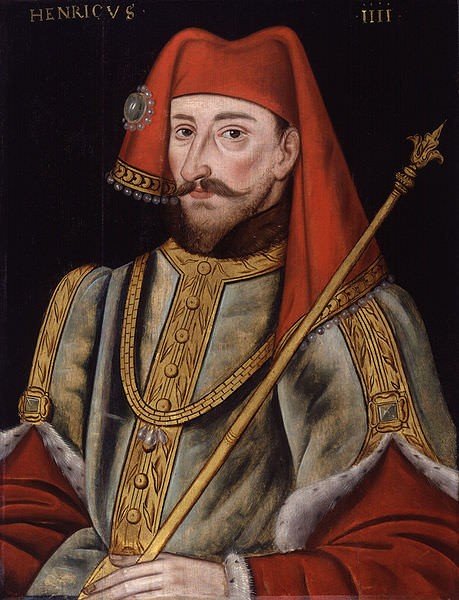
‘Kings were not wont to render account’ Henry IV and the Authority of the King
Henry travelled extensively, became famed throughout Christendom as a champion jouster, crusaded in Eastern Europe, and looked after his father’s holdings whilst John of Gaunt campaigned in Spain.3 It is impossible not to note that Henry Bolingbroke’s popularity continued to increase while Richard II’s declined.
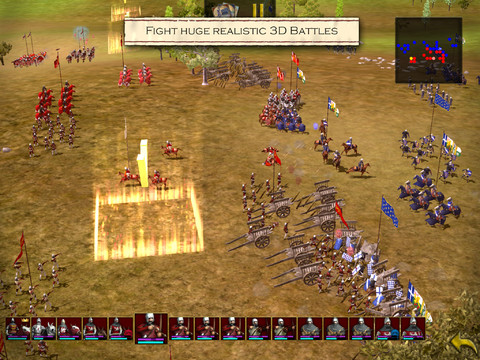
Great Battles Medieval released on iPad
If you are looking to re-fight the Hundred Years War on your iPad, the game Great Battles Medieval might be for you!
The Hundred Years War as a Siege War
Kelly DeVries aims to correct some misperceptions about the Hundred Years War, and argues that war between England and France, fought from 1337 to 1453, was mostly a war of sieges.

The Hundred Years Wars: Not One but Many
In fact, the Hundred Years War was not fought only during the period 1337-1453, the most commonly given dates, nor was it fought only by England and France.
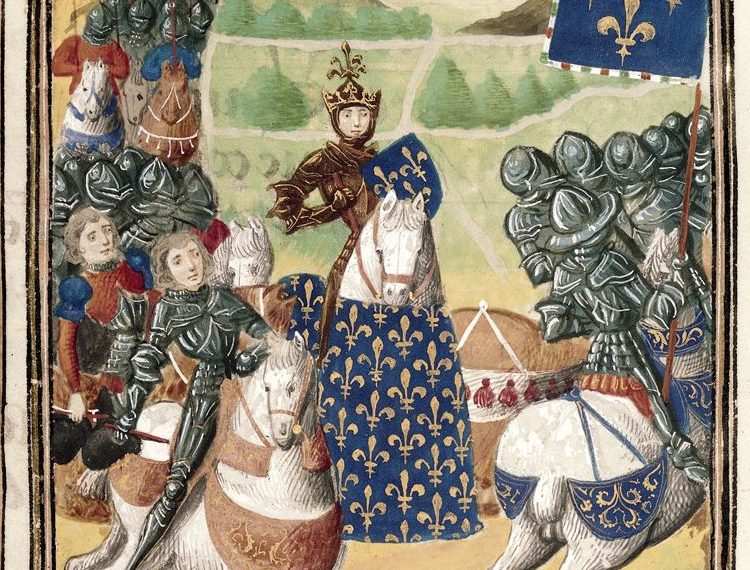
Interpreting Warfare and Knighthood in Late Medieval France: Writers and Their Sources in the Reign of King Charles VI (1380-1422)
Romances provided the basis of a particular kind of view of knighthood and warfare that was very influential on other literature concerning knights and warfare, as much as it was on real life practices and attitudes.

The Mind’s Eye: Reconstructing the Historian’s Semantic Matrix Through Henry Knighton’s Account of the Peasants’ Revolt, 1381
The Mind’s Eye: Reconstructing the Historian’s Semantic Matrix Through Henry Knighton’s Account of the Peasants’ Revolt, 1381 Sarah Marilyn Steeves Keeshan Master of Arts,…

Sir John Fortescue and the French Polemical Treatises of the Hundred Years War
Inevitably Fortescue had to adopt new arguments for the defence of Henry VI. To this end he asserted that the Lancastrians now had a just title through divine and ecclesiastical approbation, popular consent and prescription, but the core of his case was a direct response to the Yorkist claim that they had a superior hereditary title to the throne.
Ransoming prisoners of war became widespread in the Hundred Years War, new book finds
‘There is widespread evidence to suggest that during the 15th century the practice of ransom is increasingly extended to commoners, not just kings or chivalrous knights.’
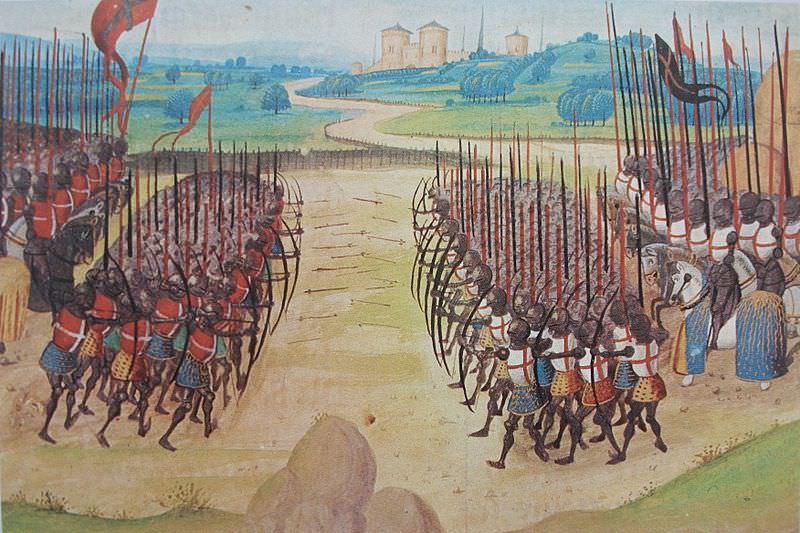
The English Soldier in the Campaign of Agincourt
The field between the English and French was open, devoid of hedges, thickets, valleys, ravines, or other obstacles, and had been chosen by the French themselves. For our purpose the country was like a table; rarely is a battlefield so simple and easy to describe.
The Scottish wars of Edward III, 1327-1338
This thesis deals with the events of the Anglo-Scottish wars of the 1330s and the English military machine that allowed Edward III to win numerous successes against the Scots yet was unable to secure a permanent conquest of any portion of Scotland save Berwick-upon Tweed.
The Half-Hanged Man
I’ve wanted to write a novel set during the latter half of the 14th century for a long time. Even by medieval standards, this was a brutal and bloody era, with much of Europe plunged into dynastic wars.
Mathematical modelling of a mediaeval battle: the Battle of Agincourt, 1415
The present study aims at using a modern continuum theory that includes contact between individuals, to model the mediaeval Battle of Agincourt in 1415
Hugh Kennedy of Ardstinchar: Joan of Arc’s Scottish Captain
Priest, soldier, pillager, diplomat, counsellor to kings, Archdeacon of St Andrews… and mentioned in the birth of Scottish golf. You couldn’t make this man up.
A Reevaluation of the Impact of the Hundred Years War On The Rural Economy and Society of England
This paper seeks to examine both the positive and negative impacts of the Hundred Years War on the rural society and economy of England and to demonstrate that the overall impact of the war was not as negative as the majority of historians have previously maintained.
“The King’s Library: Construction, Representation and Reception of the Ideal Kingship in the Late French Middle Ages”
This paper on Charles V of France and his contribution to education was given on October 5th, 2012 as part of a workshop between Freiburg and the University of Toronto.

The King’s Mercy. An Attribute of Later Medieval English Monarchy
Modern assumptions about medieval justice still tend to see this process of amelioration as merely occasional and exceptional: mercy needed to be applied only where special circumstances made it inappropriate to apply the full rigours of the law. This, however, is seriously to misunderstand both the purpose and the pervasiveness of mercy in the operation of medieval justice.
Comparisons and Contrasts: The Struggles and Reactions of Selected English Ports Between 1338 and 1360
Warships landed in the harbor on a quiet Sunday morning in 1338 while most of the townspeople were attending mass. The sailors they carried proceeded to pillage and loot the town completely, killing many of the townspeople and raping the women and girls.
