For over a thousand years, Constantinople stood among the medieval world’s richest and most sophisticated cities. As the capital of the Byzantine Empire, it was more than a political centre: it was a living city shaped by imperial ceremony and Christian devotion, by merchants and craftsmen, and by the everyday routines that kept a vast urban population fed, housed, and working. To understand Constantinople’s greatness, you also have to look at the ordinary experiences of its residents—the practical rhythms and pressures of life inside the empire’s most important metropolis.
The Urban Landscape and Neighbourhood Life
Restored section of the Theodosian Walls at the Selymbria Gate. Photo by Bigdaddy1204 / Wikicommons / Flickr
The layout of Constantinople significantly influenced the daily lives of its inhabitants. The city was fortified by massive walls, while wide avenues like the Mese linked important forums, churches, and marketplaces. Neighbourhoods formed around local parish churches, serving not only as places of worship but also as vibrant social hubs. Residents had a strong sense of identity tied to their local quarters, and everyday interactions—such as borrowing tools, exchanging local news, or resolving disputes—often unfolded in these communal spaces.
Housing conditions varied greatly among the residents. Wealthy families occupied spacious multi-storey townhouses that featured courtyards and running water, while poorer individuals were crammed into wooden buildings that were highly susceptible to fires. Despite these social disparities, most people shared the same streets, fountains, and markets, resulting in a remarkable level of social interaction and proximity among them.
Food, Markets, and Survival
Topographical map of Constantinople during the Byzantine period.- map by Cplakidas / Wikimedia Commons
Feeding the bustling population of Constantinople—often exceeding half a million—was a continuous challenge. The state took an active role in ensuring the city’s food supply, particularly through the import of grain from Egypt and later from the Black Sea region. Bread served as the fundamental staple, and bakeries were closely monitored to avoid shortages and prevent unrest.
The markets boasted a diverse array of goods: fresh fish from the Bosporus, vegetables from nearby gardens, and fine olive oil and wine sourced from various parts of the empire, along with luxury spices brought in from far-off lands. Street vendors offered hot meals, making it common for people of all classes to dine outside their homes. Seasonal changes influenced diets, and fasting periods set by the Church significantly affected what residents ate and when.
Work and Social Roles
Map of Constantinople from 1422 – British Library Arundel MS 93.art.7, f.155r
Most residents of Constantinople worked long hours. Artisans were organized into guilds, crafting textiles, metalwork, leather goods, and luxury items for both local consumption and export. Merchants either ran shops or engaged in large-scale trade, while dockworkers, porters, and sailors were busy along the Golden Horn.
Women often took care of household tasks such as spinning, weaving, and food preparation, but many also ran shops, worked as midwives, or managed family businesses, particularly during times of widowhood. Enslaved individuals were a common presence in many homes, completing domestic tasks. In contrast to later plantation systems, slavery in Byzantium was more urban and integrated into daily life.
Religion in Everyday Experience
Hagia Sophia and other landmarks in a map of Constantinople by Cristoforo Buondelmonti in Liber insularum Archipelagi, dated to 1485-90 – Wikimedia Commons
Religion was woven into the fabric of daily life. Church bells marked the passing of time, while religious festivals filled the calendar with vibrant processions, feasts, and public ceremonies. Churches buzzed with activity; they were lively, crowded places where the community gathered. People prayed for health, safety, and success, routinely lighting candles or kissing icons as expressions of their faith.
Icons weren’t just found in churches; they adorned homes, workshops, and city gates alike. Saints were believed to actively watch over neighborhoods, and discussions of miracles held as much weight as conversations about politics. In the Byzantine worldview, the sacred and the everyday were intricately intertwined, reflecting the deep influence of faith in all aspects of life.
Entertainment and Public Life
Ruins of the Hippodrome, from an engraving by Onofrio Panvinio in his work De Ludis Circensibus (Venice, 1600.)
Entertainment offered a much-needed escape from the struggles of urban life. Among the most popular events were the chariot races held at the Hippodrome, which attracted massive crowds spanning all social classes. Supporters of the racing teams—the Blues and the Greens—developed strong social identities that occasionally led to violence, most notably during the infamous Nika Riot of 532.
Storytelling, music, taverns, and public baths also played vital roles in social interactions. The baths served not only as places for cleanliness but also as hubs for conversation and relaxation, continuing a tradition that originated from Roman urban culture.
Health, Danger, and Uncertainty
Life in Constantinople was lively yet fraught with danger. The constant threats of fires, plagues, and food shortages loomed large. Medical knowledge blended classical texts with traditional folk remedies, while hospitals—often linked to monasteries—cared for the sick and the impoverished. These healthcare institutions were among the most advanced in the medieval world.
Despite the difficulties, the city was a place of opportunity. Its bustling markets, courts, and imperial bureaucracy provided avenues for social mobility, particularly for those who had education or influential connections.
Daily life in Constantinople was marked by striking contrasts: wealth and poverty, faith and fear, order and chaos. Ordinary citizens navigated their lives beneath the imposing presence of magnificent churches and palaces, yet their daily worries—food, work, family, and safety—were deeply human and relatable. Through their routines and unwavering resilience, the people of Constantinople upheld one of history’s greatest cities, keeping the Byzantine world vibrant for centuries.
Zoe Tsiami is a PhD(c) in Byzantine History at University of Thessaly. Her research interests include baptism, catechism and naming practices in the Early Byzantine period. She has published papers and taught at workshops relevant to Early Byzantine/Christian history.

By Zoe Tsiami
For over a thousand years, Constantinople stood among the medieval world’s richest and most sophisticated cities. As the capital of the Byzantine Empire, it was more than a political centre: it was a living city shaped by imperial ceremony and Christian devotion, by merchants and craftsmen, and by the everyday routines that kept a vast urban population fed, housed, and working. To understand Constantinople’s greatness, you also have to look at the ordinary experiences of its residents—the practical rhythms and pressures of life inside the empire’s most important metropolis.
The Urban Landscape and Neighbourhood Life
The layout of Constantinople significantly influenced the daily lives of its inhabitants. The city was fortified by massive walls, while wide avenues like the Mese linked important forums, churches, and marketplaces. Neighbourhoods formed around local parish churches, serving not only as places of worship but also as vibrant social hubs. Residents had a strong sense of identity tied to their local quarters, and everyday interactions—such as borrowing tools, exchanging local news, or resolving disputes—often unfolded in these communal spaces.
Housing conditions varied greatly among the residents. Wealthy families occupied spacious multi-storey townhouses that featured courtyards and running water, while poorer individuals were crammed into wooden buildings that were highly susceptible to fires. Despite these social disparities, most people shared the same streets, fountains, and markets, resulting in a remarkable level of social interaction and proximity among them.
Food, Markets, and Survival
Feeding the bustling population of Constantinople—often exceeding half a million—was a continuous challenge. The state took an active role in ensuring the city’s food supply, particularly through the import of grain from Egypt and later from the Black Sea region. Bread served as the fundamental staple, and bakeries were closely monitored to avoid shortages and prevent unrest.
The markets boasted a diverse array of goods: fresh fish from the Bosporus, vegetables from nearby gardens, and fine olive oil and wine sourced from various parts of the empire, along with luxury spices brought in from far-off lands. Street vendors offered hot meals, making it common for people of all classes to dine outside their homes. Seasonal changes influenced diets, and fasting periods set by the Church significantly affected what residents ate and when.
Work and Social Roles
Most residents of Constantinople worked long hours. Artisans were organized into guilds, crafting textiles, metalwork, leather goods, and luxury items for both local consumption and export. Merchants either ran shops or engaged in large-scale trade, while dockworkers, porters, and sailors were busy along the Golden Horn.
Women often took care of household tasks such as spinning, weaving, and food preparation, but many also ran shops, worked as midwives, or managed family businesses, particularly during times of widowhood. Enslaved individuals were a common presence in many homes, completing domestic tasks. In contrast to later plantation systems, slavery in Byzantium was more urban and integrated into daily life.
Religion in Everyday Experience
Religion was woven into the fabric of daily life. Church bells marked the passing of time, while religious festivals filled the calendar with vibrant processions, feasts, and public ceremonies. Churches buzzed with activity; they were lively, crowded places where the community gathered. People prayed for health, safety, and success, routinely lighting candles or kissing icons as expressions of their faith.
Icons weren’t just found in churches; they adorned homes, workshops, and city gates alike. Saints were believed to actively watch over neighborhoods, and discussions of miracles held as much weight as conversations about politics. In the Byzantine worldview, the sacred and the everyday were intricately intertwined, reflecting the deep influence of faith in all aspects of life.
Entertainment and Public Life
Entertainment offered a much-needed escape from the struggles of urban life. Among the most popular events were the chariot races held at the Hippodrome, which attracted massive crowds spanning all social classes. Supporters of the racing teams—the Blues and the Greens—developed strong social identities that occasionally led to violence, most notably during the infamous Nika Riot of 532.
Storytelling, music, taverns, and public baths also played vital roles in social interactions. The baths served not only as places for cleanliness but also as hubs for conversation and relaxation, continuing a tradition that originated from Roman urban culture.
Health, Danger, and Uncertainty
Life in Constantinople was lively yet fraught with danger. The constant threats of fires, plagues, and food shortages loomed large. Medical knowledge blended classical texts with traditional folk remedies, while hospitals—often linked to monasteries—cared for the sick and the impoverished. These healthcare institutions were among the most advanced in the medieval world.
Despite the difficulties, the city was a place of opportunity. Its bustling markets, courts, and imperial bureaucracy provided avenues for social mobility, particularly for those who had education or influential connections.
Daily life in Constantinople was marked by striking contrasts: wealth and poverty, faith and fear, order and chaos. Ordinary citizens navigated their lives beneath the imposing presence of magnificent churches and palaces, yet their daily worries—food, work, family, and safety—were deeply human and relatable. Through their routines and unwavering resilience, the people of Constantinople upheld one of history’s greatest cities, keeping the Byzantine world vibrant for centuries.
Zoe Tsiami is a PhD(c) in Byzantine History at University of Thessaly. Her research interests include baptism, catechism and naming practices in the Early Byzantine period. She has published papers and taught at workshops relevant to Early Byzantine/Christian history.
Click here to read more from Zoe Tsiami
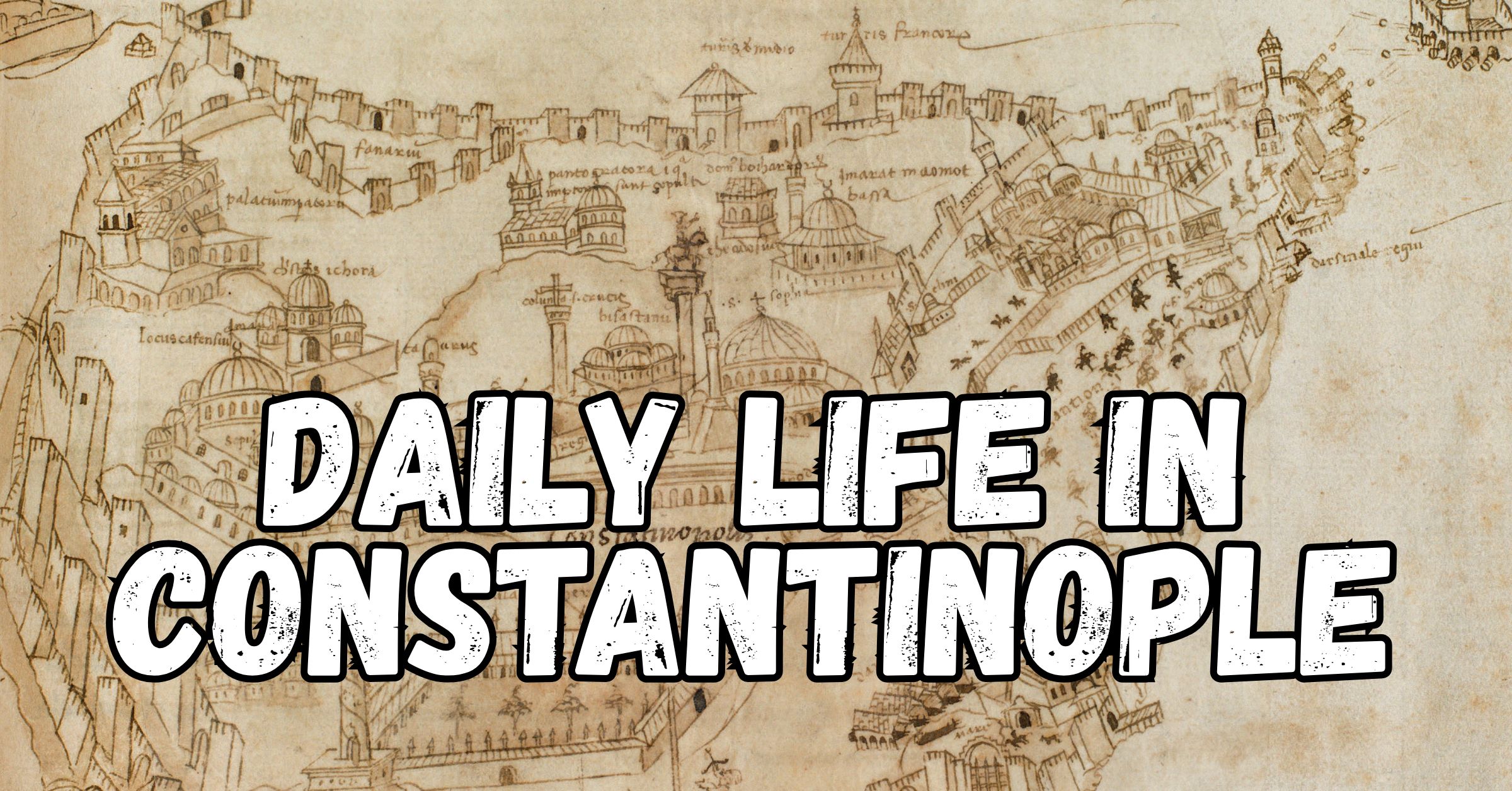
Top Image: A map of Constantinople by Cristoforo Buondelmonti in Liber insularum Archipelagi
Subscribe to Medievalverse
Related Posts