Italy is marking the 800th anniversary of the death of Saint Francis of Assisi with a major spring exhibition that sets the saint’s legacy alongside one of the biggest turning points in medieval art. Giotto and Saint Francis. A Revolution in Fourteenth-Century Umbria will run at the Galleria Nazionale dell’Umbria in Perugia from 14 March to 14 June 2026, bringing together more than 60 works connected to the artistic “workshop” that grew around the Basilica of San Francesco in Assisi.
At the centre of the show is a familiar medieval pairing: Francis, whose life and cult reshaped devotion and pilgrimage, and Giotto, whose painting helped reshape how sacred figures could look and feel on a wall or panel. Italy’s Minister of Culture, Alessandro Giuli, argues that “placing the figure of Francis alongside that of Giotto makes vivid, visible, almost tactile the meaning of the cultural revolution that took shape in the heart of Umbria in the fourteenth century and spread throughout Europe.”
The exhibition is curated by Veruska Picchiarelli and Emanuele Zappasodi and is organised by the National Museums of Perugia, in collaboration with a long list of church and civic partners connected to Assisi, Perugia, and the wider region.
Its story begins with the late 1200s, when the Basilica of San Francesco became one of the most important artistic building sites in Italy. The exhibition frames this as a moment when the older, stylised tradition often labelled the “Greek manner” (rooted in Byzantine visual language) gave way to a new approach that aimed for weight, space, emotion, and physical presence—an approach closely associated with Giotto.
The show is divided into eight sections, moving from Giotto’s earliest Assisi context through the artists and local followers who helped carry those innovations across Umbrian towns and churches.
Major loans: Giotto, Simone Martini, Pietro Lorenzetti
For medieval art lovers, the headline news is the concentration of works tied to the same decades when painters were active in and around Assisi.
Among the Giotto loans singled out by organisers are two panel paintings presented as key markers of his early phase: the Madonna of San Giorgio alla Costa (on loan from the Diocese of Florence) and the Badia Polyptych (from the Uffizi). Both are described as pivotal for understanding how Giotto’s style was taking shape in the years when he was working at the Franciscan basilica.
But Giotto is not the only star. The exhibition also highlights two other painters whose work in Assisi helped define early fourteenth-century Umbrian visual culture:
Simone Martini, represented with works connected to the years around his celebrated cycle in the Chapel of San Martino in the lower basilica.
Pietro Lorenzetti, whose Assisi projects (including frescoes in the transept and chapels) are treated as part of the same artistic ecosystem.
The exhibition does not focus only on figures such as Giotto, Simone Martini, and Pietro Lorenzetti. It also highlights the many Umbrian painters who worked in their shadow and responded to their innovations.

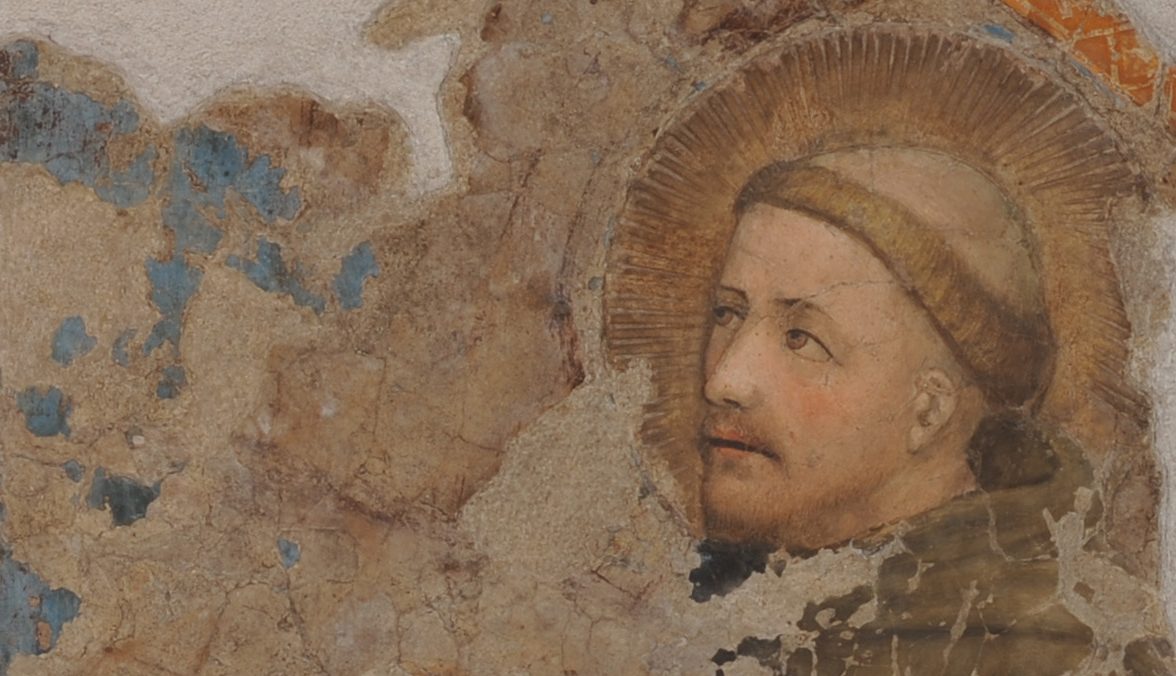
Italy is marking the 800th anniversary of the death of Saint Francis of Assisi with a major spring exhibition that sets the saint’s legacy alongside one of the biggest turning points in medieval art. Giotto and Saint Francis. A Revolution in Fourteenth-Century Umbria will run at the Galleria Nazionale dell’Umbria in Perugia from 14 March to 14 June 2026, bringing together more than 60 works connected to the artistic “workshop” that grew around the Basilica of San Francesco in Assisi.
At the centre of the show is a familiar medieval pairing: Francis, whose life and cult reshaped devotion and pilgrimage, and Giotto, whose painting helped reshape how sacred figures could look and feel on a wall or panel. Italy’s Minister of Culture, Alessandro Giuli, argues that “placing the figure of Francis alongside that of Giotto makes vivid, visible, almost tactile the meaning of the cultural revolution that took shape in the heart of Umbria in the fourteenth century and spread throughout Europe.”
A show built around the Assisi “factory”
The exhibition is curated by Veruska Picchiarelli and Emanuele Zappasodi and is organised by the National Museums of Perugia, in collaboration with a long list of church and civic partners connected to Assisi, Perugia, and the wider region.
Its story begins with the late 1200s, when the Basilica of San Francesco became one of the most important artistic building sites in Italy. The exhibition frames this as a moment when the older, stylised tradition often labelled the “Greek manner” (rooted in Byzantine visual language) gave way to a new approach that aimed for weight, space, emotion, and physical presence—an approach closely associated with Giotto.
The show is divided into eight sections, moving from Giotto’s earliest Assisi context through the artists and local followers who helped carry those innovations across Umbrian towns and churches.
Major loans: Giotto, Simone Martini, Pietro Lorenzetti
For medieval art lovers, the headline news is the concentration of works tied to the same decades when painters were active in and around Assisi.
Among the Giotto loans singled out by organisers are two panel paintings presented as key markers of his early phase: the Madonna of San Giorgio alla Costa (on loan from the Diocese of Florence) and the Badia Polyptych (from the Uffizi). Both are described as pivotal for understanding how Giotto’s style was taking shape in the years when he was working at the Franciscan basilica.
But Giotto is not the only star. The exhibition also highlights two other painters whose work in Assisi helped define early fourteenth-century Umbrian visual culture:
The exhibition does not focus only on figures such as Giotto, Simone Martini, and Pietro Lorenzetti. It also highlights the many Umbrian painters who worked in their shadow and responded to their innovations.
Click here to learn more about Giotto and Saint Francis. A Revolution in Fourteenth-Century Umbria
Subscribe to Medievalverse
Related Posts