Medieval medical writers didn’t shy away from sexual topics—they offered practical advice, foods to try, and prescriptions meant to boost desire and potency. In one of the Middle Ages’ most widely used medical textbooks, the physician Ahmed Ibn al-Jazzar lays out why men might struggle with sexual performance and what could be done about it, from everyday ingredients like chickpeas and turnips to carefully measured electuaries and beverages.
Ahmed Ibn al-Jazzar (898–980) was a Tunisian physician who became successful enough to leave behind an estate of 24,000 gold dinars and a book collection weighing 1,125 kilograms. Born into a family of doctors, he established his own practice and wrote widely on medicine, especially in Provisions for the Traveller and Nourishment for the Sedentary – a title that is slightly misleading, as it offers an in-depth guide to health from head to toe. The book concentrates on ailments and treatments, and by the twelfth century it had been translated into Greek, Latin, and Hebrew and was widely used in Europe for the rest of the Middle Ages.
Among the topics covered by al-Jazzar were sexual diseases and their cures. He quickly gets into covering men’s sexual problems, and following the medical theory of his time believed that the wrong balance of humours in a body could make men impotent or flaccid.
According to al-Jazzar, having a proper balance in the testicles was the key factor in male sexual health:
The power of sexual intercourse will only be at its best, when the temperament of the testicles is warm and moist, in a balanced measure of close to a balance, for warmth increases lust, while moisture increases sperm. If, however, the temperament of the testicles is changed very much, the power for sexual intercourse will not be proper and balanced.
Foods for Strength and Sperm
Al-Jazzar’s first line of advice is practical and food-based. He recommends everyday ingredients meant to support sperm production and sexual vigour—chickpeas and turnips among them. Beans, he adds, could also help, but he warns that they work best when paired with strengthening spices such as long pepper and ginger.
A “Wonderful Remedy”: The Electuary
British Library MS Sloane 56 fol. 30
If diet alone did not make a man virile, al-Jazzar offers more elaborate prescriptions. One of the most striking is a carefully measured electuary—packed with aromatics and spices—intended to “stimulate the lust for coitus” and to act quickly:
There is also a prescription for an electuary which I have composed, which stimulates the lust for coitus and is good for cold of kidneys, internal flatulence, and cold of the buttocks; I have tested it, approved of it and found it to be quickly effective – success is granted by God: Take ginger, galingiae, secacul, Chinese cinnamon, long pepper and linseed, of each ten mithqals; sweetmeat and peeled sweet almonds, of each twenty dirhams; seed of rocket, seed of carrot, seed of lucerne, bishop’s weed and anise, of each four mithqals; cardamom, saffron, clove, pyrethrum, pepper, nutmeg, mace, of each two mithqals. Pulverise, strain and knead these ingredients with skimmed honey and store them in a vessel which is smooth on the inside. Take in the morning and evening, each time the amount of one hazelnut, for it is a wonderful remedy which is quickly effective.
Simpler Methods
Not every remedy is so complex. Al-Jazzar also lists smaller interventions—some dietary, some involving particular ingredients and how they are used:
Another ingredient which strengthens potency is cow’s milk, and its by-products. Or take half a dirham of clove, pound it and drink it with fresh milk, or the wood of galingale and keep this in the mouth, for it produces a strong erection.
A Potency Drink
Al-Jazzar even includes a longer “beverage” recipe that he says has multiple benefits beyond sex—useful for several organs, for “cold” ailments, and for heating the body. He describes the process at length with 19 ingredients that include water-mint, pennyroyal, saffron, ginger and raisins, then finishes with instructions for how to take it, along with an optional addition meant to make it even stronger:
Take a dose of one ounce dissolved in hot water, for it is an exquisite drink. If one adds to it one ratl of the extract of carrot when cooking it, it strengthens one’s potency even more.
Desire, Mood, and Behaviour
After the ingredients and prescriptions, al-Jazzar ends with something that sounds surprisingly familiar: the idea that arousal and satisfaction are not only physical, but also shaped by affection and behaviour. Here are some of the things he suggests you do:
These include affectionate words, showing passion, kissing the cheeks, fondling with the hand, licking with the tongue, joy over the sight of the beloved, expressing one’s devotion to the beloved and refraining from dwelling on grievances against her.
The rest of this section details other sexual problems and diseases for men and women, and their treatments, including gonorrhea, nocturnal emissions, menstruation issues, and dealing with pregnancy and childbirth. Many of the treatments he wrote about could regularly be found in medical textbooks for the next several hundred years.
You can read a full edition and translation of this section in Ibn Al-Jazzar on Sexual Diseases and Their Treatment, by Gerrit Bos (Kegan Paul International, 1997). This book is open-access – click here to read and download it from Taylor & Francis.

Medieval medical writers didn’t shy away from sexual topics—they offered practical advice, foods to try, and prescriptions meant to boost desire and potency. In one of the Middle Ages’ most widely used medical textbooks, the physician Ahmed Ibn al-Jazzar lays out why men might struggle with sexual performance and what could be done about it, from everyday ingredients like chickpeas and turnips to carefully measured electuaries and beverages.
Ahmed Ibn al-Jazzar (898–980) was a Tunisian physician who became successful enough to leave behind an estate of 24,000 gold dinars and a book collection weighing 1,125 kilograms. Born into a family of doctors, he established his own practice and wrote widely on medicine, especially in Provisions for the Traveller and Nourishment for the Sedentary – a title that is slightly misleading, as it offers an in-depth guide to health from head to toe. The book concentrates on ailments and treatments, and by the twelfth century it had been translated into Greek, Latin, and Hebrew and was widely used in Europe for the rest of the Middle Ages.
Among the topics covered by al-Jazzar were sexual diseases and their cures. He quickly gets into covering men’s sexual problems, and following the medical theory of his time believed that the wrong balance of humours in a body could make men impotent or flaccid.
According to al-Jazzar, having a proper balance in the testicles was the key factor in male sexual health:
The power of sexual intercourse will only be at its best, when the temperament of the testicles is warm and moist, in a balanced measure of close to a balance, for warmth increases lust, while moisture increases sperm. If, however, the temperament of the testicles is changed very much, the power for sexual intercourse will not be proper and balanced.
Foods for Strength and Sperm
Al-Jazzar’s first line of advice is practical and food-based. He recommends everyday ingredients meant to support sperm production and sexual vigour—chickpeas and turnips among them. Beans, he adds, could also help, but he warns that they work best when paired with strengthening spices such as long pepper and ginger.
A “Wonderful Remedy”: The Electuary
If diet alone did not make a man virile, al-Jazzar offers more elaborate prescriptions. One of the most striking is a carefully measured electuary—packed with aromatics and spices—intended to “stimulate the lust for coitus” and to act quickly:
There is also a prescription for an electuary which I have composed, which stimulates the lust for coitus and is good for cold of kidneys, internal flatulence, and cold of the buttocks; I have tested it, approved of it and found it to be quickly effective – success is granted by God: Take ginger, galingiae, secacul, Chinese cinnamon, long pepper and linseed, of each ten mithqals; sweetmeat and peeled sweet almonds, of each twenty dirhams; seed of rocket, seed of carrot, seed of lucerne, bishop’s weed and anise, of each four mithqals; cardamom, saffron, clove, pyrethrum, pepper, nutmeg, mace, of each two mithqals. Pulverise, strain and knead these ingredients with skimmed honey and store them in a vessel which is smooth on the inside. Take in the morning and evening, each time the amount of one hazelnut, for it is a wonderful remedy which is quickly effective.
Simpler Methods
Not every remedy is so complex. Al-Jazzar also lists smaller interventions—some dietary, some involving particular ingredients and how they are used:
Another ingredient which strengthens potency is cow’s milk, and its by-products. Or take half a dirham of clove, pound it and drink it with fresh milk, or the wood of galingale and keep this in the mouth, for it produces a strong erection.
A Potency Drink
Al-Jazzar even includes a longer “beverage” recipe that he says has multiple benefits beyond sex—useful for several organs, for “cold” ailments, and for heating the body. He describes the process at length with 19 ingredients that include water-mint, pennyroyal, saffron, ginger and raisins, then finishes with instructions for how to take it, along with an optional addition meant to make it even stronger:
Take a dose of one ounce dissolved in hot water, for it is an exquisite drink. If one adds to it one ratl of the extract of carrot when cooking it, it strengthens one’s potency even more.
Desire, Mood, and Behaviour
After the ingredients and prescriptions, al-Jazzar ends with something that sounds surprisingly familiar: the idea that arousal and satisfaction are not only physical, but also shaped by affection and behaviour. Here are some of the things he suggests you do:
These include affectionate words, showing passion, kissing the cheeks, fondling with the hand, licking with the tongue, joy over the sight of the beloved, expressing one’s devotion to the beloved and refraining from dwelling on grievances against her.
The rest of this section details other sexual problems and diseases for men and women, and their treatments, including gonorrhea, nocturnal emissions, menstruation issues, and dealing with pregnancy and childbirth. Many of the treatments he wrote about could regularly be found in medical textbooks for the next several hundred years.
You can read a full edition and translation of this section in Ibn Al-Jazzar on Sexual Diseases and Their Treatment, by Gerrit Bos (Kegan Paul International, 1997). This book is open-access – click here to read and download it from Taylor & Francis.
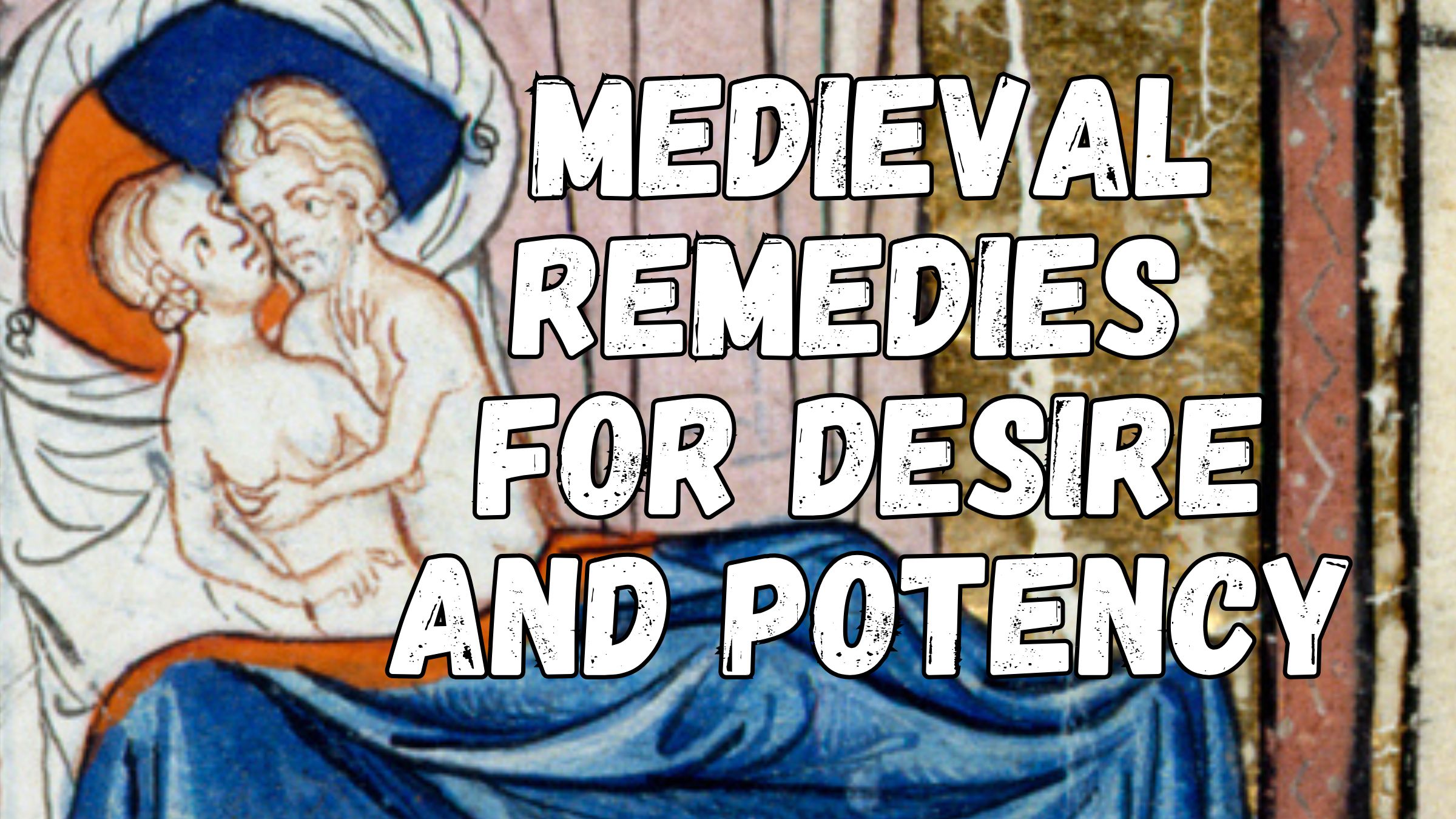
Top Image: British Library MS Egerton 881, f.126
Subscribe to Medievalverse
Related Posts