What’s new in medieval studies? Here are ten open-access articles published in December, which include papers on new runic finds to how inquisitive was medieval inquisition.
This ongoing series on Medievalists.net highlights what has been published in journals over the last month that deal with the Middle Ages. All ten articles are Open-Access, meaning you can read them for free. Join our $10 tier on Patreon to see the full list of the 83 open-access articles we found.
Who Inherited Antiquity? The Concept of Cultural Continuity in the Seljuk and Early Ottoman Eastern Mediterranean
By Armin F. Bergmeier
Acta ad archaeologiam et artium historiam pertinentia
Abstract: This article seeks to challenge enduring Western notions of cultural continuity with and ownership of the ancient and Byzantine past. Through a study of the public display of spolia in Anatolia before 1500, in the lands ruled by Romans, Seljuks, and Ottomans, I show a deep investment of local peoples with their heritage. Fragmentary artifacts from the past – spolia – have rarely been discussed within the context of heritage debates. However, in the medieval period they were one of the most important media to communicate cultural continuity through their presence.
The article critically discusses two opposing models for constructing historical continuity: modern and national concepts of continuity rest on linear, teleological models for constructing historical time, while premodern continuity in the Eastern Mediterranean and beyond was realized through the (physical) presence of artifact and ideas taken from the past. The article argues that modern ideas about continuity, belonging, and ownership have led to a general view that the ancient and Byzantine past finds its inheritors in the Christian West, while local Muslim communities have long been excluded from their heritage. Spolia can help us question this narrative and its modern epistemologies and understand how history and heritage were constructed differently in the premodern era.
Industrial districts in medieval England: Examining the significance of the ‘elementary localisation of industry
By Catherine Casson and Mark Casson
Business History
Abstract: In Principles of Economics and Industry and Trade, Marshall considered how the localisation of industry in medieval England, c.1100 to 1560, could inform on subsequent agglomerations, but since then scholarship has focused mainly on Marshall’s findings on nineteenth–century manufacturing districts. This article seeks to redress the balance. It makes three contributions to the existing literature. Firstly, it extends the range of districts by focusing on the extractive industries of iron and salt; secondly, it relates evidence on medieval districts to Marshall’s earlier analysis; and thirdly it identifies the specific strengths and weaknesses of medieval districts relative to more modern ones. It identifies the main factors that boosted performance in medieval extractive districts: access to complementary resources, such as fuel, proximity to customers and royal patronage. The major weaknesses of medieval extractive industries were their ‘boom and bust’ lifecycle and the absence of a pool of hereditary knowledge.
The Historiographical Crisis of the Fifth Century: Towards a New Paradigm for Late Antique and Early Medieval Historiography
By Niklas Fröhlich
Millennium
Abstract: A previous paper in Millennium 21 (2024) demonstrated the significance of a lost Reichenau codex for the transmission of late antique and early medieval chronicles. As a follow-up, this paper now presents the larger picture in which these findings can be integrated:
1) There was a golden age of Latin ‘minor historiography’ between 420/430 and 450/460 AD, which has not been recognised in its own right until now.
2) This golden age ended abruptly in the 450s – the ‘historiographical crisis of the fifth century’.
3) Beyond the written word, this crisis was linked to a very real (political) crisis in the dissemination of imperial information and dating practice, for which consular dating is recognised as a central source.
4) A strained revival, with writers continuing or revising previous chronicles, did not occur until around 500 AD, but in a new, now distinctly post-imperial form.
5) The texts produced across these different phases and developments reached the Middle Ages in miscellanies such as the Reichenauiensis, all of which can only be fully understood against the background outlined here.
6) For disciplinary and editorial reasons, the texts and developments discussed here have been frequently under-researched and overlooked.
At the same time, they are not only central to our image of the end of antiquity, but also to historiography in the transition from antiquity to the Middle Ages. The paper thus also serves as a general introduction to the texts discussed in the process of developing a new overall picture of late antique/early medieval ‘minor historiography’.
The First Pandemic: Transformative Disaster or Footnote in History? – An Introduction
By Marcel Keller, Christof Paulus and Elena Xoplaki
Human Ecology
Abstract: The topical cluster, The First Pandemic: Transformative Disaster or Footnote in History?, presents the proceedings of an interdisciplinary, international symposium held in Hanover, Germany, from September 21 to 24, 2021, and generously supported by the Volkswagen Stiftung. We first came up with the idea for this symposium at the end of 2019. However, by the time we submitted the initial proposal in mid-February 2020, the topic had become unexpectedly relevant, as two weeks earlier, the WHO had declared COVID-19 a public health emergency of international concern, and a month later, it was officially labeled a pandemic. Although we decided on a hybrid format for the conference in May 2021, the situation remained very unpredictable until the last minute. It was only thanks to the excellent support of the Volkswagen Stiftung that the symposium could be held smoothly, without any technical or health-related issues.
The date and context of the Astronomer’s Life of Louis the Pious
By Simon MacLean
Early Medieval Europe
Abstract: The Astronomer’s Life of the emperor Louis the Pious (814–40) is a canonical source for scholars of Frankish history. It sits at the centre of recent debates about the nature and tone of Carolingian political discourse, and about the crisis of the empire in the 830s. Yet the date and precise context of the text’s composition have hardly ever been debated. The consensus position, codified in Ernst Tremp’s definitive 1995 edition, is that it was written very shortly after the death of its subject, during the succession war fought between his sons. In this article I argue that this reading is not as secure as is usually assumed, and that a later dating may be preferable. I propose a new interpretation of the text as a product of Charles the Bald’s reign and argue that this context reinvigorates the Life’s value as a source for ninth-century history.
Local microcredit in fourteenth-century Italy: social networks and documentary practices in Vercelli
By Antonio Olivieri and Luciano Maffi
Continuity and Change
Abstract: This article investigates the dynamics of microcredit in late-medieval Italy by examining the case of fourteenth-century Vercelli and its surrounding rural area. Drawing on an extensive corpus of notarial sources, it highlights how credit networks were sustained not only by elite bankers and merchants but also by less prominent actors embedded in everyday social and economic life. Two case studies – the baker Enrico da Greggio and the priest Salerno Ferraroto – illustrate the role of small-scale lenders and borrowers in structuring a dense web of transactions. Their activities reveal how personal trust, proximity and reciprocity enabled access to liquidity through loans, rents and credit, often mediated by the Sant’Andrea monastery and hospital. Far from marginal, these practices constituted a vital infrastructure of support for urban and rural populations alike, allowing individuals of modest means to become active participants in the circulation of capital. By analysing these intertwined networks, the article underscores the significance of documentary practices in shaping the economy of trust and credit. The study ultimately argues that grassroots credit systems were central to the functioning of late-medieval urban society, challenging narratives that privilege only large-scale or institutional forms of credit.
Traces of clay: Exploring slave and migrant identities in medieval Swahili Zanzibar
By Henriette Rødland
Cambridge Archaeological Journal
Abstract: The East African coast has long been recognized as a cosmopolitan region, where different cultures and peoples met and exchanged ideas, goods and knowledge. The culture that developed there from the seventh century CE was shaped by these relations, often referred to under the term Swahili, and many of the coastal residents engaged in Islamic practice, long-distance trade, conspicuous consumption of valued goods, and spoke a common language. This paper investigates the presence of slaves and migrants from the East African interior, through pottery assemblages uncovered at two eleventh- to fifteenth-century ce sites in northern Zanzibar: Tumbatu and Mkokotoni. These are groups of people not usually discussed in relation to medieval Swahili towns, and slavery has been especially difficult to study archaeologically on the coast. Through a material culture of difference, I argue that enslaved and non-elite migrants can be recognized and allow for a fuller understanding of socio-economic and cultural complexity in Swahili towns.
How inquisitive was medieval inquisition? A network-analytical approach to information flow in the trials for Brandenburg-Pomeranian Waldensians (late 14th c.)
By Kaarel Sikk, Reima Välimäki, and David Zbíral
Digital Scholarship in the Humanities
Abstract: In this study, we analyse a medieval inquisitorial campaign by conceptualizing it as an information process. We investigate how investigative decision-making was structured by testimony-driven data gathering. Our case study is Peter Zwicker’s well-documented 1393–4 anti-Waldensian inquisition in Stettin. We explore the reconstruction of the inquisitor’s strategy by examining the sequencing of interrogations and subsequent actions based on suspects’ names appearing in previous testimonies. We assess the extent to which the process was adaptive, with suspects summoned dynamically based on new testimonies versus being guided by pre-existing knowledge. We apply network analysis and temporal visualization to incriminations operationalized as network data and use statistical methods to map the feedback between information retrieval and decision-making.
Our analysis follows sequences of interrogations where deponents incriminated others on specific dates. This allows us to identify inquisitorial responses to accumulated data, distinguishing between planned strategies and reactive decisions based on new testimony. The challenge of missing data adds complexity and theoretical engagement. A substantial portion of the depositions is lost, yet we can estimate the original volume, enabling an assessment of the impact of data loss. We employ data imputation simulations to test how missing records might obscure evidence of follow-up strategies. The results indicate that network visualization must be complemented by statistical analysis. Comparisons between deponents’ testimony types reveal an interplay between structured pre-planning and selective incorporation of new intelligence. By conceptualizing inquisitorial work as a dynamic information process, this study proposes a novel methodological framework for analysing historical trial documents.
‘not wreton with penne and ynke’: William Caxton and the effaced technique of the printer
By Stacie Vos
Postmedieval
Abstract: This article analyzes why the two processes William Caxton mentions most briefly and obscurely in his own writing are those with which he is most easily identified: selling and printing. Caxton’s silence on both the mechanics of the press and his own work as an inventor of typefaces and as a printer of movable type is particularly striking. His paratextual essays treat technology as a means to greater self-care and understanding; his narrative style reveals Caxton as a self-teaching and self-fashioning individual. The press, according to his stylized description, has more internal and social functions than it does practical ones, or, rather, the practical use of the press is only good for its benefits to one’s personal health and psychosocial condition. Early printers’ techniques were at once practical and poetic, visual and verbal, new and borrowed. Caxton’s modern biographers will come to reveal their ability to learn from Caxton a double technique of reproducing his actual type and of writing instructional texts for amateur readers, bibliophiles, and antiquarians. Caxton survives as a relic distributed across the existing volumes he printed.
Abstract: In 2021–2022, archaeologists from the Norwegian Institute for Cultural Heritage Research (NIKU) unearthed twelve small, portable objects with runes or rune-like markings during an excavation in Oslo. The excavation was conducted as part of large-scale archaeological projects linked to the construction of the Follo Line railway from Oslo to Ski, and it was related to the establishment of the new, enlarged Middelalderparken in Oslo. This article provides the first runological and archaeological analysis of the finds and their context. The objects, dating approximately from 1150–1350, contain inscriptions ranging from a few marks to longer and meaningful texts in Old Norse and Latin. The study highlights their significance as written and material evidence, following an integrated approach to runic artefacts as hybrid objects.

What’s new in medieval studies? Here are ten open-access articles published in December, which include papers on new runic finds to how inquisitive was medieval inquisition.
This ongoing series on Medievalists.net highlights what has been published in journals over the last month that deal with the Middle Ages. All ten articles are Open-Access, meaning you can read them for free. Join our $10 tier on Patreon to see the full list of the 83 open-access articles we found.
Who Inherited Antiquity? The Concept of Cultural Continuity in the Seljuk and Early Ottoman Eastern Mediterranean
By Armin F. Bergmeier
Acta ad archaeologiam et artium historiam pertinentia
Abstract: This article seeks to challenge enduring Western notions of cultural continuity with and ownership of the ancient and Byzantine past. Through a study of the public display of spolia in Anatolia before 1500, in the lands ruled by Romans, Seljuks, and Ottomans, I show a deep investment of local peoples with their heritage. Fragmentary artifacts from the past – spolia – have rarely been discussed within the context of heritage debates. However, in the medieval period they were one of the most important media to communicate cultural continuity through their presence.
The article critically discusses two opposing models for constructing historical continuity: modern and national concepts of continuity rest on linear, teleological models for constructing historical time, while premodern continuity in the Eastern Mediterranean and beyond was realized through the (physical) presence of artifact and ideas taken from the past. The article argues that modern ideas about continuity, belonging, and ownership have led to a general view that the ancient and Byzantine past finds its inheritors in the Christian West, while local Muslim communities have long been excluded from their heritage. Spolia can help us question this narrative and its modern epistemologies and understand how history and heritage were constructed differently in the premodern era.
Click here to read this article
Industrial districts in medieval England: Examining the significance of the ‘elementary localisation of industry
By Catherine Casson and Mark Casson
Business History
Abstract: In Principles of Economics and Industry and Trade, Marshall considered how the localisation of industry in medieval England, c.1100 to 1560, could inform on subsequent agglomerations, but since then scholarship has focused mainly on Marshall’s findings on nineteenth–century manufacturing districts. This article seeks to redress the balance. It makes three contributions to the existing literature. Firstly, it extends the range of districts by focusing on the extractive industries of iron and salt; secondly, it relates evidence on medieval districts to Marshall’s earlier analysis; and thirdly it identifies the specific strengths and weaknesses of medieval districts relative to more modern ones. It identifies the main factors that boosted performance in medieval extractive districts: access to complementary resources, such as fuel, proximity to customers and royal patronage. The major weaknesses of medieval extractive industries were their ‘boom and bust’ lifecycle and the absence of a pool of hereditary knowledge.
Click here to read this article
The Historiographical Crisis of the Fifth Century: Towards a New Paradigm for Late Antique and Early Medieval Historiography
By Niklas Fröhlich
Millennium
Abstract: A previous paper in Millennium 21 (2024) demonstrated the significance of a lost Reichenau codex for the transmission of late antique and early medieval chronicles. As a follow-up, this paper now presents the larger picture in which these findings can be integrated:
1) There was a golden age of Latin ‘minor historiography’ between 420/430 and 450/460 AD, which has not been recognised in its own right until now.
2) This golden age ended abruptly in the 450s – the ‘historiographical crisis of the fifth century’.
3) Beyond the written word, this crisis was linked to a very real (political) crisis in the dissemination of imperial information and dating practice, for which consular dating is recognised as a central source.
4) A strained revival, with writers continuing or revising previous chronicles, did not occur until around 500 AD, but in a new, now distinctly post-imperial form.
5) The texts produced across these different phases and developments reached the Middle Ages in miscellanies such as the Reichenauiensis, all of which can only be fully understood against the background outlined here.
6) For disciplinary and editorial reasons, the texts and developments discussed here have been frequently under-researched and overlooked.
At the same time, they are not only central to our image of the end of antiquity, but also to historiography in the transition from antiquity to the Middle Ages. The paper thus also serves as a general introduction to the texts discussed in the process of developing a new overall picture of late antique/early medieval ‘minor historiography’.
Click here to read this article
The First Pandemic: Transformative Disaster or Footnote in History? – An Introduction
By Marcel Keller, Christof Paulus and Elena Xoplaki
Human Ecology
Abstract: The topical cluster, The First Pandemic: Transformative Disaster or Footnote in History?, presents the proceedings of an interdisciplinary, international symposium held in Hanover, Germany, from September 21 to 24, 2021, and generously supported by the Volkswagen Stiftung. We first came up with the idea for this symposium at the end of 2019. However, by the time we submitted the initial proposal in mid-February 2020, the topic had become unexpectedly relevant, as two weeks earlier, the WHO had declared COVID-19 a public health emergency of international concern, and a month later, it was officially labeled a pandemic. Although we decided on a hybrid format for the conference in May 2021, the situation remained very unpredictable until the last minute. It was only thanks to the excellent support of the Volkswagen Stiftung that the symposium could be held smoothly, without any technical or health-related issues.
Click here to read this article
The date and context of the Astronomer’s Life of Louis the Pious
By Simon MacLean
Early Medieval Europe
Abstract: The Astronomer’s Life of the emperor Louis the Pious (814–40) is a canonical source for scholars of Frankish history. It sits at the centre of recent debates about the nature and tone of Carolingian political discourse, and about the crisis of the empire in the 830s. Yet the date and precise context of the text’s composition have hardly ever been debated. The consensus position, codified in Ernst Tremp’s definitive 1995 edition, is that it was written very shortly after the death of its subject, during the succession war fought between his sons. In this article I argue that this reading is not as secure as is usually assumed, and that a later dating may be preferable. I propose a new interpretation of the text as a product of Charles the Bald’s reign and argue that this context reinvigorates the Life’s value as a source for ninth-century history.
Click here to read this article
Local microcredit in fourteenth-century Italy: social networks and documentary practices in Vercelli
By Antonio Olivieri and Luciano Maffi
Continuity and Change
Abstract: This article investigates the dynamics of microcredit in late-medieval Italy by examining the case of fourteenth-century Vercelli and its surrounding rural area. Drawing on an extensive corpus of notarial sources, it highlights how credit networks were sustained not only by elite bankers and merchants but also by less prominent actors embedded in everyday social and economic life. Two case studies – the baker Enrico da Greggio and the priest Salerno Ferraroto – illustrate the role of small-scale lenders and borrowers in structuring a dense web of transactions. Their activities reveal how personal trust, proximity and reciprocity enabled access to liquidity through loans, rents and credit, often mediated by the Sant’Andrea monastery and hospital. Far from marginal, these practices constituted a vital infrastructure of support for urban and rural populations alike, allowing individuals of modest means to become active participants in the circulation of capital. By analysing these intertwined networks, the article underscores the significance of documentary practices in shaping the economy of trust and credit. The study ultimately argues that grassroots credit systems were central to the functioning of late-medieval urban society, challenging narratives that privilege only large-scale or institutional forms of credit.
Click here to read this article
Traces of clay: Exploring slave and migrant identities in medieval Swahili Zanzibar
By Henriette Rødland
Cambridge Archaeological Journal
Abstract: The East African coast has long been recognized as a cosmopolitan region, where different cultures and peoples met and exchanged ideas, goods and knowledge. The culture that developed there from the seventh century CE was shaped by these relations, often referred to under the term Swahili, and many of the coastal residents engaged in Islamic practice, long-distance trade, conspicuous consumption of valued goods, and spoke a common language. This paper investigates the presence of slaves and migrants from the East African interior, through pottery assemblages uncovered at two eleventh- to fifteenth-century ce sites in northern Zanzibar: Tumbatu and Mkokotoni. These are groups of people not usually discussed in relation to medieval Swahili towns, and slavery has been especially difficult to study archaeologically on the coast. Through a material culture of difference, I argue that enslaved and non-elite migrants can be recognized and allow for a fuller understanding of socio-economic and cultural complexity in Swahili towns.
Click here to read this article
How inquisitive was medieval inquisition? A network-analytical approach to information flow in the trials for Brandenburg-Pomeranian Waldensians (late 14th c.)
By Kaarel Sikk, Reima Välimäki, and David Zbíral
Digital Scholarship in the Humanities
Abstract: In this study, we analyse a medieval inquisitorial campaign by conceptualizing it as an information process. We investigate how investigative decision-making was structured by testimony-driven data gathering. Our case study is Peter Zwicker’s well-documented 1393–4 anti-Waldensian inquisition in Stettin. We explore the reconstruction of the inquisitor’s strategy by examining the sequencing of interrogations and subsequent actions based on suspects’ names appearing in previous testimonies. We assess the extent to which the process was adaptive, with suspects summoned dynamically based on new testimonies versus being guided by pre-existing knowledge. We apply network analysis and temporal visualization to incriminations operationalized as network data and use statistical methods to map the feedback between information retrieval and decision-making.
Our analysis follows sequences of interrogations where deponents incriminated others on specific dates. This allows us to identify inquisitorial responses to accumulated data, distinguishing between planned strategies and reactive decisions based on new testimony. The challenge of missing data adds complexity and theoretical engagement. A substantial portion of the depositions is lost, yet we can estimate the original volume, enabling an assessment of the impact of data loss. We employ data imputation simulations to test how missing records might obscure evidence of follow-up strategies. The results indicate that network visualization must be complemented by statistical analysis. Comparisons between deponents’ testimony types reveal an interplay between structured pre-planning and selective incorporation of new intelligence. By conceptualizing inquisitorial work as a dynamic information process, this study proposes a novel methodological framework for analysing historical trial documents.
Click here to read this article
‘not wreton with penne and ynke’: William Caxton and the effaced technique of the printer
By Stacie Vos
Postmedieval
Abstract: This article analyzes why the two processes William Caxton mentions most briefly and obscurely in his own writing are those with which he is most easily identified: selling and printing. Caxton’s silence on both the mechanics of the press and his own work as an inventor of typefaces and as a printer of movable type is particularly striking. His paratextual essays treat technology as a means to greater self-care and understanding; his narrative style reveals Caxton as a self-teaching and self-fashioning individual. The press, according to his stylized description, has more internal and social functions than it does practical ones, or, rather, the practical use of the press is only good for its benefits to one’s personal health and psychosocial condition. Early printers’ techniques were at once practical and poetic, visual and verbal, new and borrowed. Caxton’s modern biographers will come to reveal their ability to learn from Caxton a double technique of reproducing his actual type and of writing instructional texts for amateur readers, bibliophiles, and antiquarians. Caxton survives as a relic distributed across the existing volumes he printed.
Click here to read this article
New runic finds from medieval Oslo
By Kristel Zilmer and Mark Oldham
Maal og Minne
Abstract: In 2021–2022, archaeologists from the Norwegian Institute for Cultural Heritage Research (NIKU) unearthed twelve small, portable objects with runes or rune-like markings during an excavation in Oslo. The excavation was conducted as part of large-scale archaeological projects linked to the construction of the Follo Line railway from Oslo to Ski, and it was related to the establishment of the new, enlarged Middelalderparken in Oslo. This article provides the first runological and archaeological analysis of the finds and their context. The objects, dating approximately from 1150–1350, contain inscriptions ranging from a few marks to longer and meaningful texts in Old Norse and Latin. The study highlights their significance as written and material evidence, following an integrated approach to runic artefacts as hybrid objects.
Click here to read this article
We found 83 open-access articles from December – you can get the full list by joining our Patreon.
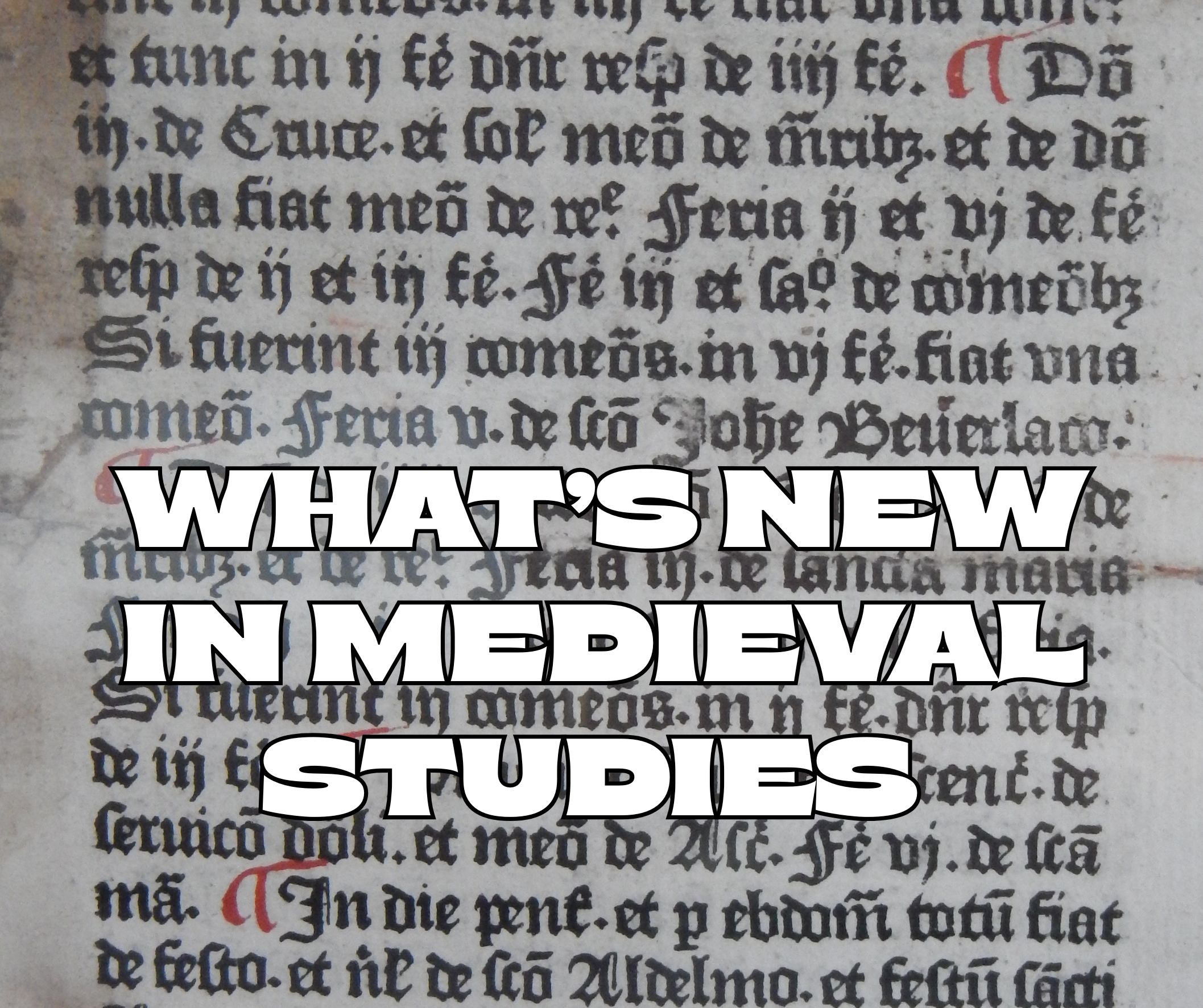
Top Image: Page from a William Caxton printing – photo by BabelStone / Wikimedia Commons
Subscribe to Medievalverse
Related Posts