A major volcanic eruption in the mid-14th century may have triggered the climatic shocks that opened the door for the arrival of the Black Death in Europe, according to new research combining natural and historical evidence. The study, published in Communications Earth & Environment, argues that the eruption set off a cascade of cooling, agricultural crisis, and emergency grain shipments that ultimately carried the plague bacterium Yersinia pestis into Mediterranean ports.
Researchers from the University of Cambridge and the Leibniz Institute for the History and Culture of Eastern Europe (GWZO) have reconstructed what they call a “perfect storm” of environmental and economic pressures between 1345 and 1347. Their work links volcanic activity, sudden climate deterioration, and the reshaping of long-distance food trade — creating the conditions for one of the deadliest pandemics in human history.
A massive volcanic event — larger than Pinatubo
The new study identifies a previously unknown volcanic eruption, or cluster of eruptions, around 1345. Ice-core data show this event injected around 14 teragrams of sulphur into the stratosphere — more than double the sulphur released by the 1991 Mount Pinatubo eruption, one of the most significant volcanic events of the modern era. In fact, the 1345 eruption ranks as one of the largest sulphur injections of the past 2,000 years, suggesting a climatic impact far beyond what had been assumed in medieval histories.
This enormous atmospheric disturbance occurred after several smaller eruptions in 1329, 1336, and 1341, meaning Europe entered the 1340s already under climate strain.
Medieval observers saw the sky change
Contemporary witnesses across Europe and Asia reported strange atmospheric conditions between 1345 and 1349. Chroniclers described reduced sunshine, persistent haziness, and unusually foggy skies. Several accounts note a darkened lunar eclipse, which modern scientists now recognize as a clear sign of volcanic aerosols scattering light in the upper atmosphere. These atmospheric anomalies strongly support the presence of a sulphur-rich dust veil spreading across Eurasia.
Such reports match the scientific evidence: the eruption likely dimmed sunlight for multiple years, lowering temperatures and destabilising agricultural cycles.
Tree rings reveal rare and abrupt summer cooling
Tree-ring analyses from the Spanish Pyrenees uncovered two consecutive Blue Rings — anatomical features indicating sudden and severe summer cooling — for the years 1345 and 1346. According to the researchers, consecutive Blue Rings are extremely rare, and their presence signals a dramatic climatic shock affecting southern Europe.
These findings align with temperature reconstructions from across the continent, which show that 1345–1347 marked the coldest summers in the Mediterranean since the 1257 Samalas eruption. The climate downturn was not a minor fluctuation but a sustained, multi-year cooling episode.
From failed harvests to plague ships
The abrupt cooling led to widespread harvest failure across the western and central Mediterranean. Italy was hit particularly hard: flooding, poor growing seasons, and collapsing grape yields created the threat of mass famine. To prevent unrest or starvation, the maritime republics of Venice, Genoa, and Pisa activated their long-established grain supply networks and began importing massive quantities of cereals from the Black Sea region in 1347.
These emergency grain shipments saved lives — but they also carried the plague.
The authors argue that the climate-driven turn toward Black Sea grain was the decisive step that allowed Yersinia pestis to reach European ports. Fleas infected with the bacterium likely travelled in grain cargo, on rodents, or in ship holds, arriving in Mediterranean harbours mere weeks before the first outbreaks were recorded.
Within months, the Black Death was moving inland, beginning the wave that would kill tens of millions between 1347 and 1353. Mortality in some regions reached 60%.
A chain reaction of climate, food, and disease
“This is something I’ve wanted to understand for a long time,” says Professor Ulf Büntgen of the University of Cambridge. “What were the drivers of the onset and transmission of the Black Death, and how unusual were they?” The study’s interdisciplinary approach — combining dendrochronology, ice-core chemistry, and medieval documentation — allowed the researchers to identify how a single volcanic event could ripple through environmental, economic, and social systems.
For Dr Martin Bauch, a historian of medieval climate and epidemiology from GWZO, the key was understanding food security on the eve of the pandemic. “We wanted to look at the climate, environmental and economic factors together, so we could more fully understand what triggered the onset of the second plague pandemic in Europe.”
Their conclusion: a rare alignment of explosive volcanism, crop failure, famine, and interconnected trade routes explains not only the timing of the Black Death’s arrival but the scale of its devastation.
An early example of globalisation’s risks
The researchers emphasise that the Black Death was not simply a biological disaster but an early example of how interconnected systems can amplify risk. The same trade networks that protected Italian cities from starvation inadvertently opened a pathway for pandemic disease.
“Although the coincidence of factors that contributed to the Black Death seems rare,” Büntgen notes, “the probability of zoonotic diseases emerging under climate change and translating into pandemics is likely to increase in a globalised world.”
The article, “Climate-driven changes in Mediterranean grain trade mitigated famine but introduced the Black Death to medieval Europe, by Martin Bauch and Ulf Büntgen, is published in Communications Earth & Environment.Click here to read it.
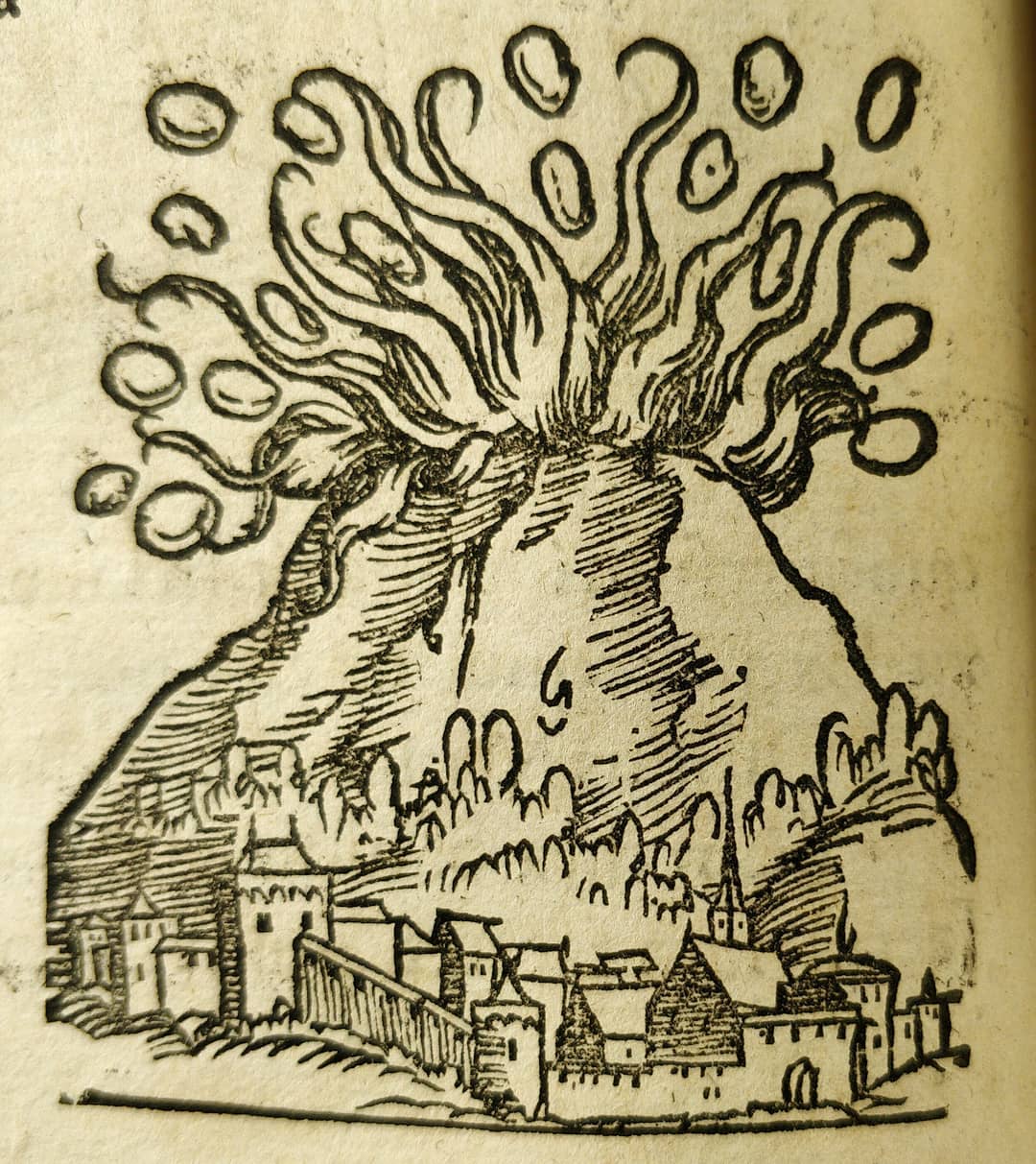
Top Image: Eruption of a volcano, from Conrad Lycosthenes’s Prodigiorvm ac ostentorvm chronicon

A major volcanic eruption in the mid-14th century may have triggered the climatic shocks that opened the door for the arrival of the Black Death in Europe, according to new research combining natural and historical evidence. The study, published in Communications Earth & Environment, argues that the eruption set off a cascade of cooling, agricultural crisis, and emergency grain shipments that ultimately carried the plague bacterium Yersinia pestis into Mediterranean ports.
Researchers from the University of Cambridge and the Leibniz Institute for the History and Culture of Eastern Europe (GWZO) have reconstructed what they call a “perfect storm” of environmental and economic pressures between 1345 and 1347. Their work links volcanic activity, sudden climate deterioration, and the reshaping of long-distance food trade — creating the conditions for one of the deadliest pandemics in human history.
A massive volcanic event — larger than Pinatubo
The new study identifies a previously unknown volcanic eruption, or cluster of eruptions, around 1345. Ice-core data show this event injected around 14 teragrams of sulphur into the stratosphere — more than double the sulphur released by the 1991 Mount Pinatubo eruption, one of the most significant volcanic events of the modern era. In fact, the 1345 eruption ranks as one of the largest sulphur injections of the past 2,000 years, suggesting a climatic impact far beyond what had been assumed in medieval histories.
This enormous atmospheric disturbance occurred after several smaller eruptions in 1329, 1336, and 1341, meaning Europe entered the 1340s already under climate strain.
Medieval observers saw the sky change
Contemporary witnesses across Europe and Asia reported strange atmospheric conditions between 1345 and 1349. Chroniclers described reduced sunshine, persistent haziness, and unusually foggy skies. Several accounts note a darkened lunar eclipse, which modern scientists now recognize as a clear sign of volcanic aerosols scattering light in the upper atmosphere. These atmospheric anomalies strongly support the presence of a sulphur-rich dust veil spreading across Eurasia.
Such reports match the scientific evidence: the eruption likely dimmed sunlight for multiple years, lowering temperatures and destabilising agricultural cycles.
Tree rings reveal rare and abrupt summer cooling
Tree-ring analyses from the Spanish Pyrenees uncovered two consecutive Blue Rings — anatomical features indicating sudden and severe summer cooling — for the years 1345 and 1346. According to the researchers, consecutive Blue Rings are extremely rare, and their presence signals a dramatic climatic shock affecting southern Europe.
These findings align with temperature reconstructions from across the continent, which show that 1345–1347 marked the coldest summers in the Mediterranean since the 1257 Samalas eruption. The climate downturn was not a minor fluctuation but a sustained, multi-year cooling episode.
From failed harvests to plague ships
The abrupt cooling led to widespread harvest failure across the western and central Mediterranean. Italy was hit particularly hard: flooding, poor growing seasons, and collapsing grape yields created the threat of mass famine. To prevent unrest or starvation, the maritime republics of Venice, Genoa, and Pisa activated their long-established grain supply networks and began importing massive quantities of cereals from the Black Sea region in 1347.
These emergency grain shipments saved lives — but they also carried the plague.
The authors argue that the climate-driven turn toward Black Sea grain was the decisive step that allowed Yersinia pestis to reach European ports. Fleas infected with the bacterium likely travelled in grain cargo, on rodents, or in ship holds, arriving in Mediterranean harbours mere weeks before the first outbreaks were recorded.
Within months, the Black Death was moving inland, beginning the wave that would kill tens of millions between 1347 and 1353. Mortality in some regions reached 60%.
A chain reaction of climate, food, and disease
“This is something I’ve wanted to understand for a long time,” says Professor Ulf Büntgen of the University of Cambridge. “What were the drivers of the onset and transmission of the Black Death, and how unusual were they?” The study’s interdisciplinary approach — combining dendrochronology, ice-core chemistry, and medieval documentation — allowed the researchers to identify how a single volcanic event could ripple through environmental, economic, and social systems.
For Dr Martin Bauch, a historian of medieval climate and epidemiology from GWZO, the key was understanding food security on the eve of the pandemic. “We wanted to look at the climate, environmental and economic factors together, so we could more fully understand what triggered the onset of the second plague pandemic in Europe.”
Their conclusion: a rare alignment of explosive volcanism, crop failure, famine, and interconnected trade routes explains not only the timing of the Black Death’s arrival but the scale of its devastation.
An early example of globalisation’s risks
The researchers emphasise that the Black Death was not simply a biological disaster but an early example of how interconnected systems can amplify risk. The same trade networks that protected Italian cities from starvation inadvertently opened a pathway for pandemic disease.
“Although the coincidence of factors that contributed to the Black Death seems rare,” Büntgen notes, “the probability of zoonotic diseases emerging under climate change and translating into pandemics is likely to increase in a globalised world.”
The article, “Climate-driven changes in Mediterranean grain trade mitigated famine but introduced the Black Death to medieval Europe, by Martin Bauch and Ulf Büntgen, is published in Communications Earth & Environment. Click here to read it.
Top Image: Eruption of a volcano, from Conrad Lycosthenes’s Prodigiorvm ac ostentorvm chronicon
Subscribe to Medievalverse
Related Posts