Long before “chaplaincy” became an official military institution, medieval armies were already wrestling with a deadly spiritual problem: how could soldiers fight, kill, and still hope for salvation? The answer emerged through new forms of confession and pastoral care—changes that transformed warfare in the Latin West and helped create the first true military chaplains.
By David Bachrach
Military chaplains play an exceptionally important role in Western armies, offering spiritual care and moral support to soldiers and their families. The U.S. Army Recruiting Command states that the mission of the chaplain is as follows: “is to bring soldiers to God and God to soldiers. America calls on our Army to fight and win our nation’s wars and Army chaplains are there every step of the way. Whether in training or operations, Army chaplains represent hundreds of American denominations, faith traditions and fulfill a sacred calling of service captured in our motto, ‘Pro Deo et Patria’ (for God and country).”
This tradition of religious leadership in service of military aims was already ancient when the Continental Congress founded the chaplain corps in July 1775. The origins of Christian military religion date back to the reign of Constantine the Great, the first Christian Roman Emperor (307–337). The main duty of the Christian bishops accompanying Constantine’s armies was to seek divine intervention on behalf of the Romans. These bishops cared for sacred relics, celebrated intercessory masses, led soldiers in prayers to God, and encouraged them to behave morally so as to be worthy of divine support.
By contrast with modern practice, however, individual pastoral care was not a significant element of army religion in either the later Roman Empire or in the armies of early medieval Europe. This was largely the case because the ancient Christian practice of once-in-a-lifetime confession, usually made on one’s deathbed when possible, remained the norm throughout the Latin West until the later sixth century.
There was no established ritual through which a soldier could purge himself of sin, and still remain in the secular world. Christian soldiers necessarily risked death in battle while their souls were still stained by sins, including homicide. As we learn from letters and conciliar decisions, this prospect imposed enormous stresses on soldiers who had to choose between giving up their careers and the potential for eternal damnation.
An Irish Innovation: Repeatable Confession
A priest hearing confession, depicted in the 15th century. British Library MS Add. 37049 fol. 87v
Happily, a solution to the problem of addressing sinfulness while remaining in the secular world was developed in Ireland during the course of the sixth century, primarily in the context of the monasteries. Monks in Ireland played a central role in leading parishes during this period and so had a good understanding of the needs of their secular flocks.
The pastoral innovation introduced by Irish monks was the development of the model of repeatable confession. Laypeople could confess their sins on a regular basis and receive penances through which they could cleanse their souls of sin. The Irish monks developed penitential manuals, often referred to as tariff books, which included a list of sins in one column and a parallel list of penances.
The doctrine and practice of repeatable confession had enormous implications for the pastoral care of fighting men, and consequently for the development of a formal military chaplaincy. Soldiers could now confess their sins before battle and know that they had prepared themselves spiritually to face death.
The practice of repeatable confession spread rapidly from Ireland to England and from here to the continent, as can be seen clearly by the production of substantial numbers of penitential manuals within the Regnum Francorum, many of which clearly were designed for use by parish priests.
In a military context, priests added hearing confessions to their traditional roles of leading soldiers in prayer, celebrating intercessory masses, and caring for relics. In effect, army-wide rites were augmented by individual pastoral care for soldiers.
The Carolingians Formalize Military Chaplaincy
An image from an 8th-century manuscript – St. Gallen, Stiftsbibliothek, Cod. Sang. 731
A crucial date in the institutionalization of military pastoral care came in April 742 when an assembly of Frankish bishops under the direction of Carloman, the Carolingian mayor of the palace (741–747) and the English missionary Boniface, instituted new requirements for the recruitment of priests to serve with the army. The statutes of the Concilium Germanicum, as this synod came to be known, denoted these priests in Latin as capellani. The name derived from the cloak of St. Martin, called a capa in Latin, which was a very important relic that Frankish kings frequently took on campaign. The priests charged with taking care of St. Martin’s cloak were called capellani. Thus, the bishops at the 742 synod drew an explicit connection between the older forms of military religion and the new duties of priests serving with the army.
The assembled bishops mandated that the commander (praefectus) of every unit in the army have a priest in his company. The bishops also explicitly mandated that these priests had to be capable of hearing the confessions of the soldiers and also of assigning them penances.
This requirement led to a dramatic increase in the number of priests serving on campaign. Frankish armies under the new Carolingian dynasty numbered in the many thousands, and frequently in the tens of thousands. Hundreds of priests had to be recruited to serve as unit chaplains to hear the confessions of the fighting men.
The Frankish campaign armies of this period had two main elements. The smaller of these consisted of the military households of the ruler and the magnates. These leaders generally had their own personal chaplains, who also provided pastoral care to the men in their households. The larger element of most campaign armies was composed of members of the expeditionary levy, who were essentially militia troops, serving for the most part under the command of the local count. The military chaplains for these forces often were the parish priests from the same villages as the men summoned for military duty as part of the expeditionary levy.
Edicts by Carolingian rulers, dating back to just after the episcopal synod of 742, include provisions to protect these parish priests while they were in military service. These priests were not to be subject to tolls and other taxes for the goods that they brought with them as they went to join the army. They also were freed from the dietary restrictions that were imposed during Lent while they traveled to and served with the army.
The institutionalization of pastoral care by the Carolingians was enormously influential, and the practice of recruiting large numbers of priests to serve in the army spread throughout Latin Europe. Indeed, it is fair to say that Concilium Germanicum marked the birth of military chaplaincy in the Western tradition.
David Bachrach is a Professor at the University of New Hampshire, where he researches medieval military history, particularly in England and Germany.

Long before “chaplaincy” became an official military institution, medieval armies were already wrestling with a deadly spiritual problem: how could soldiers fight, kill, and still hope for salvation? The answer emerged through new forms of confession and pastoral care—changes that transformed warfare in the Latin West and helped create the first true military chaplains.
By David Bachrach
Military chaplains play an exceptionally important role in Western armies, offering spiritual care and moral support to soldiers and their families. The U.S. Army Recruiting Command states that the mission of the chaplain is as follows: “is to bring soldiers to God and God to soldiers. America calls on our Army to fight and win our nation’s wars and Army chaplains are there every step of the way. Whether in training or operations, Army chaplains represent hundreds of American denominations, faith traditions and fulfill a sacred calling of service captured in our motto, ‘Pro Deo et Patria’ (for God and country).”
This tradition of religious leadership in service of military aims was already ancient when the Continental Congress founded the chaplain corps in July 1775. The origins of Christian military religion date back to the reign of Constantine the Great, the first Christian Roman Emperor (307–337). The main duty of the Christian bishops accompanying Constantine’s armies was to seek divine intervention on behalf of the Romans. These bishops cared for sacred relics, celebrated intercessory masses, led soldiers in prayers to God, and encouraged them to behave morally so as to be worthy of divine support.
By contrast with modern practice, however, individual pastoral care was not a significant element of army religion in either the later Roman Empire or in the armies of early medieval Europe. This was largely the case because the ancient Christian practice of once-in-a-lifetime confession, usually made on one’s deathbed when possible, remained the norm throughout the Latin West until the later sixth century.
There was no established ritual through which a soldier could purge himself of sin, and still remain in the secular world. Christian soldiers necessarily risked death in battle while their souls were still stained by sins, including homicide. As we learn from letters and conciliar decisions, this prospect imposed enormous stresses on soldiers who had to choose between giving up their careers and the potential for eternal damnation.
An Irish Innovation: Repeatable Confession
Happily, a solution to the problem of addressing sinfulness while remaining in the secular world was developed in Ireland during the course of the sixth century, primarily in the context of the monasteries. Monks in Ireland played a central role in leading parishes during this period and so had a good understanding of the needs of their secular flocks.
The pastoral innovation introduced by Irish monks was the development of the model of repeatable confession. Laypeople could confess their sins on a regular basis and receive penances through which they could cleanse their souls of sin. The Irish monks developed penitential manuals, often referred to as tariff books, which included a list of sins in one column and a parallel list of penances.
The doctrine and practice of repeatable confession had enormous implications for the pastoral care of fighting men, and consequently for the development of a formal military chaplaincy. Soldiers could now confess their sins before battle and know that they had prepared themselves spiritually to face death.
The practice of repeatable confession spread rapidly from Ireland to England and from here to the continent, as can be seen clearly by the production of substantial numbers of penitential manuals within the Regnum Francorum, many of which clearly were designed for use by parish priests.
In a military context, priests added hearing confessions to their traditional roles of leading soldiers in prayer, celebrating intercessory masses, and caring for relics. In effect, army-wide rites were augmented by individual pastoral care for soldiers.
The Carolingians Formalize Military Chaplaincy
A crucial date in the institutionalization of military pastoral care came in April 742 when an assembly of Frankish bishops under the direction of Carloman, the Carolingian mayor of the palace (741–747) and the English missionary Boniface, instituted new requirements for the recruitment of priests to serve with the army. The statutes of the Concilium Germanicum, as this synod came to be known, denoted these priests in Latin as capellani. The name derived from the cloak of St. Martin, called a capa in Latin, which was a very important relic that Frankish kings frequently took on campaign. The priests charged with taking care of St. Martin’s cloak were called capellani. Thus, the bishops at the 742 synod drew an explicit connection between the older forms of military religion and the new duties of priests serving with the army.
The assembled bishops mandated that the commander (praefectus) of every unit in the army have a priest in his company. The bishops also explicitly mandated that these priests had to be capable of hearing the confessions of the soldiers and also of assigning them penances.
This requirement led to a dramatic increase in the number of priests serving on campaign. Frankish armies under the new Carolingian dynasty numbered in the many thousands, and frequently in the tens of thousands. Hundreds of priests had to be recruited to serve as unit chaplains to hear the confessions of the fighting men.
The Frankish campaign armies of this period had two main elements. The smaller of these consisted of the military households of the ruler and the magnates. These leaders generally had their own personal chaplains, who also provided pastoral care to the men in their households. The larger element of most campaign armies was composed of members of the expeditionary levy, who were essentially militia troops, serving for the most part under the command of the local count. The military chaplains for these forces often were the parish priests from the same villages as the men summoned for military duty as part of the expeditionary levy.
Edicts by Carolingian rulers, dating back to just after the episcopal synod of 742, include provisions to protect these parish priests while they were in military service. These priests were not to be subject to tolls and other taxes for the goods that they brought with them as they went to join the army. They also were freed from the dietary restrictions that were imposed during Lent while they traveled to and served with the army.
The institutionalization of pastoral care by the Carolingians was enormously influential, and the practice of recruiting large numbers of priests to serve in the army spread throughout Latin Europe. Indeed, it is fair to say that Concilium Germanicum marked the birth of military chaplaincy in the Western tradition.
David Bachrach is a Professor at the University of New Hampshire, where he researches medieval military history, particularly in England and Germany.
Click here to read more from David Bachrach
Further Readings:
David S. Bachrach, Religion and the Conduct of War c. 300–c. 1215 (Boydell & Brewer, 2003).
David S. Bachrach, “Lay Confession in the Regnum Francorum: The Evidence Reconsidered,” The Journal of Ecclesiastical History 54 (2003), 3–22.
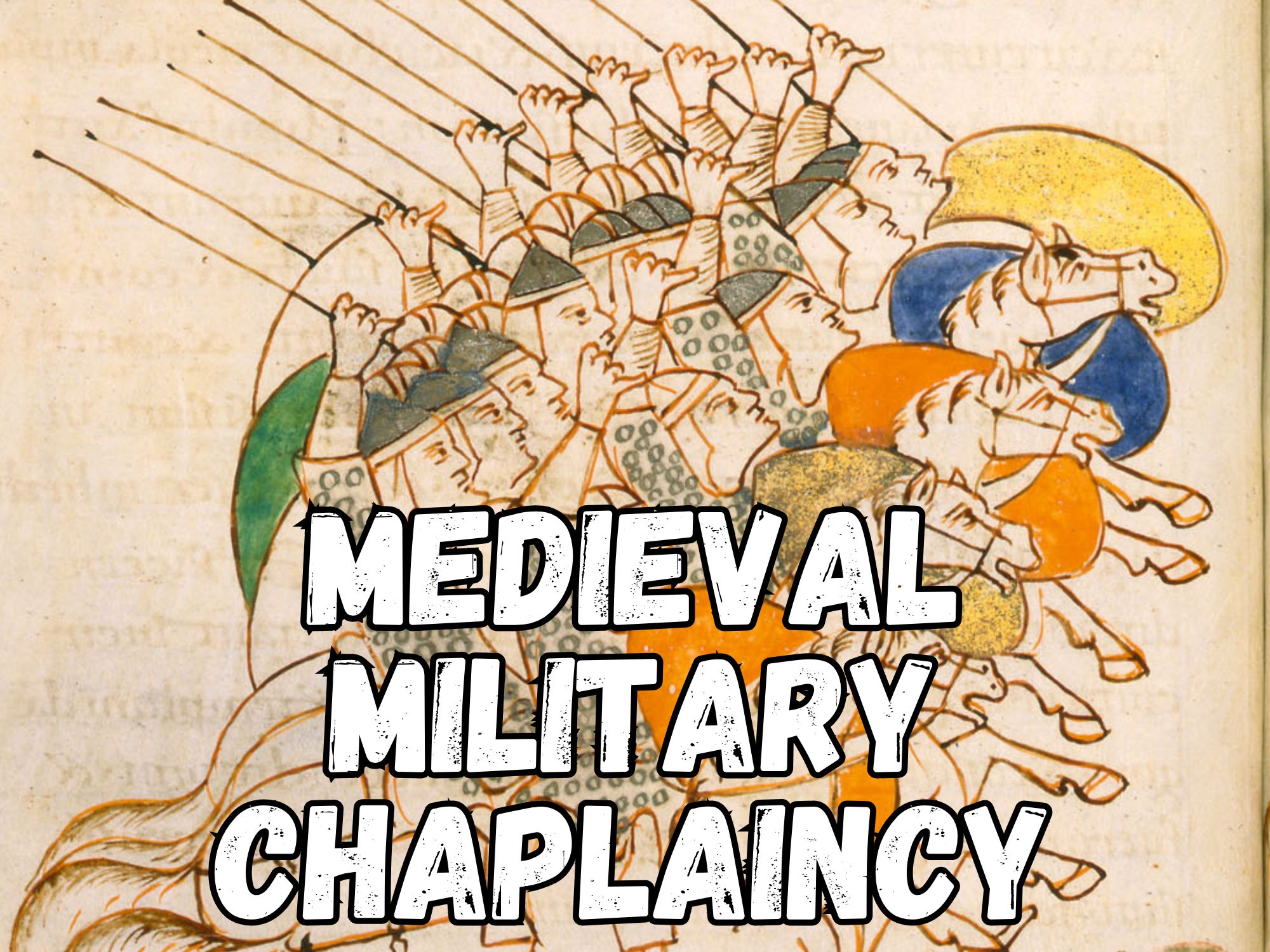
Top Image: The Leiden 1 Maccabees manuscript / Codex PER F 17
Subscribe to Medievalverse
Related Posts