Reflections of Reality in the Manor Court: Sutton-in-the-Isle, 1308–1391
Session: Rural Experience in Late Medieval England: Manorial Records and Law
By Erin McGibbon Smith, Independent Scholar
This paper dealt with manorial court records in 14th century England.
What can manorial court records tell us? How accurate are they? How should historians treat this area of study? This paper focuses on Sutton records. How complete are the records? Historians must look at these questions.
At the end of the 14th century, there was a bit more consistency when the courts met. Historians must be transparent as to how much information they have and what the gaps are in their work.
Methodologies: Themes, and village court reconstruction. Both these methods have draw backs. Themes can give too much information.Reconstruction can be very complicated; historians need to examine court records in their totality. McGibbon Smith suggested that there be seven categories for manorial court records:
1.) Lord’s rights
2.) Inter-peasant litigation
3.) Community nuisance
4.) Officials and court function
5.) Crime and misbehaviour
6. Land
7.) The market
She argued that scholars should not focus just on one year, but to examine several years to get a more balanced approach. Population data is also a consideration since it is not comparable pre and post-Black death. Historians must be aware of changes over a short period of time.

Reflections of Reality in the Manor Court: Sutton-in-the-Isle, 1308–1391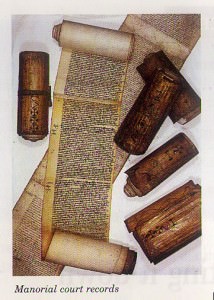
Session: Rural Experience in Late Medieval England: Manorial Records and Law
By Erin McGibbon Smith, Independent Scholar
This paper dealt with manorial court records in 14th century England.
What can manorial court records tell us? How accurate are they? How should historians treat this area of study? This paper focuses on Sutton records. How complete are the records? Historians must look at these questions.
At the end of the 14th century, there was a bit more consistency when the courts met. Historians must be transparent as to how much information they have and what the gaps are in their work.
Methodologies: Themes, and village court reconstruction. Both these methods have draw backs. Themes can give too much information.Reconstruction can be very complicated; historians need to examine court records in their totality. McGibbon Smith suggested that there be seven categories for manorial court records:
1.) Lord’s rights
2.) Inter-peasant litigation
3.) Community nuisance
4.) Officials and court function
5.) Crime and misbehaviour
6. Land
7.) The market
She argued that scholars should not focus just on one year, but to examine several years to get a more balanced approach. Population data is also a consideration since it is not comparable pre and post-Black death. Historians must be aware of changes over a short period of time.
Subscribe to Medievalverse
Related Posts