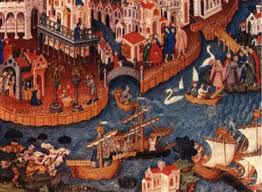
Venetian Trading Networks in the Medieval Mediterranean
To understand the system of business relations within the commercial network of the Republic of Venice, this article adopts a network analysis that differs from a standard narrative based on a privileged subset of actors or relations. It allows us to examine the socially mixed group of entrepreneurs, brokers, and shippers at the heart of Venice’s economic system.
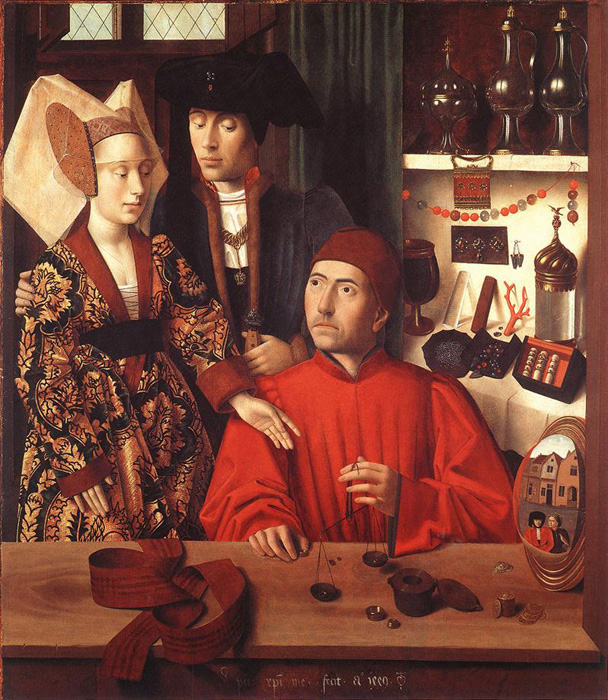
Did Purchasing Power Parity Hold in Medieval Europe?
This paper employs a unique, hand-collected dataset of exchange rates for five major currencies (the lira of Barcelona, the pound sterling of England, the pond groot of Flanders, the florin of Florence and the livre tournois of France) to consider whether the law of one price and purchasing power parity held in Europe during the late fourteenth and early fifteenth centuries.

Mosaic from Venice
This mosaic was made in the first half of the twelfth century as part of a decoration at the west dome in the Basilica of San Marco in Venice.

Big Love in the Middle Ages: Adjudicating Jewish Bigamy in Venetian Crete’s Secular Court
What happened when Catholic doctrine, secular law, and minority religious difference met in that crucible of cultural decision making: the courtroom?

The Quadriga – War Booty in Venice’s Piazza San Marco
In 1204, during the Fourth Crusade, Western European armies sacked Constantinople, bringing about the fall of the Byzantine Empire. As a result of the conquest, the Republic of Venice acquired a number of war spoils, many of which were incorporated into the design of the Piazza San Marco.
‘Selling stories and many other things in and through the city’: Peddling Print in Renaissance Florence and Venice
‘Selling stories and many other things in and through the city’: Peddling Print in Renaissance Florence and Venice Rosa M. Salzberg (University of…

Power and Institutional Identity in Renaissance Venice: The Female Convents of S. M. delle Vergini and S. Zaccaria
Even though inmates of convents were the most regulated group in fifteenth and sixteenth-century Europe, canonesses and nuns at these two convents were able to generate and harness multiple sorts of power in a variety of ways.
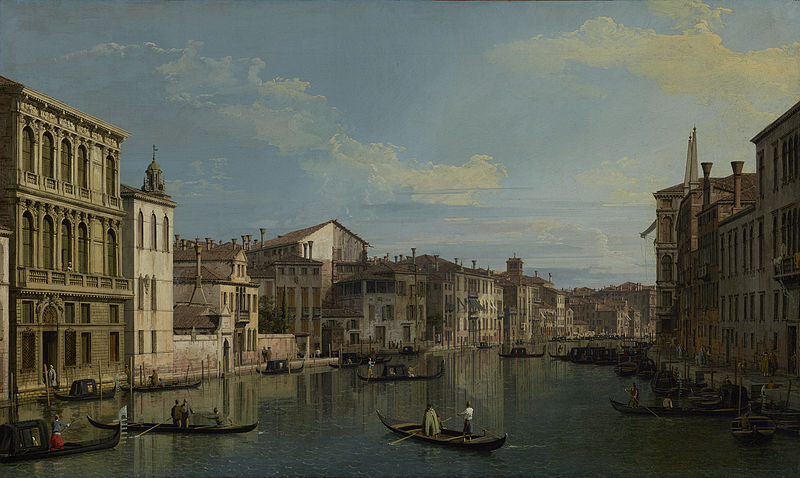
Venice – obstacle for the Crusades?
At first sight, the topic’s title sounds somewhat intriguing. It certainly raises the question: is it possible for the Venetians to regard themselves as an obstacle for such a noble initiative as crusades had been?
The Dragon and the Storm The Saracen anti-knight in Orlando furioso and Gerusalemme liberata
The Dragon and the Storm The Saracen anti-knight in Orlando furioso and Gerusalemme liberata Cam Lindley Cross University of Chicago, March 8 (2011) Abstract When…
‘Defending the Christian Faith with Our Blood’. The Battle of Lepanto (1571) and the Venetian Eastern Adriatic: Impact of a Global Conflict on the Mediterranean Periphery
The battle of Lepanto, which took place on the 7th of October 1571, was the greatest naval battle of oar driven vessels in the history of the Mediterranean1. It was then that the mighty Ottoman navy suffered its first and utter defeat in a direct confrontation with Christian forces, joined in the Holy League. Its purpose was to help Venice in the defence of Cyprus, stormed by the Ottoman troops in July of 1570, but to no avail, as on the 3rd of August 1571 the island was taken by the Ottomans.
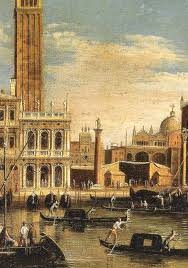
Bread and Falcons: The View from Crete in 1501
An overview of 62 letters written between 1500 and 1502 by Bartolomeo Minio, Venetian Captain of Crete.

The Morosinis in Hungary under King Andrew III and the two versions of the death of the Queen of Hungary Tommasina
In reality, Charles Robert’s predecessor, the last Arpád, Andrew III, called the Vene- tian, was already a foreigner on the throne of Hungary.
Poisons and Poisoning in the Republic of Dubrovnik
Dubrovnik authorities occasionally resorted to poisoning as a means of resolving state affairs.
The sea republic of Genoa and the conquest of Black Sea in 1261
I’m going to explain how Genoa conquered the Black Sea in 1261, which was the most important, or better, only road to Asia
Strange Geographies: The Happy, Haunted Island of Poveglia
What I found there was both stranger and more innocuous than anything I had heard.

Through the Eyes of a Crusader: An Intensive Study Into the Personal Involvement of Two Men in the Fourth Crusade
What was going through the minds ofthese men who were fighting for the cross when they attacked a Christian city, which was one oftheir allies?
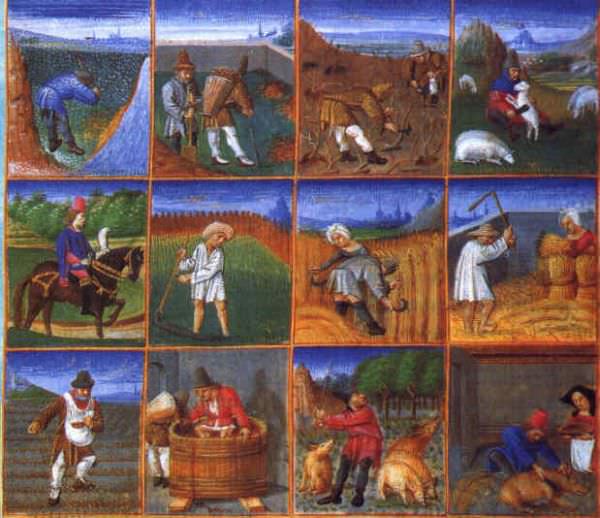
Labor Markets After the Black Death: Landlord Collusion and the Imposition of Serfdom in Eastern Europe and the Middle East
The differences in the imposition of serfdom led to different economic and political effects for the peasantry in Europe. In Western Europe, wages rose, grain prices fell, and the consumption of meat, dairy products, and beer increased. More and more peasants moved into a widening “middle class” that could afford to buy manufactured goods.

The Italo-Cretan Religious Painting and The Byzantine-Palaeologan Legacy
The paper aims to introduce the last significant school of painting, which was nurtured by the Byzantine sources, the so-called Italo-Cretan school, whose presence and influence lasted for more than 300 years. Its works are perceived not just as mere objects of veneration but have also high artistic and marketing value.
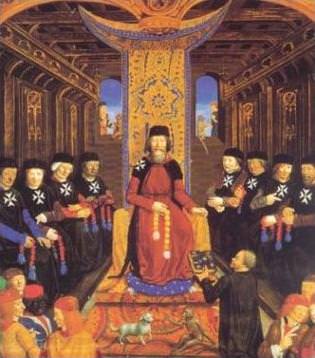
‘Images of the Other: Venice’s Perception of the Knights of Malta’
The hostile perception which Venice generally entertained of the Knights Hospitallers on Rhodes and Malta was not an attitude which the Republic secretly assumed and secretly endeavoured with much effort to disguise.
Between Byzantium and Venice: Western Music in Crete
Were there orchestras, and which was their place in the life of the Catholic or Byzantine Churches? On the other hand, to what extent was the organ used in the liturgical space and by whom?
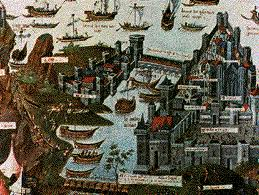
“For the Honor of God and of the Holy Roman Church:” Understanding Venetian Motivations and Involvement during the Fourth Crusade
This thesis will attempt to unravel how it came to be that men who claimed to fight in the name of the cross had come to attack one of the most important cities in all of Christendom. It shall focus particularly on the motivations and actions of the Venetians, a people whose involvement in this crusade and the crusading movement in general has often been misunderstood.
How Venice almost got a second head of Saint Mark the Evangelist
In 1419, Venice was almost able to get a second head of Saint Mark the Evangelist.
High Throughput, Multiplexed Pathogen Detection Authenticates Plague Waves in Medieval Venice, Italy
Historical records suggest that multiple burial sites from the 14th–16th centuries in Venice, Italy, were used during the Black Death and subsequent plague epidemics.
Long Distance Trade Partnerships and Social dynamic in Medieval Genoa
Likewise, for those specifically addressing the transition from feudalism to capitalism, the participation of the dominant class to the Italian medieval commercial revolution often run contrary to account that pits the nobility against the urban merchants.