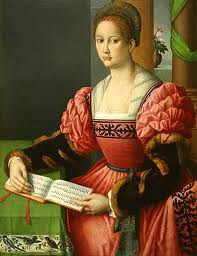
Late medieval bling-bling
Illustrations and surviving clothing and accessories however present an entirely different picture of medieval fashion: bright, contrasting colours, costly, lavishly decorated fabrics and belts and bags adorned with all kinds of golden and silver-coloured mounts.
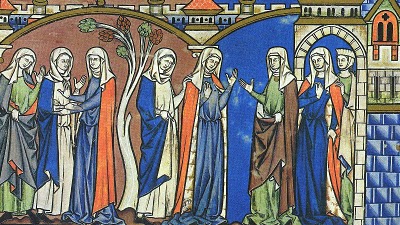
Living la vita apostolica: Life expectancy and mortality of nuns in late-medieval Holland
Living la vita apostolica: Life expectancy and mortality of nuns in late-medieval Holland Jaco Zuijderduijn (Utrecht University ) Centre for Global Economic History:…
England’s First Attempt to Break the Commercial Monopoly of the Hanseatic League, 1377-1380
During the second half of the fourteenth century English traders first seriously threatened the Hanseatic League’s commercial monopoly in the Baltic. The League, attempting to defendits monopoly, treated the English unjustly,where upon in 1377 the English Parliament rescinded the charter that granted the League important concessions and privileges in its English trade.
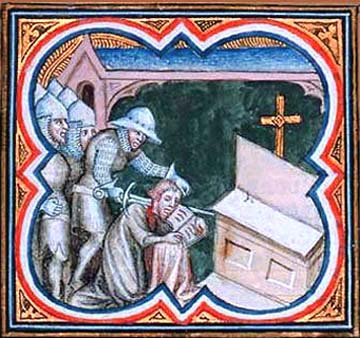
Galbert of Bruges’ ‘Journal’: From Medieval Flop to Modern Bestseller
Galbert’s text was an utter failure in the Middle Ages. No medieval copies of the journal survive and there is no reason to believe that more than one copy of it every existed during the period.
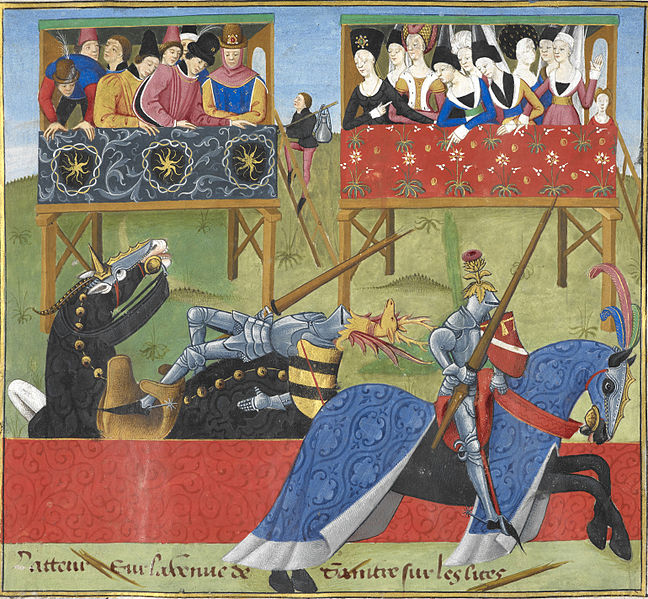
Urban Jousts in the Later Middle Ages: The White Bear of Bruges
Jousting competitions between towns excited passions which, far from releasing citizens into some escapist unreality, could plunge them instead into violence.

Were Medieval Prostitutes Marginals? Evidence from Sluis, 1387-1440
How convincing is the idea that all prostitutes had common, inalienable characteristics? How convincing is the view that prostitutes formed a distinct and clearly identifiable group?
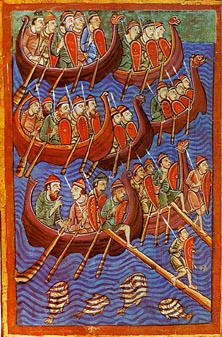
How Destructive were the Vikings?
Danielle Trynoski reports on the paper “How Much Material Damage Did the Northmen Do in Northern Europe?” given by Lesley Anne Morden
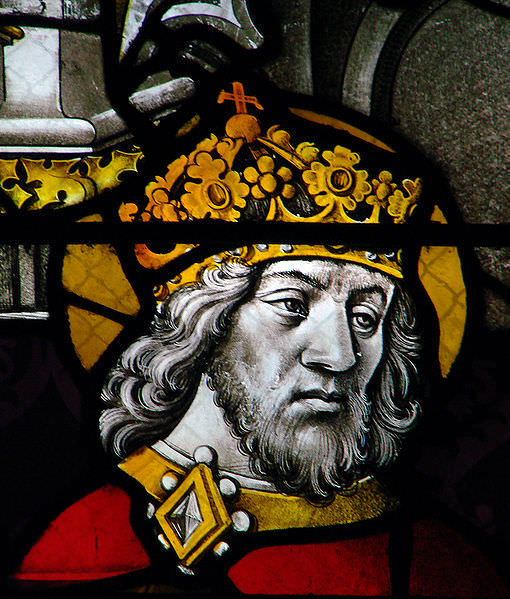
Medieval Dutch Charlemagne Romances: An Overview
The great majority of the Middle Dutch Charlemagne romances are adaptations of Old French chansons de geste.
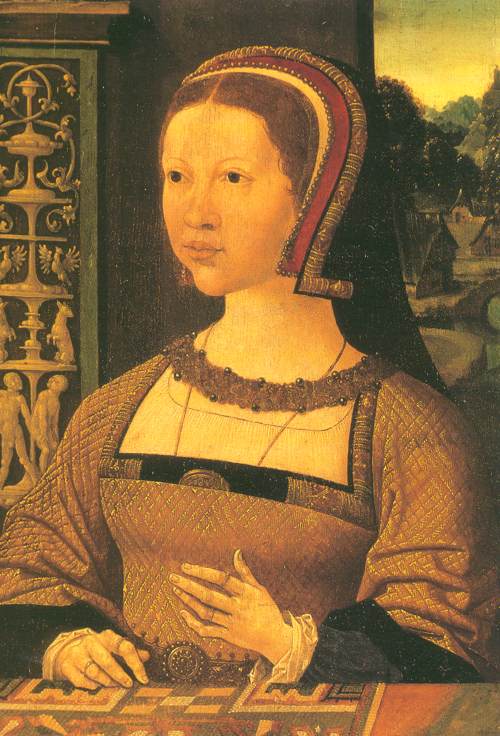
Margaret of Austria, Duchess of Savoy and Regent of the Netherlands
Margaret’s Motto: Fortune, Infortune, Fortune pretty much sums up her extraordinary life.
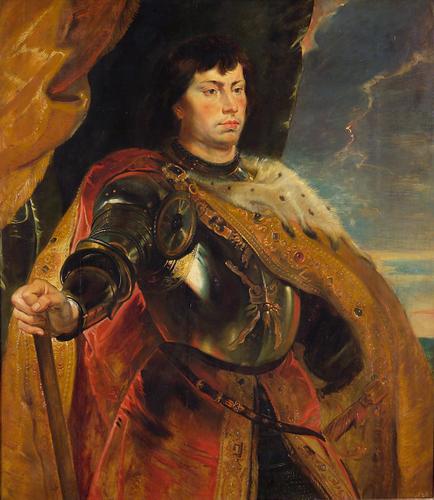
How Charles the Bold dispensed justice
Shortly before his visit to Middelburg, the governor, a nobleman and knight, fell in love with a married woman. She indignantly spurned his advances. The governor took revenge against the woman by having her husband arrested and imprisoned on a charge of high treason.

Late medieval choir stalls and the search for their maker
Christel Theunissen, a graduate student at Radboud University, has created this video introducing the research she is doing on medieval choir stalls.

Famous medieval bridge in Belgium under threat from canal project
The Pont des Trous, a 13th century bridge in the city of Tournais, could be torn down and replaced as part of large project to create a canal that would link France with the Low Countries.

Learning by doing or expert knowledge? Technological innovations in dike-building in coastal Flanders (13th-18th centuries AD)
Dike construction apparently uses simple technology, with slow and gradual change; not the kind of technology that reshaped the material conditions of living, comparable to the spread of electricity or sanitation in the 19th century ‘networked’ city (and linked to the disciplining of society and the rise of domesticity and the modern self-reflexive individual) (often inspired by Latour and Foucault).
New Insights from the Metal Detected Brooches of Early Medieval Frisia
My research undertook the bulk analysis of over 600 copper alloy brooches by hhXRF and onsite morphological analysis at repositories in the north of Holland.
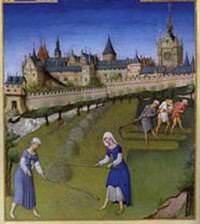
Into the frontier: medieval land reclamation and the creation of new societies. Comparing Holland and the Po Valley, 800-1500
In the paper it is shown that medieval land reclamation led to the emergence of two very divergent societies, characterised by a number of different configurations; (a) power and property structure, (b) modes of exploitation, (c) economic portfolios, and (d) commodity markets.

Medieval Books of Hours in the Public Library of Bruges
A documentary created by the Public Library of Bruges about their collection

The God of History: The Concept of God in the Works of Galbert of Bruges and Walter of Thérouanne
Charles the Good, count of Flanders, was surrounded by assassins and killed by a sword blow to the forehead while praying in an upper chapel of his castral church of Saint Donation in Bruges on March 2, 1127.

Female brewers in Holland and England
I also want to know why women worked in those professions, what the background of these women was and if changes occurred over time.

The Hidden Masters of the Middle Ages: the Limbourg Brothers
Their best known work is the Très Riches Heures du Duc de Berry, which is called the ‘most valuable book in the world.’
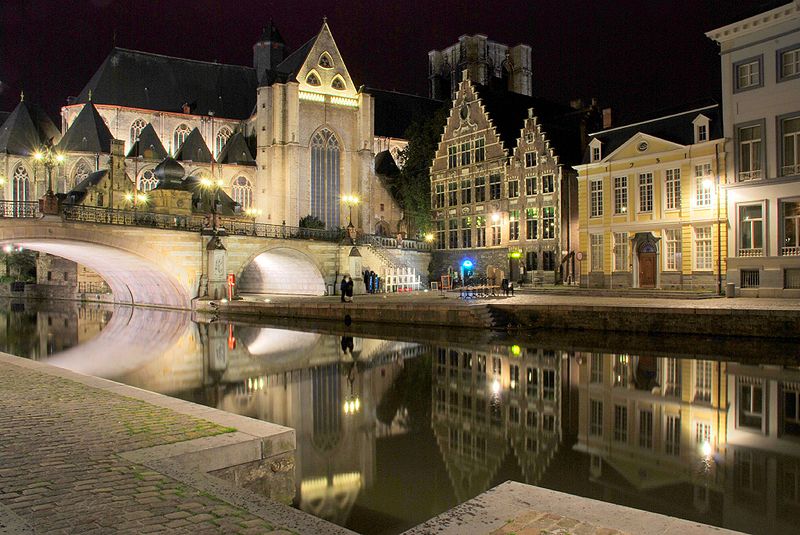
Urban Space and Political Conflict in Late Medieval Flanders
This essay investigates political claims over space in Ghent, urban Flanders’ largest city during the late Middle Ages.
The Assassination of Godfrey the Hunchback
One of the earliest reports comes from Lambert of Hersfeld. Around 1078, he wrote a rather extensive account of the assassination, with several details: the assault took place in the city of Antwerp, in the night, when the duke had retired ‘because of a natural need’.
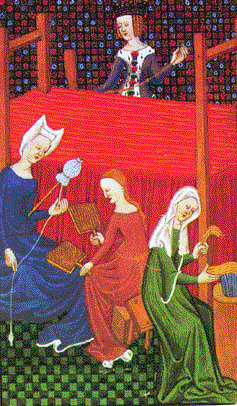
Handspinners of the Later Middle Ages and Renaissance
The Handspinners of Paris, France: In 1270, a royal judge, Etienne Boileau, compiled “Le Livre de Metiers” (The Book of Trades) which contained the ordinances of 100 Parisian craft guilds. By consulting the surviving tax rolls of 1292, 1300, and 1313, it is possible to determine the extent to which these crafts were practiced.
Tournament Culture in the Low Countries and England
In England and the Low Countries towards the end of the thirteenth century, a common chivalric culture had emerged which permitted exchanges and mutual participation in tournaments on both sides of the Channel.
Tolling the Rhine in 1254: Complementary Monopoly Revisited
Given a demand for Rhine travel, an Emperor faced a classic complementary monopoly problem: how many toll stations to have, where to site them, and what toll to charge at each.