How did Charlemagne and his successors gather the information needed to wage war across a vast and volatile frontier? From interrogating travellers to compiling detailed reports on enemy fortresses, the Carolingians developed sophisticated systems of intelligence and planning that underpinned their military success.
By David Bachrach
During the later eighth century, Charlemagne’s cousin and leading advisor Adalhard of Corbie (died 826) wrote a handbook for the administrators, who were to govern Italy on behalf of Charlemagne’s son Pippin (781-810). The information provided in De ordine palatii (On the Organization of the Palace), as Adalhard called his book, was based on his own experiences at the court of Charlemagne and the latter’s father Pippin. As might be expected, Adalhard gave a considerable amount of attention to military matters, and particularly to the great importance of gathering intelligence when developing plans for a campaign.
How the Carolingian Court Gathered Information
Adalhard identified several important ways in which the royal court was to obtain intelligence about a great range of matters, including military threats. He emphasized that anyone coming to court from a frontier region was to be interrogated about what was going on in neighboring lands. One key rubric concerned the development of information about peoples that were subject to the Franks and paid tributes. The ruler should be given as early a warning as possible if these peoples were becoming disgruntled and potentially preparing for a rebellion.
Similarly, individuals travelling to lands that were not yet subject to the regnum Francorum also were to be interrogated to obtain any potentially useful information. This data might have included not only signs of hostility among these foreign peoples, but also details about transportation routes, sources of water, and other aspects of the natural and man-made topography that would be important to know should the Carolingians decide to invade.
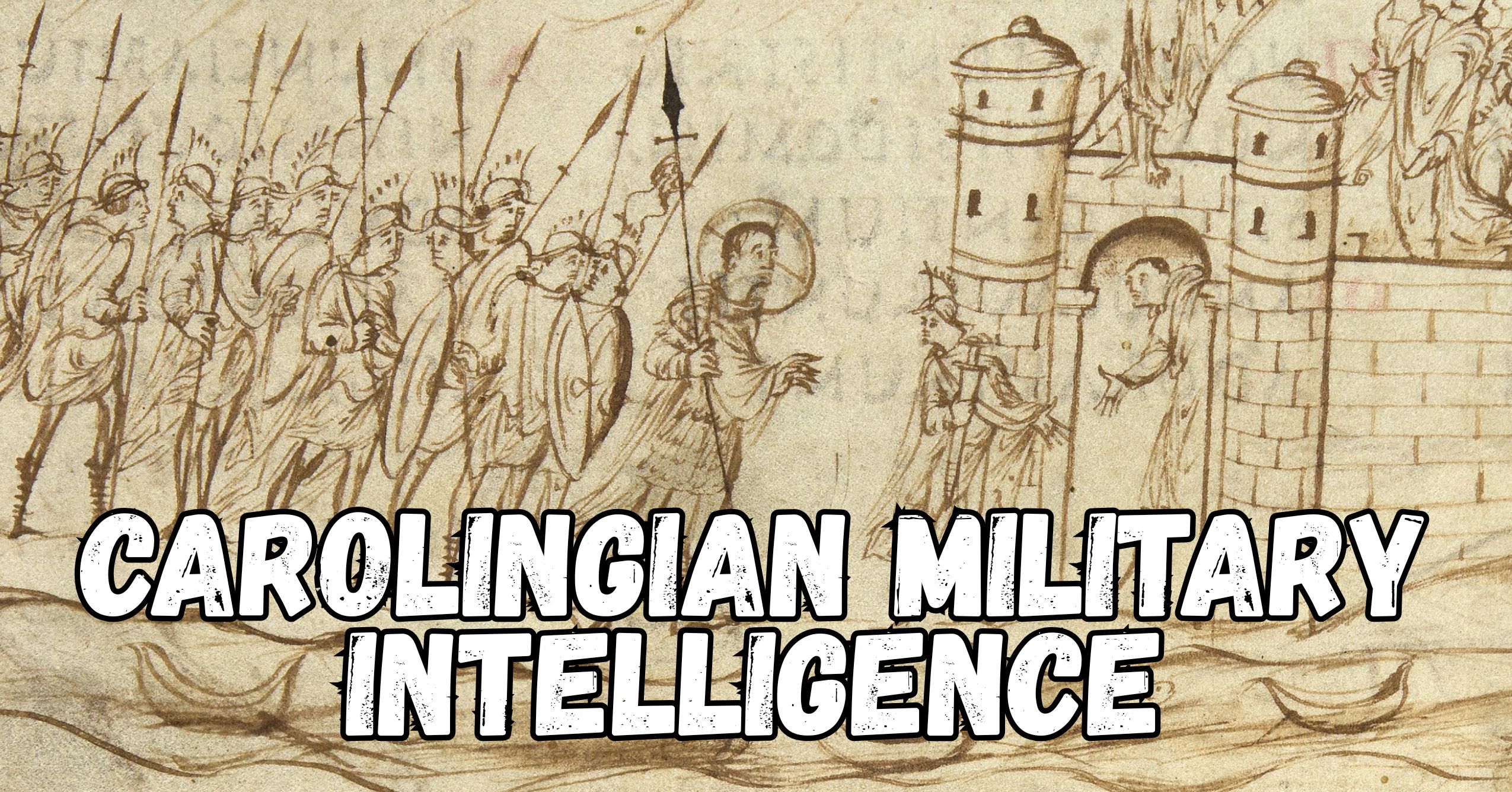
Scenes of war from the Utrecht Psalter – Utrecht, Universiteitsbibliotheek, MS Bibl. Rhenotraiectinae I Nr 32
Although visitors coming to court or questioned by officials on the frontier on an ad hoc basis had the potential to turn up valuable nuggets of information, Adalhard was particularly focused on the role that experts were to play in developing military plans. The term that Adalhard used to describe the ruler’s special advisors was praecipui consiliarii by which he meant men who had developed specific expertise in one or another topic. In military terms, this largely meant men who had gained expertise regarding a region of the frontier or lands beyond the frontier.
Adalhard recommended that early each winter, the ruler was to summon a special planning group, which he denoted as the magistratus. This planning group was responsible for developing information about current and potential adversaries for the purpose of planning military operations. The members of the magistratus were to draw up their findings and recommendations in a series of texts denoted as capitula, which is the same word applied to the various mandates issued by the Carolingian kings. Notably, Adalhard emphasized that it was essential that the members of the magistratus keep all of their findings secret so that no word of the ruler’s potential plans could be obtained by the enemy.
Narrative sources from the early ninth century provide a considerable amount of information regarding the types of men whom Adalhard denoted as the praecipui consiliarii, and how their expertise was used by Carolingian rulers to make military plans. In his biography of Louis the Pious, composed in the mid-820s, the former royal official Ermoldus Nigellus observed that the Carolingian emperor routinely summoned frontier commanders to court to make their reports in the context of planning military operations. In one case, Ermoldus observes that Count Lambert of Nantes, the commander of the Breton March, reported on the situation in Brittany and convinced the court that a campaign there was necessary.
Intelligence in Action: Louis the Pious and Barcelona
Ermoldus offers considerably more detail about the information provided by a frontier commander when discussing the annual planning session that took place in early 801 as Charlemagne was developing plans for the conquest of the region that would become the Spanish March (Catalonia) and the capture of the fortress city of Barcelona. The military commander of the frontier region along the Pyrenees, William of Toulouse (790-806), presented a detailed intelligence report regarding the deployment of Muslim forces in Spain, which he had developed through his own reconnaissance efforts. He provided information about the fortifications that the Muslims had garrisoned and the safest routes for moving forces through their territory. Ermoldus credited William with providing the information that made possible the campaign under the command of Louis the Pious that ended with the capture of Barcelona.
Wandalbert of Prüm presents his martyrology to a king, probably Louis the German, in a 9th-century illustration – Biblioteca Apostolica Vaticana, Reg. lat. 438, fol. 1v
We see this same attention to the gathering of intelligence by Louis the Pious’ son Louis the German (840-876). In his case, rather than a report in a narrative account we have actual “work product” produced by agents operating on the king’s behalf. The eastern frontier of Louis the German’s kingdom extended almost a thousand kilometers from the mouth of the Elbe River in the north to the Isar River in the south. Along almost this entire distance, Louis faced hostile or potentially hostile forces, and routinely dispatched armies against the trans-Saale and trans-Elben Slavic polities as well as against the Bohemians and Moravians.
To prepare for these campaigns, which were focused largely on siege warfare, Louis the German required a detailed accounting of the military assets of his enemies. A fortuitously surviving text, sometimes denoted as the work of the Bavarian Geographer and entitled “A Description of the Fortresses and Regions North of the Danube” provides a listing from north to south of the fortifications held by the various Slavic peoples along the frontier. The document identifies a total of 246 sites. Extensive work by archaeologists over the past 70 years has revealed that many of these fortifications were constructed initially during the early to mid-ninth century and thus precisely in the timeframe when this document was produced.
Another piece of “work product” survives from the reign of Arnulf of Carinthia (887-889), a grandson of Louis the German, who acquired the entirety of his grandfather’s kingdom after a coup d’état in 877 against Emperor Charles III. Among Arnulf’s main military challenges was dealing with the rising power of the Moravian state, and he devoted considerable attention to dealing with threats from this direction.
It is in this context that another fortuitously surviving document, a letter from Margrave Aribo to Arnulf, includes information about the espionage work that Aribo’s agents had undertaken. He reported, in particular, that leading men in the Moravian state were prepared to rebel against their prince Svatopluk (870-894) and place themselves under the rule of Arnulf. Aribo went on to state that Bishop Wiching of Nitra, who later served as Arnulf’s chancellor, had agents in operation in Moravia and that he would pass along the intelligence that they gathered as soon as he could.
Adalhard of Corbie’s handbook about governing a polity was not merely a theoretical guide to politics and power but rather provided information about key “real world” practices that all effective rulers had to implement. In the realm of intelligence gathering, Adalhard’s views about the importance of collecting information about the lands along the frontier clearly were put into practice by Charlemagne and his descendants. This is undoubtedly one of the reasons why the Carolingians enjoyed military success over the long term.
David Bachrach is a Professor at the University of New Hampshire, where he researches medieval military history, particularly in England and Germany.

How did Charlemagne and his successors gather the information needed to wage war across a vast and volatile frontier? From interrogating travellers to compiling detailed reports on enemy fortresses, the Carolingians developed sophisticated systems of intelligence and planning that underpinned their military success.
By David Bachrach
During the later eighth century, Charlemagne’s cousin and leading advisor Adalhard of Corbie (died 826) wrote a handbook for the administrators, who were to govern Italy on behalf of Charlemagne’s son Pippin (781-810). The information provided in De ordine palatii (On the Organization of the Palace), as Adalhard called his book, was based on his own experiences at the court of Charlemagne and the latter’s father Pippin. As might be expected, Adalhard gave a considerable amount of attention to military matters, and particularly to the great importance of gathering intelligence when developing plans for a campaign.
How the Carolingian Court Gathered Information
Adalhard identified several important ways in which the royal court was to obtain intelligence about a great range of matters, including military threats. He emphasized that anyone coming to court from a frontier region was to be interrogated about what was going on in neighboring lands. One key rubric concerned the development of information about peoples that were subject to the Franks and paid tributes. The ruler should be given as early a warning as possible if these peoples were becoming disgruntled and potentially preparing for a rebellion.
Similarly, individuals travelling to lands that were not yet subject to the regnum Francorum also were to be interrogated to obtain any potentially useful information. This data might have included not only signs of hostility among these foreign peoples, but also details about transportation routes, sources of water, and other aspects of the natural and man-made topography that would be important to know should the Carolingians decide to invade.
Although visitors coming to court or questioned by officials on the frontier on an ad hoc basis had the potential to turn up valuable nuggets of information, Adalhard was particularly focused on the role that experts were to play in developing military plans. The term that Adalhard used to describe the ruler’s special advisors was praecipui consiliarii by which he meant men who had developed specific expertise in one or another topic. In military terms, this largely meant men who had gained expertise regarding a region of the frontier or lands beyond the frontier.
Adalhard recommended that early each winter, the ruler was to summon a special planning group, which he denoted as the magistratus. This planning group was responsible for developing information about current and potential adversaries for the purpose of planning military operations. The members of the magistratus were to draw up their findings and recommendations in a series of texts denoted as capitula, which is the same word applied to the various mandates issued by the Carolingian kings. Notably, Adalhard emphasized that it was essential that the members of the magistratus keep all of their findings secret so that no word of the ruler’s potential plans could be obtained by the enemy.
Narrative sources from the early ninth century provide a considerable amount of information regarding the types of men whom Adalhard denoted as the praecipui consiliarii, and how their expertise was used by Carolingian rulers to make military plans. In his biography of Louis the Pious, composed in the mid-820s, the former royal official Ermoldus Nigellus observed that the Carolingian emperor routinely summoned frontier commanders to court to make their reports in the context of planning military operations. In one case, Ermoldus observes that Count Lambert of Nantes, the commander of the Breton March, reported on the situation in Brittany and convinced the court that a campaign there was necessary.
Intelligence in Action: Louis the Pious and Barcelona
Ermoldus offers considerably more detail about the information provided by a frontier commander when discussing the annual planning session that took place in early 801 as Charlemagne was developing plans for the conquest of the region that would become the Spanish March (Catalonia) and the capture of the fortress city of Barcelona. The military commander of the frontier region along the Pyrenees, William of Toulouse (790-806), presented a detailed intelligence report regarding the deployment of Muslim forces in Spain, which he had developed through his own reconnaissance efforts. He provided information about the fortifications that the Muslims had garrisoned and the safest routes for moving forces through their territory. Ermoldus credited William with providing the information that made possible the campaign under the command of Louis the Pious that ended with the capture of Barcelona.
We see this same attention to the gathering of intelligence by Louis the Pious’ son Louis the German (840-876). In his case, rather than a report in a narrative account we have actual “work product” produced by agents operating on the king’s behalf. The eastern frontier of Louis the German’s kingdom extended almost a thousand kilometers from the mouth of the Elbe River in the north to the Isar River in the south. Along almost this entire distance, Louis faced hostile or potentially hostile forces, and routinely dispatched armies against the trans-Saale and trans-Elben Slavic polities as well as against the Bohemians and Moravians.
To prepare for these campaigns, which were focused largely on siege warfare, Louis the German required a detailed accounting of the military assets of his enemies. A fortuitously surviving text, sometimes denoted as the work of the Bavarian Geographer and entitled “A Description of the Fortresses and Regions North of the Danube” provides a listing from north to south of the fortifications held by the various Slavic peoples along the frontier. The document identifies a total of 246 sites. Extensive work by archaeologists over the past 70 years has revealed that many of these fortifications were constructed initially during the early to mid-ninth century and thus precisely in the timeframe when this document was produced.
Another piece of “work product” survives from the reign of Arnulf of Carinthia (887-889), a grandson of Louis the German, who acquired the entirety of his grandfather’s kingdom after a coup d’état in 877 against Emperor Charles III. Among Arnulf’s main military challenges was dealing with the rising power of the Moravian state, and he devoted considerable attention to dealing with threats from this direction.
It is in this context that another fortuitously surviving document, a letter from Margrave Aribo to Arnulf, includes information about the espionage work that Aribo’s agents had undertaken. He reported, in particular, that leading men in the Moravian state were prepared to rebel against their prince Svatopluk (870-894) and place themselves under the rule of Arnulf. Aribo went on to state that Bishop Wiching of Nitra, who later served as Arnulf’s chancellor, had agents in operation in Moravia and that he would pass along the intelligence that they gathered as soon as he could.
Adalhard of Corbie’s handbook about governing a polity was not merely a theoretical guide to politics and power but rather provided information about key “real world” practices that all effective rulers had to implement. In the realm of intelligence gathering, Adalhard’s views about the importance of collecting information about the lands along the frontier clearly were put into practice by Charlemagne and his descendants. This is undoubtedly one of the reasons why the Carolingians enjoyed military success over the long term.
David Bachrach is a Professor at the University of New Hampshire, where he researches medieval military history, particularly in England and Germany.
Click here to read more from David Bachrach
Further Readings:
Bernard S. Bachrach, “Charlemagne and the Carolingian General Staff,” The Journal of Military History 66 (2002), 313‒57.
Bernard S. Bachrach, “Adalhard’s De ordine palatii: Some Methodological Observations Regarding Chapters 29‒36,” Cithara 39 (2001). 3‒36.
David S. Bachrach and Bernard S. Bachrach, “Military Intelligence and Long-Term Planning in the Ninth Century: The Carolingians and their Adversaries,” Mediavistik 33 (2020), 89-111.
Subscribe to Medievalverse
Related Posts