In the summer of 1187, a doomed crusader army marched into disaster near the Horns of Hattin. At the centre of the collapse stood the Templars, whose final charges became one of the most desperate last stands of the Crusades.
By Steve Tibble
In July 1187, shortly after the intangible glory (and all too tangible gore) of the Templar massacre at the Springs of the Cresson, Guy of Lusignan, the weak and vacillating king of Jerusalem, made an appalling decision – he was persuaded to take his troops to the rescue of the castle of Tiberias, besieged by Saladin’s armies.
Marching along an almost waterless route, surrounded and hopelessly outnumbered by Muslim armies, the Frankish forces were falling apart even before they made serious contact with the enemy. As the doomed crusader army paced slowly towards the village of Hattin on 3–4 July 1187, the Templars were assigned the position of greatest danger, and the one which the Franks knew required most discipline in the face of enemy provocation – the rearguard.
The Templar rearguard was increasingly pushed back, as the weight of enemy numbers began to tell. Eventually, they made a desperate charge to try to keep Saladin’s troops at bay. Afterwards, as recriminations were bandied about, messages sent back to the West after the battle complained that it was only a lack of support from other parts of the army that had caused the Templar charge to fail. One letter sent by the Hospitallers to Italy said that ‘at around the third hour the master of the Temple charged with all his brothers. They received no assistance, and God allowed most of them to be lost.’
The battle dragged on remorselessly towards its inevitable, shocking conclusion. King Guy did not command the respect of his vassals, so the last stand of the Frankish army, fought around the king’s tent, was inevitably a somewhat lonely affair. Some men had already fled or fought their way out. Others had surrendered or taken temporary refuge on a nearby hill. A few of Guy’s close allies were still with him – but the core of this final die-hard band were the men of the military orders.
15th-century depiction of King Guy marching to battle with Saladin – BnF, MS Français 138 fol.164
There was precious little hope. They were a couple of hundred knights at most, surrounded by tens of thousands. But the Templars fell back on their ideology – they had only the most negligible chance of material success, but they could still go down fighting, inspired by the glorious prospect of sacrifice and martyrdom. Even their Muslim enemies knew what was happening. As Ibn al-Athir later wrote, ‘they understood that they would only be saved from death by facing it boldly’.
The Templars chose the same path they had taken at Mont Gisard ten years earlier – they identified Saladin’s standards, lowered their lances and charged. Saladin’s son, al-Afdal, saw what happened next. He was sitting with his father at the end of the battle and left an extraordinary account of these last desperate assaults.
‘I was alongside my father during this battle,’ he wrote, ‘the first I had witnessed. When the king of the Franks was on the hill…they made a formidable charge against the Muslims facing them, so that they drove them back to my father. I looked towards him and he was overcome by grief and his complexion pale . . . The Muslims rallied, returned to the fight and climbed the hill. When I saw that the Franks withdrew, pursued by the Muslims, I shouted for joy, “We have beaten them!” But the Franks rallied and charged again like the first time and drove the Muslims back to my father. He acted as he had on the first occasion and the Muslims turned upon the Franks and drove them back to the hill. I again shouted, “We have beaten them!” but my father rounded on me and said, “Be quiet! We have not beaten them until that tent falls.” As he was speaking to me, the tent [of King Guy] fell.’
The Templars’ last charges were awe-inspiring, and they caused Saladin some moments of real fear even though the battle was, for all practical purposes, already over. But now it was time for revenge.
The Frankish army at Hattin, the greatest force ever fielded by the crusader states, had been defeated. Most of the survivors were captured and enslaved. But not the Templars. Saladin had something else in mind for them.
The sultan had the prisoners from the military orders rounded up and killed for the entertainment of his men. Imad ad-Din, Saladin’s chancellor and secretary, had a grandstand view of how the Templar prisoners of war were slaughtered in an obscenely amateurish fashion by Muslim religious scholars. He left a customarily obsequious and flowery account of the grim event:
‘…two days after the victory [at Hattin],’ he wrote, ‘the Sultan sought out the Templars and Hospitallers who had been captured and said: “I shall purify the land of these two impure races.”…He ordered that they should be beheaded, choosing to have them dead rather than in prison. With him was a whole band of scholars and Sufis and a certain number of devout men and ascetics; each begged to be allowed to kill one of them, and drew his sword and rolled back his sleeve.’
Saladin took huge pleasure from the spectacle of death which he instructed to be played out in front of him: ‘his face joyful, [he] was sitting on his dais; the unbelievers showed black despair, the troops were drawn up in their ranks, the amirs stood in double file. There were some who slashed and cut cleanly, and were thanked for it; some who refused and failed to act, and were excused; some who made fools of themselves, and others took their places.’ Saladin’s revenge for his humiliation at Mont Gisard was elaborate, public and savoured.
A few days after the battle, the senior surviving Templar, a preceptor named Terricus, wrote about what happened next. He had fought at Hattin, so he described events through the traumatic prism of experience. He was probably part of the small Christian vanguard which had carved its way out through the Muslim lines as the outcome of the battle became clear – he and a small band of comrades escaped to the Christian strongholds on the coast. Coming so soon after the disaster, the horror of the events which he had witnessed was palpable.
Terricus, in his shocked letter back to the West, wrote that ‘two hundred and thirty of our [Templar] brothers were beheaded that day…the other sixty having been killed on 1 May,’ executed after the battle of the Springs of the Cresson. There were a few stunned survivors, but there was a glaring, unavoidable truth.
The Templars in the East had almost ceased to exist as a fighting force.
Steve Tibble, an honorary research associate at Royal Holloway, University of London, has a new book out – Assassins and Templars: A Battle in Myth and Blood – from Yale University Press. It tells the true history behind the hugely popular video game Assassin’s Creed and the medieval world’s two most extraordinary organisations, tracing their origins, strategies, violent clashes, and enduring legacy in myth and memory.
You can get your copy of Assassins and Templars: A Battle in Myth and Blood through

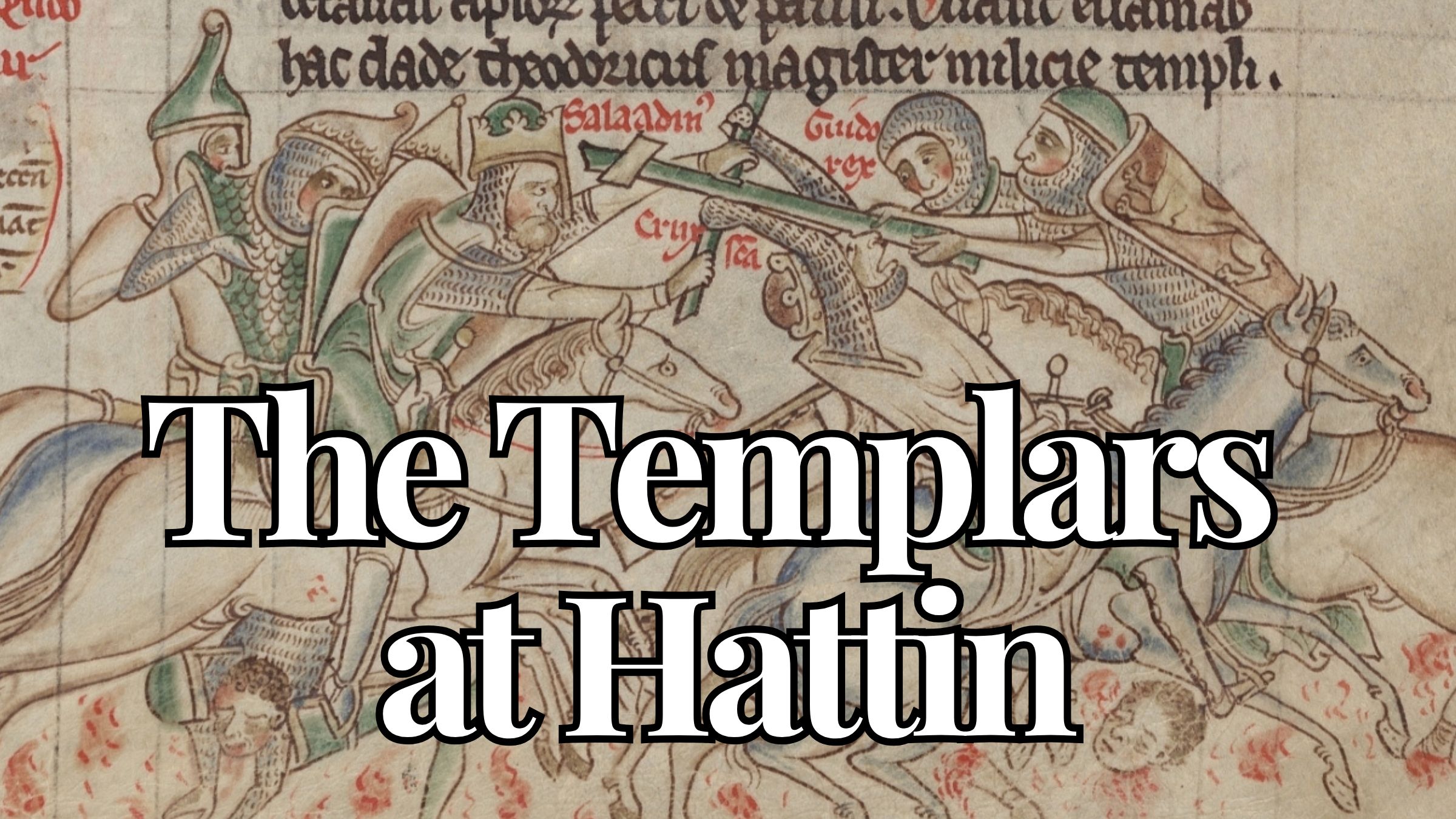
In the summer of 1187, a doomed crusader army marched into disaster near the Horns of Hattin. At the centre of the collapse stood the Templars, whose final charges became one of the most desperate last stands of the Crusades.
By Steve Tibble
In July 1187, shortly after the intangible glory (and all too tangible gore) of the Templar massacre at the Springs of the Cresson, Guy of Lusignan, the weak and vacillating king of Jerusalem, made an appalling decision – he was persuaded to take his troops to the rescue of the castle of Tiberias, besieged by Saladin’s armies.
Marching along an almost waterless route, surrounded and hopelessly outnumbered by Muslim armies, the Frankish forces were falling apart even before they made serious contact with the enemy. As the doomed crusader army paced slowly towards the village of Hattin on 3–4 July 1187, the Templars were assigned the position of greatest danger, and the one which the Franks knew required most discipline in the face of enemy provocation – the rearguard.
The Templar rearguard was increasingly pushed back, as the weight of enemy numbers began to tell. Eventually, they made a desperate charge to try to keep Saladin’s troops at bay. Afterwards, as recriminations were bandied about, messages sent back to the West after the battle complained that it was only a lack of support from other parts of the army that had caused the Templar charge to fail. One letter sent by the Hospitallers to Italy said that ‘at around the third hour the master of the Temple charged with all his brothers. They received no assistance, and God allowed most of them to be lost.’
The battle dragged on remorselessly towards its inevitable, shocking conclusion. King Guy did not command the respect of his vassals, so the last stand of the Frankish army, fought around the king’s tent, was inevitably a somewhat lonely affair. Some men had already fled or fought their way out. Others had surrendered or taken temporary refuge on a nearby hill. A few of Guy’s close allies were still with him – but the core of this final die-hard band were the men of the military orders.
There was precious little hope. They were a couple of hundred knights at most, surrounded by tens of thousands. But the Templars fell back on their ideology – they had only the most negligible chance of material success, but they could still go down fighting, inspired by the glorious prospect of sacrifice and martyrdom. Even their Muslim enemies knew what was happening. As Ibn al-Athir later wrote, ‘they understood that they would only be saved from death by facing it boldly’.
The Templars chose the same path they had taken at Mont Gisard ten years earlier – they identified Saladin’s standards, lowered their lances and charged. Saladin’s son, al-Afdal, saw what happened next. He was sitting with his father at the end of the battle and left an extraordinary account of these last desperate assaults.
‘I was alongside my father during this battle,’ he wrote, ‘the first I had witnessed. When the king of the Franks was on the hill…they made a formidable charge against the Muslims facing them, so that they drove them back to my father. I looked towards him and he was overcome by grief and his complexion pale . . . The Muslims rallied, returned to the fight and climbed the hill. When I saw that the Franks withdrew, pursued by the Muslims, I shouted for joy, “We have beaten them!” But the Franks rallied and charged again like the first time and drove the Muslims back to my father. He acted as he had on the first occasion and the Muslims turned upon the Franks and drove them back to the hill. I again shouted, “We have beaten them!” but my father rounded on me and said, “Be quiet! We have not beaten them until that tent falls.” As he was speaking to me, the tent [of King Guy] fell.’
The Templars’ last charges were awe-inspiring, and they caused Saladin some moments of real fear even though the battle was, for all practical purposes, already over. But now it was time for revenge.
The Frankish army at Hattin, the greatest force ever fielded by the crusader states, had been defeated. Most of the survivors were captured and enslaved. But not the Templars. Saladin had something else in mind for them.
The sultan had the prisoners from the military orders rounded up and killed for the entertainment of his men. Imad ad-Din, Saladin’s chancellor and secretary, had a grandstand view of how the Templar prisoners of war were slaughtered in an obscenely amateurish fashion by Muslim religious scholars. He left a customarily obsequious and flowery account of the grim event:
‘…two days after the victory [at Hattin],’ he wrote, ‘the Sultan sought out the Templars and Hospitallers who had been captured and said: “I shall purify the land of these two impure races.”…He ordered that they should be beheaded, choosing to have them dead rather than in prison. With him was a whole band of scholars and Sufis and a certain number of devout men and ascetics; each begged to be allowed to kill one of them, and drew his sword and rolled back his sleeve.’
Saladin took huge pleasure from the spectacle of death which he instructed to be played out in front of him: ‘his face joyful, [he] was sitting on his dais; the unbelievers showed black despair, the troops were drawn up in their ranks, the amirs stood in double file. There were some who slashed and cut cleanly, and were thanked for it; some who refused and failed to act, and were excused; some who made fools of themselves, and others took their places.’ Saladin’s revenge for his humiliation at Mont Gisard was elaborate, public and savoured.
A few days after the battle, the senior surviving Templar, a preceptor named Terricus, wrote about what happened next. He had fought at Hattin, so he described events through the traumatic prism of experience. He was probably part of the small Christian vanguard which had carved its way out through the Muslim lines as the outcome of the battle became clear – he and a small band of comrades escaped to the Christian strongholds on the coast. Coming so soon after the disaster, the horror of the events which he had witnessed was palpable.
Terricus, in his shocked letter back to the West, wrote that ‘two hundred and thirty of our [Templar] brothers were beheaded that day…the other sixty having been killed on 1 May,’ executed after the battle of the Springs of the Cresson. There were a few stunned survivors, but there was a glaring, unavoidable truth.
The Templars in the East had almost ceased to exist as a fighting force.
You can get your copy of Assassins and Templars: A Battle in Myth and Blood through
Yale University Press website
Amazon.com
Amazon.ca
Amazon.co.uk
To learn more about Steve, please visit his website or follow him on Instagram
Subscribe to Medievalverse
Related Posts