The Byzantine Empire is often imagined through the glittering domes and crowded streets of Constantinople, but most Byzantines lived far from the capital. From bustling cities to hard-working villages, daily life in Byzantium was shaped by sharp contrasts in wealth, power, and opportunity.
By Zoe Tsiami
When most people envision the Byzantine Empire, they conjure images of the opulence of Constantinople, with its shimmering mosaics, majestic domed churches, and vibrant, bustling markets filled with merchants from across the Mediterranean. However, the social reality of the Byzantine Empire was far more nuanced, extending well beyond the capital’s imposing walls. Life in Byzantine urban centers contrasted sharply with that of rural areas, creating a diverse societal landscape marked by profound differences in economy, social hierarchy, cultural practices, and daily experiences.
In the urban context, Constantinople served as a melting pot of cultures, where the elite engaged in political intrigue, scholars debated theological doctrines, and artisans showcased their exceptional craftsmanship. The city was a hub of commerce, with its strategic location along trade routes fostering a thriving economy, yet it also harbored stark social inequalities: the wealthy lived in lavish homes, while the lower classes often struggled to make ends meet.
In contrast, life in the countryside was characterized by agrarian routines and a close-knit community atmosphere. Peasants worked tirelessly on farms, cultivating crops such as wheat, olives, and grapes, often under the harsh realities of feudal obligations to local landowners. The rural landscape was dotted with small villages, where traditions remained strong, and communal ties were crucial for survival. These differences in lifestyle underscored the complexity of Byzantine society, revealing a rich tapestry of human experience shaped by geography, class, and culture. Understanding these distinctions is essential for a comprehensive grasp of Byzantine social dynamics and the empire’s enduring legacy.
Urban Life: Power, Commerce, and Culture
Some of cities and towns of the Byzantine Empire – map by Cplakidas / Wikimedia Commons
Byzantine cities, led by Constantinople, served as vibrant centers of political, commercial, and cultural activity. A clear social hierarchy marked urban life: at the top were the emperor and the courtly elites, followed by aristocrats, affluent merchants, skilled artisans, and the urban poor. While social mobility was somewhat restricted, it wasn’t entirely out of reach; connections to the imperial bureaucracy, military service, and successful trade ventures could elevate one’s status.
These cities were bustling and cosmopolitan, with markets alive with goods from across the Mediterranean, ranging from silk and spices to olive oil and glassware. Skilled trades were organized into guilds, which not only regulated economic activities but also shaped the social fabric, fostering a sense of community among professionals that reinforced their identities and place within the hierarchy. Public entertainment was a significant feature of urban life; events like chariot races at the Hippodrome and theatrical performances went beyond mere leisure, serving as platforms for political messages, communal identity, and social unity.
Education and religion were essential to the urban experience. The literate elite engaged in philosophy, theology, and law, while monasteries and churches played crucial roles in charity and moral guidance. Urban centers also acted as hubs of information and gossip, shaping reputations and influencing opportunities in ways that rural settings rarely offered.
Rural Life: The Backbone of the Empire
Parable of the Workers in the Vineyard: Workers on the field (down) and pay time (up), Byzantine Gospel of 11th century, BnF, Cod. gr. 74 fol. 39v
In stark contrast to the bustling cities, the majority of Byzantines found their lives anchored in picturesque villages and quaint agricultural settlements. Here, the rhythm of daily life was intricately woven with the changing seasons and the obligations to the close-knit community. Peasants, tenant farmers, and small landowners formed the lifeblood of the empire, diligently cultivating the fertile lands to produce essential staples such as grain, rich wines, and fragrant olive oil that sustained not only the urban populace but also the imperial armies.
Social hierarchies in these rural locales were deeply rooted and distinctly localized. Authority often rested in the hands of village elders, prosperous landowners, and regional officials, yet their power was as much about personal relationships as it was about status, imbued with a sense of communal responsibility. Ordinary peasants toiled on both communal and privately owned lands, often settling their debts with rent or taxes paid in kind—a handful of grain or a jug of olive oil—rather than in hard currency. Life was characterized by relentless labor, repetitive routines, and limited access to formal education or luxury items, creating a stark yet resilient existence.
Religious life in these villages revolved around modest yet vital local churches, veneration of saints, and the vibrant tapestry of seasonal festivals. While urban centers engaged in grand theological debates, the spiritual devotion of rural communities was expressed through their heartfelt participation in village rituals and practical acts of charity. Festivals linked to the cycles of planting, harvest, and religious observances illuminated their calendars, offering moments of joyous celebration, reinforcing social bonds, and providing welcome respite from the rigorous demands of agricultural toil.
Economy and Interdependence
Despite their differences, urban and rural Byzantium were deeply interconnected. Cities relied on the countryside for food, raw materials, and manpower. Rural areas, in turn, depended on cities for trade, tools, and access to luxury goods.
Urban Commerce: Cities thrived on trade networks connecting the Mediterranean, Black Sea, and beyond. Markets were hubs for imported luxury goods, and guilds controlled craftsmanship and production standards.
Rural Production: Villagers supplied essential commodities such as grain, wine, and olive oil. Some rural settlements were specialized, producing textiles, ceramics, or other goods demanded by urban markets.
This economic interdependence reinforced social hierarchies: urban elites wielded influence and consumed wealth, while rural producers maintained the labor and loyalty that underpinned the empire.
Social Tensions and Mobility
Map of Constantinople, from Civitates Orbis Terrarum, … Part 1. Köln, 1572-1624.
Urban-rural contrasts significantly influenced social tensions throughout history. In cities, discontent often erupted into riots or unrest driven by factors such as economic inequality, excessive taxation, and political machinations. A notable instance of this unrest was the Nika Revolt of 532 CE, when citizens of Constantinople revolted against Emperor Justinian I, motivated by grievances over taxation and political favoritism. In contrast, rural communities often faced oppressive landlords or burdensome imperial demands. While some villagers resorted to rebellion as a form of resistance, most favored using local networks and negotiation methods to address grievances, thereby avoiding large-scale violence.
Mobility varied greatly between urban and rural settings. Urban areas, fueled by trade, bureaucratic opportunities, and the accumulation of wealth, provided more avenues for social advancement. Merchants and skilled workers could rise into the ranks of the middle class, enjoying a more fluid social structure. Conversely, rural peasants typically faced significant barriers to upward mobility, finding their opportunities limited to successful land acquisition or distinguished military service, which were rare events. Achieving land ownership or serving valiantly in conflicts could occasionally elevate a family’s status. Yet, these instances remained exceptions rather than the rule, underscoring the rigid social hierarchy prevalent in rural societies.
Leisure, Festivals, and Cultural Life
Both urban and rural communities held leisure and celebration in high regard, though their expressions varied beautifully across different landscapes.
Urban Festivals: Vibrant public spectacles, grand religious processions, and exhilarating chariot races captivated the hearts of citizens, offering not only entertainment but also a means to reaffirm imperial authority and unity. The sights and sounds of these gatherings colored the cityscape, creating an atmosphere of grandeur where the echo of cheers mingled with the resonance of divine hymns.
Rural Festivals: In contrast, rural festivals blossomed with the warmth of community spirit. Harvest celebrations, local saint days, and seasonal fairs came alive with laughter and camaraderie, providing much-needed respite from the rigors of labor. These gatherings served as vibrant threads in the social fabric, weaving together neighbors’ lives while fostering agricultural pride and reinforcing a strong sense of belonging.
Together, these cultural practices not only celebrated the diversity of Byzantine life but also reinforced social hierarchies, all while nurturing a collective identity that transcended regional differences and brought people together in joyous unity.
Urban and rural Byzantium represented two distinct yet interconnected realms shaped by geography, economic structures, and intricate social hierarchies. The cities, such as Constantinople, pulsed with life, displaying dazzling wealth through ornate architecture, bustling markets, and vibrant political intrigue. Commerce thrived in these urban centers, where merchants traded an array of goods—from silks and spices to grains and artwork—fostering a rich tapestry of cultural exchange and innovation.
In contrast, the countryside played a crucial role as the backbone of the empire, where agrarian labor and traditional practices anchored the Byzantine way of life. Villages were often organized around communal bonds, with local customs and festivals reflecting a deep-rooted connection to the land. Agricultural production, particularly of vital staples like wheat and olives, not only sustained the rural populace but also ensured the cities’ continuous supply of food necessary for urban survival.
Despite their differences, these worlds were deeply intertwined: rural production was essential for urban prosperity, as cities relied on the agricultural outputs of the countryside to support their growing populations. Conversely, urban centers served as hubs of governance, providing markets for rural goods and facilitating the dissemination of cultural and intellectual trends that flowed back to the villages.
Together, these dynamics forged a Byzantine society that was both hierarchical and interdependent. The noble class in cities held authority over vast estates in the countryside, while peasants worked the land, contributing to the empire’s economy and stability. This delicate balance created a civilization that harmonized the glittering splendor of its urban landscapes with the enduring strength and resilience of its rural communities, ensuring the empire’s longevity and cultural richness.
Zoe Tsiami is a PhD(c) in Byzantine History at University of Thessaly. Her research interests include baptism, catechism and naming practices in the Early Byzantine period. She has published papers and taught at workshops relevant to Early Byzantine/Christian history.

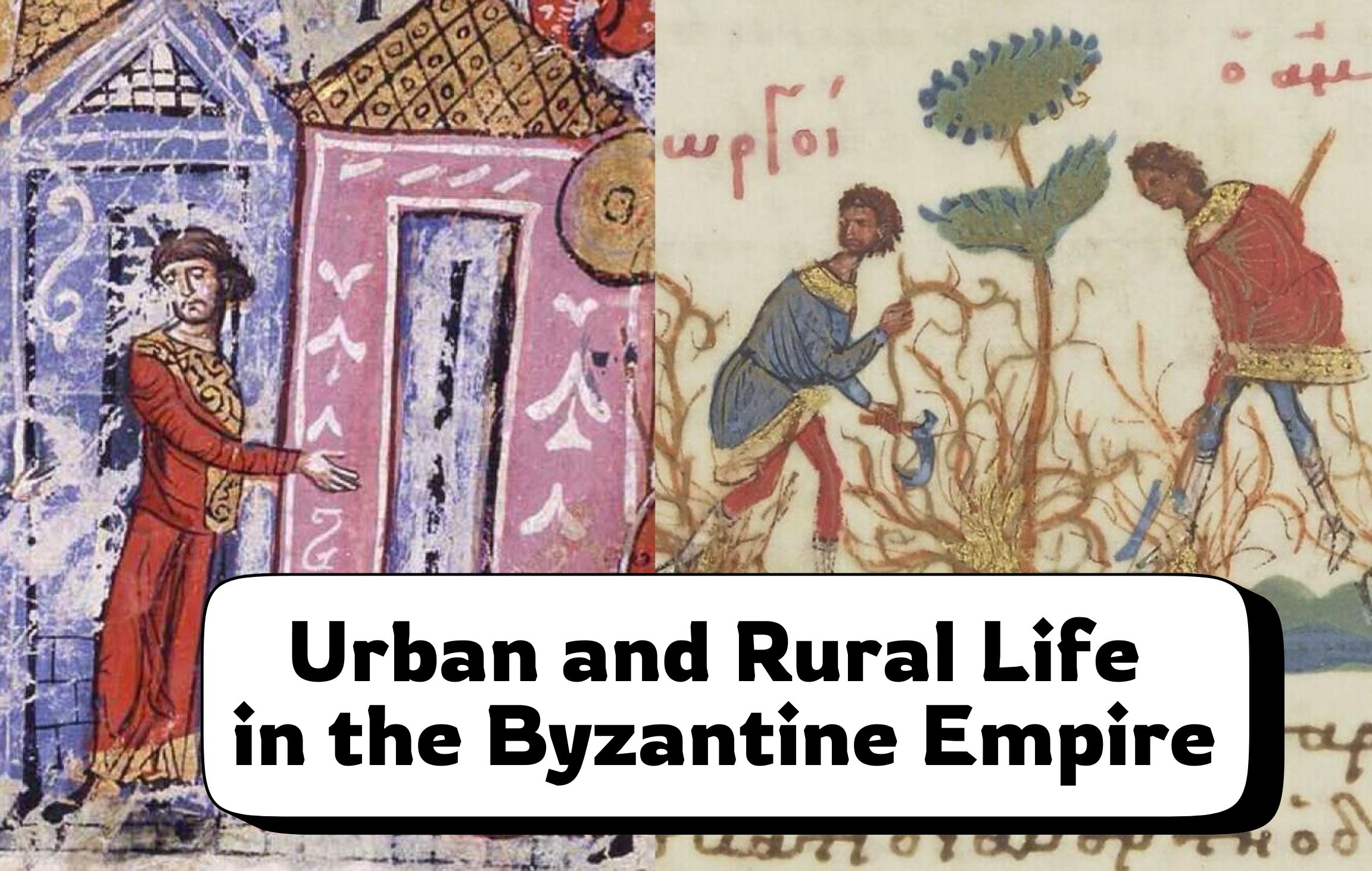
The Byzantine Empire is often imagined through the glittering domes and crowded streets of Constantinople, but most Byzantines lived far from the capital. From bustling cities to hard-working villages, daily life in Byzantium was shaped by sharp contrasts in wealth, power, and opportunity.
By Zoe Tsiami
When most people envision the Byzantine Empire, they conjure images of the opulence of Constantinople, with its shimmering mosaics, majestic domed churches, and vibrant, bustling markets filled with merchants from across the Mediterranean. However, the social reality of the Byzantine Empire was far more nuanced, extending well beyond the capital’s imposing walls. Life in Byzantine urban centers contrasted sharply with that of rural areas, creating a diverse societal landscape marked by profound differences in economy, social hierarchy, cultural practices, and daily experiences.
In the urban context, Constantinople served as a melting pot of cultures, where the elite engaged in political intrigue, scholars debated theological doctrines, and artisans showcased their exceptional craftsmanship. The city was a hub of commerce, with its strategic location along trade routes fostering a thriving economy, yet it also harbored stark social inequalities: the wealthy lived in lavish homes, while the lower classes often struggled to make ends meet.
In contrast, life in the countryside was characterized by agrarian routines and a close-knit community atmosphere. Peasants worked tirelessly on farms, cultivating crops such as wheat, olives, and grapes, often under the harsh realities of feudal obligations to local landowners. The rural landscape was dotted with small villages, where traditions remained strong, and communal ties were crucial for survival. These differences in lifestyle underscored the complexity of Byzantine society, revealing a rich tapestry of human experience shaped by geography, class, and culture. Understanding these distinctions is essential for a comprehensive grasp of Byzantine social dynamics and the empire’s enduring legacy.
Urban Life: Power, Commerce, and Culture
Byzantine cities, led by Constantinople, served as vibrant centers of political, commercial, and cultural activity. A clear social hierarchy marked urban life: at the top were the emperor and the courtly elites, followed by aristocrats, affluent merchants, skilled artisans, and the urban poor. While social mobility was somewhat restricted, it wasn’t entirely out of reach; connections to the imperial bureaucracy, military service, and successful trade ventures could elevate one’s status.
These cities were bustling and cosmopolitan, with markets alive with goods from across the Mediterranean, ranging from silk and spices to olive oil and glassware. Skilled trades were organized into guilds, which not only regulated economic activities but also shaped the social fabric, fostering a sense of community among professionals that reinforced their identities and place within the hierarchy. Public entertainment was a significant feature of urban life; events like chariot races at the Hippodrome and theatrical performances went beyond mere leisure, serving as platforms for political messages, communal identity, and social unity.
Education and religion were essential to the urban experience. The literate elite engaged in philosophy, theology, and law, while monasteries and churches played crucial roles in charity and moral guidance. Urban centers also acted as hubs of information and gossip, shaping reputations and influencing opportunities in ways that rural settings rarely offered.
Rural Life: The Backbone of the Empire
In stark contrast to the bustling cities, the majority of Byzantines found their lives anchored in picturesque villages and quaint agricultural settlements. Here, the rhythm of daily life was intricately woven with the changing seasons and the obligations to the close-knit community. Peasants, tenant farmers, and small landowners formed the lifeblood of the empire, diligently cultivating the fertile lands to produce essential staples such as grain, rich wines, and fragrant olive oil that sustained not only the urban populace but also the imperial armies.
Social hierarchies in these rural locales were deeply rooted and distinctly localized. Authority often rested in the hands of village elders, prosperous landowners, and regional officials, yet their power was as much about personal relationships as it was about status, imbued with a sense of communal responsibility. Ordinary peasants toiled on both communal and privately owned lands, often settling their debts with rent or taxes paid in kind—a handful of grain or a jug of olive oil—rather than in hard currency. Life was characterized by relentless labor, repetitive routines, and limited access to formal education or luxury items, creating a stark yet resilient existence.
Religious life in these villages revolved around modest yet vital local churches, veneration of saints, and the vibrant tapestry of seasonal festivals. While urban centers engaged in grand theological debates, the spiritual devotion of rural communities was expressed through their heartfelt participation in village rituals and practical acts of charity. Festivals linked to the cycles of planting, harvest, and religious observances illuminated their calendars, offering moments of joyous celebration, reinforcing social bonds, and providing welcome respite from the rigorous demands of agricultural toil.
Economy and Interdependence
Despite their differences, urban and rural Byzantium were deeply interconnected. Cities relied on the countryside for food, raw materials, and manpower. Rural areas, in turn, depended on cities for trade, tools, and access to luxury goods.
This economic interdependence reinforced social hierarchies: urban elites wielded influence and consumed wealth, while rural producers maintained the labor and loyalty that underpinned the empire.
Social Tensions and Mobility
Urban-rural contrasts significantly influenced social tensions throughout history. In cities, discontent often erupted into riots or unrest driven by factors such as economic inequality, excessive taxation, and political machinations. A notable instance of this unrest was the Nika Revolt of 532 CE, when citizens of Constantinople revolted against Emperor Justinian I, motivated by grievances over taxation and political favoritism. In contrast, rural communities often faced oppressive landlords or burdensome imperial demands. While some villagers resorted to rebellion as a form of resistance, most favored using local networks and negotiation methods to address grievances, thereby avoiding large-scale violence.
Mobility varied greatly between urban and rural settings. Urban areas, fueled by trade, bureaucratic opportunities, and the accumulation of wealth, provided more avenues for social advancement. Merchants and skilled workers could rise into the ranks of the middle class, enjoying a more fluid social structure. Conversely, rural peasants typically faced significant barriers to upward mobility, finding their opportunities limited to successful land acquisition or distinguished military service, which were rare events. Achieving land ownership or serving valiantly in conflicts could occasionally elevate a family’s status. Yet, these instances remained exceptions rather than the rule, underscoring the rigid social hierarchy prevalent in rural societies.
Leisure, Festivals, and Cultural Life
Both urban and rural communities held leisure and celebration in high regard, though their expressions varied beautifully across different landscapes.
Together, these cultural practices not only celebrated the diversity of Byzantine life but also reinforced social hierarchies, all while nurturing a collective identity that transcended regional differences and brought people together in joyous unity.
Urban and rural Byzantium represented two distinct yet interconnected realms shaped by geography, economic structures, and intricate social hierarchies. The cities, such as Constantinople, pulsed with life, displaying dazzling wealth through ornate architecture, bustling markets, and vibrant political intrigue. Commerce thrived in these urban centers, where merchants traded an array of goods—from silks and spices to grains and artwork—fostering a rich tapestry of cultural exchange and innovation.
In contrast, the countryside played a crucial role as the backbone of the empire, where agrarian labor and traditional practices anchored the Byzantine way of life. Villages were often organized around communal bonds, with local customs and festivals reflecting a deep-rooted connection to the land. Agricultural production, particularly of vital staples like wheat and olives, not only sustained the rural populace but also ensured the cities’ continuous supply of food necessary for urban survival.
Despite their differences, these worlds were deeply intertwined: rural production was essential for urban prosperity, as cities relied on the agricultural outputs of the countryside to support their growing populations. Conversely, urban centers served as hubs of governance, providing markets for rural goods and facilitating the dissemination of cultural and intellectual trends that flowed back to the villages.
Together, these dynamics forged a Byzantine society that was both hierarchical and interdependent. The noble class in cities held authority over vast estates in the countryside, while peasants worked the land, contributing to the empire’s economy and stability. This delicate balance created a civilization that harmonized the glittering splendor of its urban landscapes with the enduring strength and resilience of its rural communities, ensuring the empire’s longevity and cultural richness.
Zoe Tsiami is a PhD(c) in Byzantine History at University of Thessaly. Her research interests include baptism, catechism and naming practices in the Early Byzantine period. She has published papers and taught at workshops relevant to Early Byzantine/Christian history.
Click here to read more from Zoe Tsiami
Subscribe to Medievalverse
Related Posts