The Basilica of San Lorenzo in Lucina, a medieval church in central Rome with origins in the 4th century, has become the focus of renewed attention following recent conservation work on a modern fresco. Some observers have suggested that one of the figures in the painting resembles Italy’s prime minister, Giorgia Meloni.
San Lorenzo in Lucina has a long building history. The site developed in Late Antiquity and underwent major rebuilding in the Middle Ages, with important work associated with the 11th and early 12th centuries. By the mid-5th century, the church had become an established place of worship in Rome, and later medieval reconstruction helped shape the structure that survives today.
The church is dedicated to Saint Lawrence (San Lorenzo), a 3rd-century deacon venerated as a martyr. Medieval and later traditions linked Lawrence with charity and devotion to the poor, and he remained an important figure in Christian commemorative culture. Over time, churches dedicated to him appeared across the city and beyond.
Photo by Talia Bega
While the church’s earliest phases are not fully visible today, the building still preserves striking medieval elements. Parts of the exterior retain a distinctly medieval character, including brickwork and architectural features associated with later rebuilding. A bell tower survives from the 12th century. The church also contains frescoes and artwork from multiple periods, reflecting centuries of additions and restorations.
Inside, visitors encounter an interior shaped by both medieval architecture and later decoration. Marble flooring, reused columns, and a series of artworks contribute to the church’s visual impact. Some of the best-known pieces date to the early modern period, including works associated with Rome’s Baroque artistic culture. The church’s location—near the Ara Pacis and the Mausoleum of Augustus—also places it within one of the city’s most historically dense districts.
Photo by Talia Bega
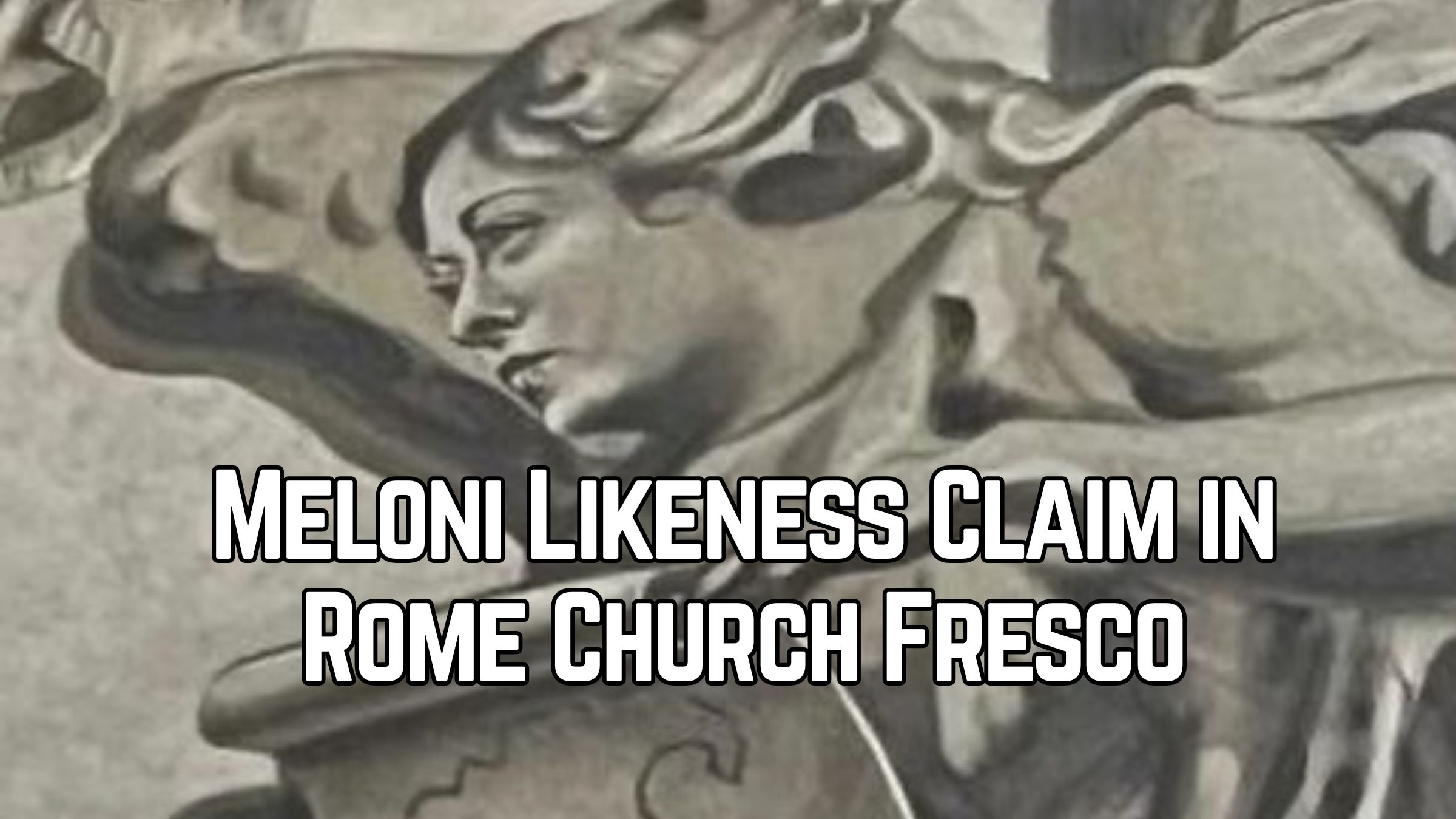
The current controversy centres on a fresco created roughly 25 years ago, which depicts two angels above a marble bust of Umberto of Savoy, Italy’s last king. Umberto reigned briefly in 1946, and the monarchy was abolished later that same year following a referendum.
According to reports, the fresco underwent conservation work after water damage. The conservator, Bruno Valentinetti, was called in by the parish priest, Don Micheletti, to repair the affected area. After the restoration was completed, some viewers argued that one of the angels appeared to resemble Giorgia Meloni. Others disputed the comparison, suggesting that the likeness is overstated.
Meloni pictured in December 2025 – Photo courtesy President Of Ukraine / Flickr
The discussion quickly spread online. On Instagram, the prime minister responded to the claims, saying: “No, I definitely don’t look like an angel.” The incident has prompted broader questions about what the restoration revealed or altered—whether the appearance was always present but obscured by damage, or whether the repair unintentionally changed the figure’s features.
Restoration and conservation work can be difficult, particularly when water damage and previous interventions complicate a painted surface. In historic churches—where artworks from different periods share the same space—small changes can also attract heightened attention, especially when modern works are involved. Valentinetti has denied that he deliberately modified the fresco to resemble the prime minister.
Italian cultural heritage authorities have reportedly been asked to examine the fresco and assess what occurred during the conservation process. For now, the matter remains unresolved, and the church—better known for its long medieval history—has found itself at the centre of a contemporary debate about restoration, perception, and public interpretation.

By Talia Bega
The Basilica of San Lorenzo in Lucina, a medieval church in central Rome with origins in the 4th century, has become the focus of renewed attention following recent conservation work on a modern fresco. Some observers have suggested that one of the figures in the painting resembles Italy’s prime minister, Giorgia Meloni.
San Lorenzo in Lucina has a long building history. The site developed in Late Antiquity and underwent major rebuilding in the Middle Ages, with important work associated with the 11th and early 12th centuries. By the mid-5th century, the church had become an established place of worship in Rome, and later medieval reconstruction helped shape the structure that survives today.
The church is dedicated to Saint Lawrence (San Lorenzo), a 3rd-century deacon venerated as a martyr. Medieval and later traditions linked Lawrence with charity and devotion to the poor, and he remained an important figure in Christian commemorative culture. Over time, churches dedicated to him appeared across the city and beyond.
While the church’s earliest phases are not fully visible today, the building still preserves striking medieval elements. Parts of the exterior retain a distinctly medieval character, including brickwork and architectural features associated with later rebuilding. A bell tower survives from the 12th century. The church also contains frescoes and artwork from multiple periods, reflecting centuries of additions and restorations.
Inside, visitors encounter an interior shaped by both medieval architecture and later decoration. Marble flooring, reused columns, and a series of artworks contribute to the church’s visual impact. Some of the best-known pieces date to the early modern period, including works associated with Rome’s Baroque artistic culture. The church’s location—near the Ara Pacis and the Mausoleum of Augustus—also places it within one of the city’s most historically dense districts.
The current controversy centres on a fresco created roughly 25 years ago, which depicts two angels above a marble bust of Umberto of Savoy, Italy’s last king. Umberto reigned briefly in 1946, and the monarchy was abolished later that same year following a referendum.
According to reports, the fresco underwent conservation work after water damage. The conservator, Bruno Valentinetti, was called in by the parish priest, Don Micheletti, to repair the affected area. After the restoration was completed, some viewers argued that one of the angels appeared to resemble Giorgia Meloni. Others disputed the comparison, suggesting that the likeness is overstated.
The discussion quickly spread online. On Instagram, the prime minister responded to the claims, saying: “No, I definitely don’t look like an angel.” The incident has prompted broader questions about what the restoration revealed or altered—whether the appearance was always present but obscured by damage, or whether the repair unintentionally changed the figure’s features.
Restoration and conservation work can be difficult, particularly when water damage and previous interventions complicate a painted surface. In historic churches—where artworks from different periods share the same space—small changes can also attract heightened attention, especially when modern works are involved. Valentinetti has denied that he deliberately modified the fresco to resemble the prime minister.
Italian cultural heritage authorities have reportedly been asked to examine the fresco and assess what occurred during the conservation process. For now, the matter remains unresolved, and the church—better known for its long medieval history—has found itself at the centre of a contemporary debate about restoration, perception, and public interpretation.
Talia Bega, who studies at the American University of Rome, is our correspondent. You can follow her History with Talia substack or on Instagram @history_with_talia
Top Image: Giorgia Meloni / Instagram
Subscribe to Medievalverse
Related Posts