Archaeologists working alongside a sewer upgrade project in the Scottish Highlands have uncovered a burial ground thought to date to the 6th century AD, along with two Iron Age roundhouses that may be up to 3,000 years old.
The discoveries were made at Windhill, a hamlet near Inverness, during the excavation of a 90-metre stretch of trench as part of a new sewer installed by Scottish Water.
Deep post holes reveal the location of the remains of an Iron Age roundhouse. Photo by Scottish Water, Steven Birch and Andy Hickie
The excavation revealed the remains of three round barrows, each around 10 metres in diameter. Shallow ditches formed rings around central burial pits, indicating a small burial complex clustered within the limits of the construction trench.
“The excavations carried out at Windhill have revealed a complex suite of archaeological features within a relatively small area,” says Steven Birch, who led the dig for West Coast Archaeological Services. “Full analysis of the samples, finds and other materials will provide additional information relating to a snapshot into the early history of the area, adding to a growing core of evidence to suggest that the area around the Beauly Firth provided a suitable locale for settlement, industrial and funerary practices.”
Bone fragments recovered from one of the burials are now being radiocarbon dated, with results expected in the coming months. Alongside the burial features, archaeologists identified two Iron Age roundhouses and well-preserved smelting furnaces built against a large flat-topped boulder. “The evidence for metalworking at the site, which most likely took place during the first few centuries AD will form an important addition to the archaeological record for this area,” Birch added.
The discoveries were made during essential works intended to reduce the risk of sewer flooding and pipe bursts in the area. According to Scottish Water, the project was completed in July 2025—while analysis of the archaeological finds is still underway.
“It has been incredible to find out what was discovered near our sewer upgrade project,” comments Project Manager Scott Henry. I have worked on many projects across the whole of Scotland and this has to be the most exciting find to date.
“From desktop studies before, we had an idea of what could be found but didn’t know it would such an amazing discovery. We always follow the correct procedures and ensure archaeologists are present when they need to be to ensure discoveries are protected and recorded from our sewer upgrade works.”
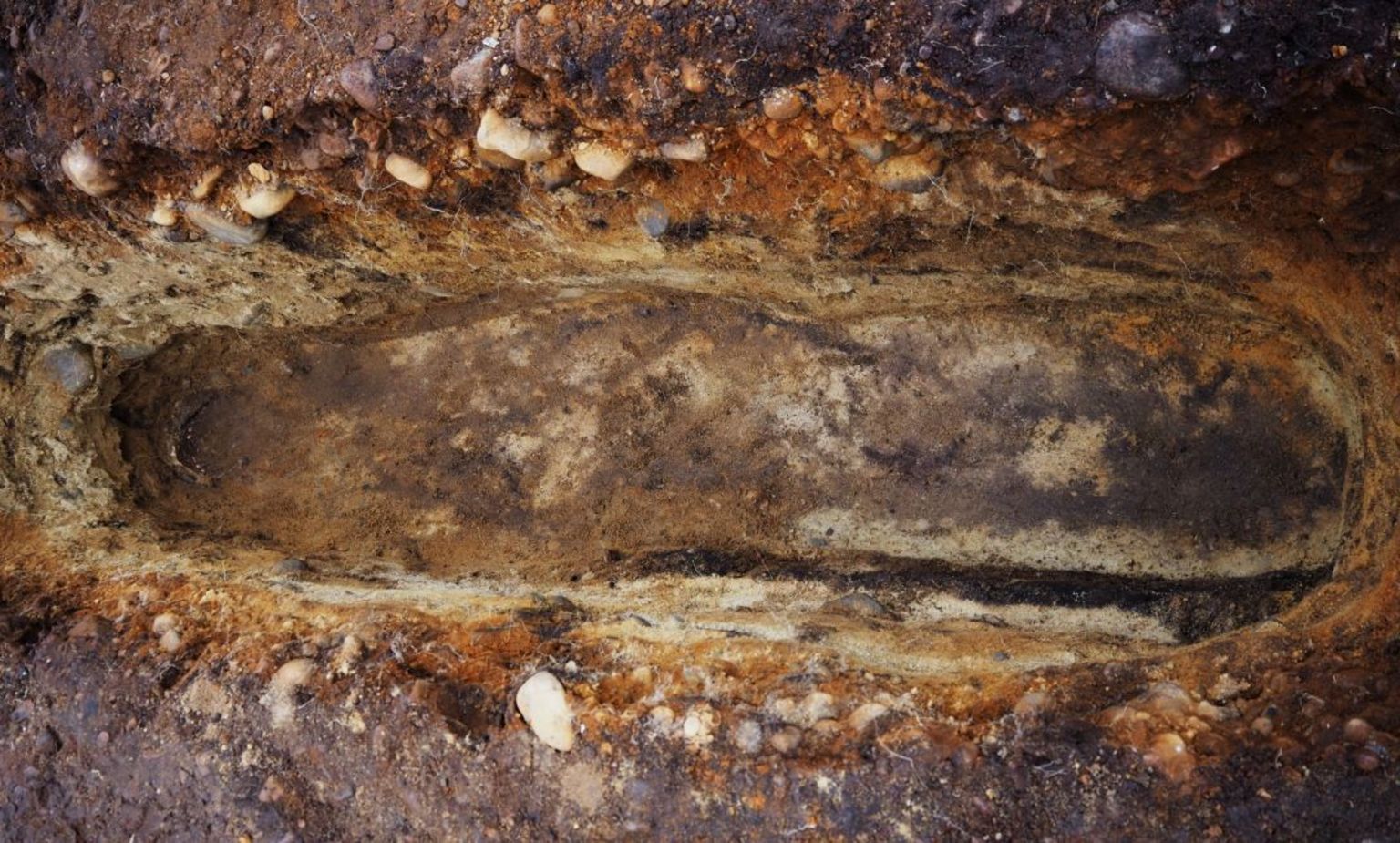
Top Image: A grave discovered during sewer upgrade works in Windhill, shown mid-excavation. Photo by Scottish Water, Steven Birch and Andy Hickie

Archaeologists working alongside a sewer upgrade project in the Scottish Highlands have uncovered a burial ground thought to date to the 6th century AD, along with two Iron Age roundhouses that may be up to 3,000 years old.
The discoveries were made at Windhill, a hamlet near Inverness, during the excavation of a 90-metre stretch of trench as part of a new sewer installed by Scottish Water.
The excavation revealed the remains of three round barrows, each around 10 metres in diameter. Shallow ditches formed rings around central burial pits, indicating a small burial complex clustered within the limits of the construction trench.
“The excavations carried out at Windhill have revealed a complex suite of archaeological features within a relatively small area,” says Steven Birch, who led the dig for West Coast Archaeological Services. “Full analysis of the samples, finds and other materials will provide additional information relating to a snapshot into the early history of the area, adding to a growing core of evidence to suggest that the area around the Beauly Firth provided a suitable locale for settlement, industrial and funerary practices.”
Bone fragments recovered from one of the burials are now being radiocarbon dated, with results expected in the coming months. Alongside the burial features, archaeologists identified two Iron Age roundhouses and well-preserved smelting furnaces built against a large flat-topped boulder. “The evidence for metalworking at the site, which most likely took place during the first few centuries AD will form an important addition to the archaeological record for this area,” Birch added.
The discoveries were made during essential works intended to reduce the risk of sewer flooding and pipe bursts in the area. According to Scottish Water, the project was completed in July 2025—while analysis of the archaeological finds is still underway.
“It has been incredible to find out what was discovered near our sewer upgrade project,” comments Project Manager Scott Henry. I have worked on many projects across the whole of Scotland and this has to be the most exciting find to date.
“From desktop studies before, we had an idea of what could be found but didn’t know it would such an amazing discovery. We always follow the correct procedures and ensure archaeologists are present when they need to be to ensure discoveries are protected and recorded from our sewer upgrade works.”
Top Image: A grave discovered during sewer upgrade works in Windhill, shown mid-excavation. Photo by Scottish Water, Steven Birch and Andy Hickie
Subscribe to Medievalverse
Related Posts