Mounted service in the armies of Edward I offered more than just duty and danger—it also provided unexpected opportunities for profit. A new look at military records reveals how hundreds of ordinary men used war to climb economically and socially.
By David Bachrach
Following his conquest of England in 1066, Duke William of Normandy maintained the traditional Anglo-Saxon requirement that men meeting a minimum property qualification had to serve in the king’s army on campaign, at their own cost. This basic principle remained in force for more than two centuries, although it was updated by King Henry II in his 1181 Assize of Arms, which required mounted military service of anyone holding 16 marks (a bit over £10) of property.
King Henry III (1216-1272) reissued the royal assizes of arms several times, including in 1253 when new wealth requirements were introduced for the lower orders of society to serve on foot in the royal army with only limited equipment. Under Henry III, wealthier men still had to serve on horseback. The basic principle of the original Anglo-Saxon system, however, was retained for both poorer and wealthier men. Everyone summoned for service was required to do so at their own cost and they were not paid by the royal government.
From Feudal Obligation to Paid Service
Portrait in Westminster Abbey, thought to be of Edward I
The military institutions of the kingdom were altered fundamentally by Edward I (1272-1307), particularly later in his reign as he found it necessary to mobilize very large military forces year after year to fight campaigns in Gascony, Flanders, Wales, and above all in Scotland. To gain public support for these wars, and just as importantly, to convince the nascent parliament to vote for taxes to sustain his military efforts, Edward found it necessary to offer pay for military service.
In some ways, Edward still relied on aspects of the older military system, and particularly the wealth categories in the royal assize of arms. This was particularly true of mounted forces. Early in the Second Welsh War (1282-1283) Edward issued writs to the sheriffs throughout England to mobilize all of the men within their shires who possessed property valued at £20 or more, and to inspect their equipment and horses.
During his effort to conquer Scotland (1296-1307), Edward routinely summoned the wealthier men in the kingdom to serve on horseback. In 1297, he commanded all men with properties valued at £120 or more but who were not legally knights to present themselves for military service on horseback. In 1298, Edward commanded the sheriff of Nottinghamshire and Derbyshire to summon all of the men within these counties with property valued at £30 or more to muster on horseback for the current campaign in Scotland. In 1300, Edward issued writs to sheriffs throughout England to summon men with properties valued at £40 or more to muster for service on horseback in Scotland.
In contrast to earlier periods, however, these landowners were to be paid for their service in the army. The standard rate of pay was one shilling per day. Men serving on horseback because of these wealth requirements were denoted generically as homines ad arma, that is simply men at arms. In the voluminous pay records and other documents from this period, wealthy landowners were contrasted with those combatants who had the legal status of knights. The latter were denoted in royal administrative documents as milites and given the honorific of dominus. They were paid two shillings per day by the king, or twice the rate of landowners who were not knights. The mounted men serving under the command of the milites were denoted a variety of terms including scutiferi, literally shield bearers, servientes, which was written as serjaunt in French documents, and finally homines ad arma. These mounted men received one shilling per day for their service, that is the same rate as the wealthy landowners who had been conscripted for service.
By contrast, men serving on foot earned two pennies a day, whether they had been recruited as spearmen, archers, or diggers.
Psalter of Queen Isabella of England: a king and his soldiers depicted in the early 14th century – Bayerische Staatsbibliothek Cod.gall. 16 fol. 36r
In addition to conscripting wealthy landowners to serve for pay, Edward greatly increased the size of the royal military household, employing directly more than 500 mounted men for the Flanders campaign of 1297, and almost 800 mounted men for the 1298 campaign in Scotland. He also requested that his great magnates as well as the knights increase the size of their military households to the extent that they were able. However, even these measures were insufficient to meet the need for mounted fighting men, and so Edward decided to seek additional volunteers for mounted service. The catch, however, was that everyone who was required to be in the army already had been summoned. The king needed men who did not have sufficient wealth to be liable for mounted service to show up to the muster with horses suited for campaign duty.
To this end, in September 1297, Edward explicitly commanded the sheriffs throughout the realm to offer royal pay to anyone who possessed a horse and arms. The next September, Edward issued similar orders to his sheriffs for a planned campaign to Scotland, which was ultimately scuttled. In 1303, Edward sent letters to the sheriffs of the northern counties of Yorkshire, Cumberland, and Westmorland to summon for service at royal pay all men who could ride to the host. These were to include not only barons and knights, but also boni homines, a term generally used to denote solid yeomen farmers, and townsmen.
Who Were These Mounted Men?
The extensive surviving pay records as well as horse valuation lists from Edward’s Scottish campaigns permit us to identify by name over two thousand men who served on horseback in Edward’s army outside the compass of the traditional pools of mounted fighters, namely the royal military household, the military households of the magnates, and knights, and finally the wealthy landowners who were not knights.
In general, these men served as centenarii or as soldarii. The centenarii were the commanders of units of 100 foot soldiers conscripted from the shires. The soldarii served specifically as cavalry troopers. There was, however, a great deal of overlap between the two groups, as the same men often served as both soldarii and centenarii, frequently in the same year.
Both the centenarii and the soldarii, like all other non-knightly mounted men earned one shilling a day for their wages. However, unlike most other mounted fighting men, the centenarii and the soldarii were volunteers. They chose to join the army to serve on horseback, they were not obligated to do so.
Bodley MS. Douce 151 fol. 22r
Two types of contemporary documents illuminate the lower economic status of the centenarii and soldarii as compared with other categories of mounted fighting men. The first of these are the horse evaluation lists, which were produced by royal clerks attached to the army on campaign. The purpose of these lists was to record a cash value for the horses of the mounted troops so that if the animals were injured or died on campaign, the soldier could obtain compensation from the royal government. In essence, these were insurance lists. However, each mounted man was only allowed to have one horse evaluated by the clerks, which was presumably the most expensive one he owned.
On average, the horses of the soldarii and centenarii, which appear on these lists, were valued at £6, but ranged from as low as £1 to as high, in very rare cases, as £20. By contrast, the average valuation of the horses presented by knights was £22, or almost four-fold that for the soldarii and centenarii. The horses of the magnates were valued at much higher rates still. Even the simple fighting men, the servientes and scutiferi, in the military households of the magnates had horses that were valued at £9 on average.
A second means of establishing the economic status of the centenarii is to examine the surviving property assessments for taxation from Edward I’s reign. It is not possible to do this for the soldarii because, unlike the centenarii, they were not listed in the pay records by their counties of origin. In the vast majority of cases, the centenarii did not have sufficient wealth assets to be subject to taxes on moveable wealth. Of the 124 centenarii from Yorkshire who appear in royal service between 1297-1307, just a dozen also appear on the tax rolls. Even those centenarii who were liable for taxes, paid very little, usually just ten or twenty pence, indicating that they held property valued at one or two pounds.
Despite their lack of wealth, every year hundreds of men found a way to obtain a horse suitable for service on campaign and thereby put themselves in a position to obtain what must have seemed to them to be extraordinary wealth. Many of the centenarii and soldarii served for many months at a time and, in some cases, even years on end. They could pay off a £6 horse in four or five months or perhaps trade up and obtain the more valuable horses that some of these men had entered on the horse evaluation lists.
These centenarii and soldarii, whether they served out of reverence for their king or adventure or just for money, can be understood as military entrepreneurs. They found a way to lift themselves above the common run of their fellows and used this initiative to make a profit from war and, in some cases, to become quite rich indeed.
David Bachrach is a Professor at the University of New Hampshire, where he researches medieval military history, particularly in England and Germany.

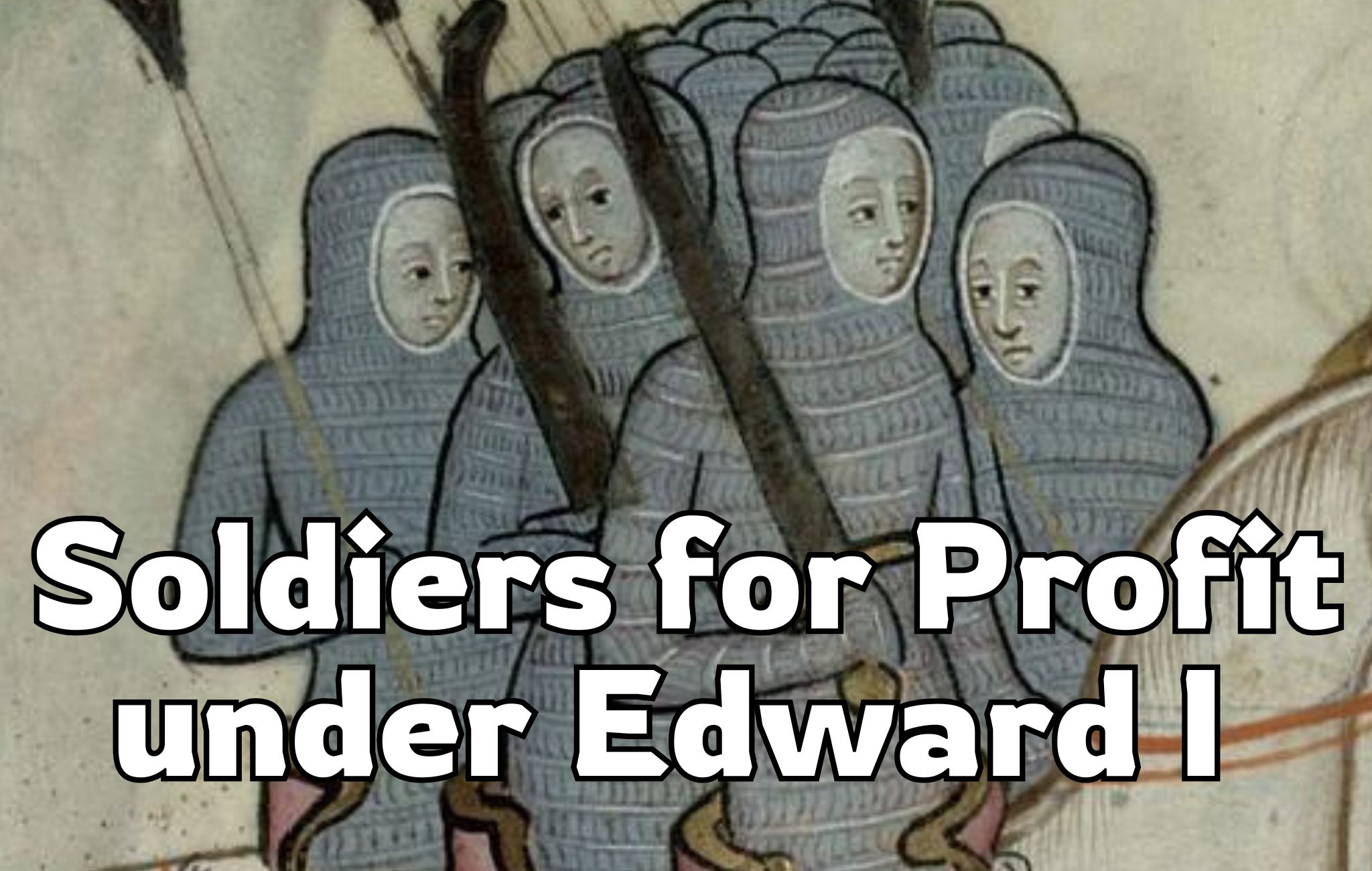
Mounted service in the armies of Edward I offered more than just duty and danger—it also provided unexpected opportunities for profit. A new look at military records reveals how hundreds of ordinary men used war to climb economically and socially.
By David Bachrach
Following his conquest of England in 1066, Duke William of Normandy maintained the traditional Anglo-Saxon requirement that men meeting a minimum property qualification had to serve in the king’s army on campaign, at their own cost. This basic principle remained in force for more than two centuries, although it was updated by King Henry II in his 1181 Assize of Arms, which required mounted military service of anyone holding 16 marks (a bit over £10) of property.
King Henry III (1216-1272) reissued the royal assizes of arms several times, including in 1253 when new wealth requirements were introduced for the lower orders of society to serve on foot in the royal army with only limited equipment. Under Henry III, wealthier men still had to serve on horseback. The basic principle of the original Anglo-Saxon system, however, was retained for both poorer and wealthier men. Everyone summoned for service was required to do so at their own cost and they were not paid by the royal government.
From Feudal Obligation to Paid Service
The military institutions of the kingdom were altered fundamentally by Edward I (1272-1307), particularly later in his reign as he found it necessary to mobilize very large military forces year after year to fight campaigns in Gascony, Flanders, Wales, and above all in Scotland. To gain public support for these wars, and just as importantly, to convince the nascent parliament to vote for taxes to sustain his military efforts, Edward found it necessary to offer pay for military service.
In some ways, Edward still relied on aspects of the older military system, and particularly the wealth categories in the royal assize of arms. This was particularly true of mounted forces. Early in the Second Welsh War (1282-1283) Edward issued writs to the sheriffs throughout England to mobilize all of the men within their shires who possessed property valued at £20 or more, and to inspect their equipment and horses.
During his effort to conquer Scotland (1296-1307), Edward routinely summoned the wealthier men in the kingdom to serve on horseback. In 1297, he commanded all men with properties valued at £120 or more but who were not legally knights to present themselves for military service on horseback. In 1298, Edward commanded the sheriff of Nottinghamshire and Derbyshire to summon all of the men within these counties with property valued at £30 or more to muster on horseback for the current campaign in Scotland. In 1300, Edward issued writs to sheriffs throughout England to summon men with properties valued at £40 or more to muster for service on horseback in Scotland.
In contrast to earlier periods, however, these landowners were to be paid for their service in the army. The standard rate of pay was one shilling per day. Men serving on horseback because of these wealth requirements were denoted generically as homines ad arma, that is simply men at arms. In the voluminous pay records and other documents from this period, wealthy landowners were contrasted with those combatants who had the legal status of knights. The latter were denoted in royal administrative documents as milites and given the honorific of dominus. They were paid two shillings per day by the king, or twice the rate of landowners who were not knights. The mounted men serving under the command of the milites were denoted a variety of terms including scutiferi, literally shield bearers, servientes, which was written as serjaunt in French documents, and finally homines ad arma. These mounted men received one shilling per day for their service, that is the same rate as the wealthy landowners who had been conscripted for service.
By contrast, men serving on foot earned two pennies a day, whether they had been recruited as spearmen, archers, or diggers.
In addition to conscripting wealthy landowners to serve for pay, Edward greatly increased the size of the royal military household, employing directly more than 500 mounted men for the Flanders campaign of 1297, and almost 800 mounted men for the 1298 campaign in Scotland. He also requested that his great magnates as well as the knights increase the size of their military households to the extent that they were able. However, even these measures were insufficient to meet the need for mounted fighting men, and so Edward decided to seek additional volunteers for mounted service. The catch, however, was that everyone who was required to be in the army already had been summoned. The king needed men who did not have sufficient wealth to be liable for mounted service to show up to the muster with horses suited for campaign duty.
To this end, in September 1297, Edward explicitly commanded the sheriffs throughout the realm to offer royal pay to anyone who possessed a horse and arms. The next September, Edward issued similar orders to his sheriffs for a planned campaign to Scotland, which was ultimately scuttled. In 1303, Edward sent letters to the sheriffs of the northern counties of Yorkshire, Cumberland, and Westmorland to summon for service at royal pay all men who could ride to the host. These were to include not only barons and knights, but also boni homines, a term generally used to denote solid yeomen farmers, and townsmen.
Who Were These Mounted Men?
The extensive surviving pay records as well as horse valuation lists from Edward’s Scottish campaigns permit us to identify by name over two thousand men who served on horseback in Edward’s army outside the compass of the traditional pools of mounted fighters, namely the royal military household, the military households of the magnates, and knights, and finally the wealthy landowners who were not knights.
In general, these men served as centenarii or as soldarii. The centenarii were the commanders of units of 100 foot soldiers conscripted from the shires. The soldarii served specifically as cavalry troopers. There was, however, a great deal of overlap between the two groups, as the same men often served as both soldarii and centenarii, frequently in the same year.
Both the centenarii and the soldarii, like all other non-knightly mounted men earned one shilling a day for their wages. However, unlike most other mounted fighting men, the centenarii and the soldarii were volunteers. They chose to join the army to serve on horseback, they were not obligated to do so.
Two types of contemporary documents illuminate the lower economic status of the centenarii and soldarii as compared with other categories of mounted fighting men. The first of these are the horse evaluation lists, which were produced by royal clerks attached to the army on campaign. The purpose of these lists was to record a cash value for the horses of the mounted troops so that if the animals were injured or died on campaign, the soldier could obtain compensation from the royal government. In essence, these were insurance lists. However, each mounted man was only allowed to have one horse evaluated by the clerks, which was presumably the most expensive one he owned.
On average, the horses of the soldarii and centenarii, which appear on these lists, were valued at £6, but ranged from as low as £1 to as high, in very rare cases, as £20. By contrast, the average valuation of the horses presented by knights was £22, or almost four-fold that for the soldarii and centenarii. The horses of the magnates were valued at much higher rates still. Even the simple fighting men, the servientes and scutiferi, in the military households of the magnates had horses that were valued at £9 on average.
A second means of establishing the economic status of the centenarii is to examine the surviving property assessments for taxation from Edward I’s reign. It is not possible to do this for the soldarii because, unlike the centenarii, they were not listed in the pay records by their counties of origin. In the vast majority of cases, the centenarii did not have sufficient wealth assets to be subject to taxes on moveable wealth. Of the 124 centenarii from Yorkshire who appear in royal service between 1297-1307, just a dozen also appear on the tax rolls. Even those centenarii who were liable for taxes, paid very little, usually just ten or twenty pence, indicating that they held property valued at one or two pounds.
Despite their lack of wealth, every year hundreds of men found a way to obtain a horse suitable for service on campaign and thereby put themselves in a position to obtain what must have seemed to them to be extraordinary wealth. Many of the centenarii and soldarii served for many months at a time and, in some cases, even years on end. They could pay off a £6 horse in four or five months or perhaps trade up and obtain the more valuable horses that some of these men had entered on the horse evaluation lists.
These centenarii and soldarii, whether they served out of reverence for their king or adventure or just for money, can be understood as military entrepreneurs. They found a way to lift themselves above the common run of their fellows and used this initiative to make a profit from war and, in some cases, to become quite rich indeed.
David Bachrach is a Professor at the University of New Hampshire, where he researches medieval military history, particularly in England and Germany.
Click here to read more from David Bachrach
Further Readings:
Andrew Ayton, Knights and Warhorse: Military Service and the English Aristocracy under Edward III (Woodbridge, 1994).
David S. Bachrach and Oliver Stoutner, “Military Entrepreneurs in the Armies of Edward I of England (1272-1307),” Haskins Society Journal 27 (2015, published 2016), 179–193.
Top Image: Cambridge MS B.10.2 fol 16r
Subscribe to Medievalverse
Related Posts