Archaeological investigations in the English city of York have uncovered evidence of early medieval occupation alongside substantial Roman remains, shedding new light on the city’s long and complex past. The discoveries were made on the site of a new hotel development.
Excavations carried out ahead of construction revealed pottery fragments, animal bones, building materials, and metal objects, including coins. These artefacts suggest sustained activity on the site across multiple centuries, reinforcing the picture of York as a continuously occupied settlement rather than a city that declined after the end of Roman rule. The presence of Anglo-Saxon and Anglo-Scandinavian material aligns with what is already known from other excavations in York, where layers of early medieval occupation frequently overlay Roman remains.
Beneath the early medieval layers, archaeologists also identified remains from the Roman period, including evidence of a Roman road and associated buildings. Roman York, known as Eboracum, was founded in the late first century CE as a legionary fortress and later developed into an important administrative and military centre.
The discovery of a Roman road is particularly notable, as it confirms the enduring influence of Roman infrastructure on the city’s layout. Roads were central to Roman urban planning, connecting military, administrative, and commercial spaces. Their survival beneath later layers highlights how medieval York was built quite literally on Roman foundations.
Artefacts recovered during the excavation are currently undergoing detailed analysis. Once this work is complete, the finds will be displayed at the Yorkshire Museum, where they will join one of Britain’s most important collections relating to Roman and medieval York.
The excavations were carried out by On-Site Archaeology in collaboration with the project’s main contractor, Clegg Construction, during the early phases of development. “Discovering such significant Roman and early medieval remains in the heart of York is a reminder of the city’s remarkable history,” said Michael Sims, Managing Director of Clegg Construction. “As the main contractor, we are proud to have facilitated the safe and efficient excavations. Collaboration between our site team and the archaeologists was key to achieving this balance, and we are pleased that the discoveries will contribute to a deeper understanding of York’s past for generations to come.”
The archaeological site is located at 23 Piccadilly, in the southeastern portion of York’s historic centre, and will be the future home of room2 York, a new hotel development.

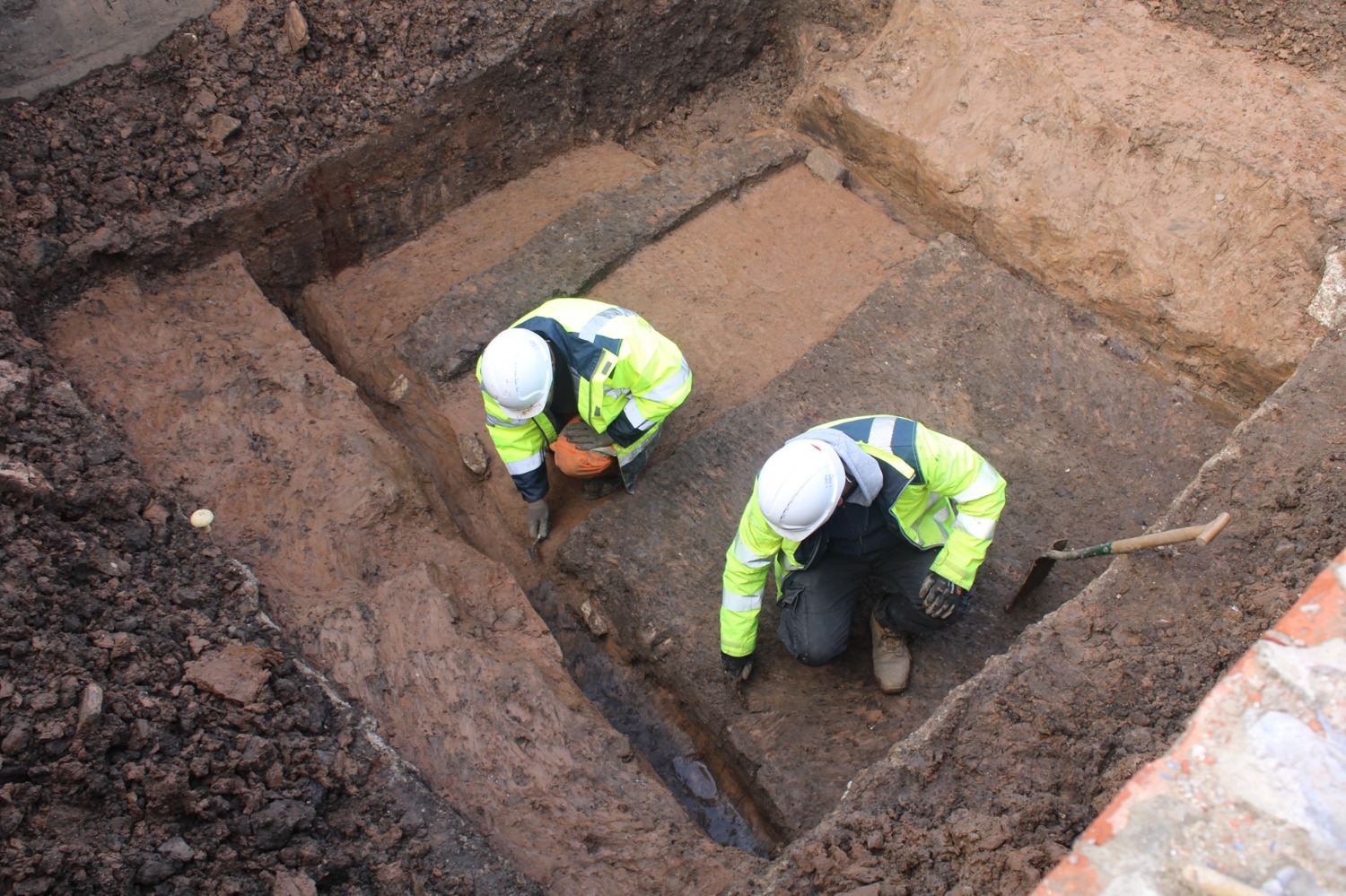
Archaeological investigations in the English city of York have uncovered evidence of early medieval occupation alongside substantial Roman remains, shedding new light on the city’s long and complex past. The discoveries were made on the site of a new hotel development.
Excavations carried out ahead of construction revealed pottery fragments, animal bones, building materials, and metal objects, including coins. These artefacts suggest sustained activity on the site across multiple centuries, reinforcing the picture of York as a continuously occupied settlement rather than a city that declined after the end of Roman rule. The presence of Anglo-Saxon and Anglo-Scandinavian material aligns with what is already known from other excavations in York, where layers of early medieval occupation frequently overlay Roman remains.
Beneath the early medieval layers, archaeologists also identified remains from the Roman period, including evidence of a Roman road and associated buildings. Roman York, known as Eboracum, was founded in the late first century CE as a legionary fortress and later developed into an important administrative and military centre.
The discovery of a Roman road is particularly notable, as it confirms the enduring influence of Roman infrastructure on the city’s layout. Roads were central to Roman urban planning, connecting military, administrative, and commercial spaces. Their survival beneath later layers highlights how medieval York was built quite literally on Roman foundations.
Artefacts recovered during the excavation are currently undergoing detailed analysis. Once this work is complete, the finds will be displayed at the Yorkshire Museum, where they will join one of Britain’s most important collections relating to Roman and medieval York.
The excavations were carried out by On-Site Archaeology in collaboration with the project’s main contractor, Clegg Construction, during the early phases of development. “Discovering such significant Roman and early medieval remains in the heart of York is a reminder of the city’s remarkable history,” said Michael Sims, Managing Director of Clegg Construction. “As the main contractor, we are proud to have facilitated the safe and efficient excavations. Collaboration between our site team and the archaeologists was key to achieving this balance, and we are pleased that the discoveries will contribute to a deeper understanding of York’s past for generations to come.”
The archaeological site is located at 23 Piccadilly, in the southeastern portion of York’s historic centre, and will be the future home of room2 York, a new hotel development.
Top Image: Photo courtesy On site Archaeology
Subscribe to Medievalverse
Related Posts