The 1381 Rising in Bury St Edmunds: The Role of Leaders and the Community in Shaping the Rebellion
By Joe Chick
PONS AELIUS E-Journal, Vol.13 (2016)
Introduction: Leadership is a central theme in popular perceptions of the Peasants’ Revolt of 1381. The image of the rebel leader Wat Tyler face-to-face with King Richard II at Smithfield, which appears in Louis of Gruuthuse’s manuscript of Froissart’s chronicle, forms one of the most iconic images of the uprising. Other rebels have been described as county leaders. One such individual is John Wrawe, a chaplain from Sudbury in the south of Suffolk, often referred to as “the Suffolk leader.”
The secondary literature attributes actions across the county, and in some cases beyond, to the leadership of John Wrawe. The historian Rodney Hilton used figures such as Wrawe to form an organisational model of a revolt which, whilst not centrally organised, was led through a county framework with significant levels of communication between groups of rebels. Whilst placing leaders at the centre of his arguments, Hilton’s model does not attribute a great degree of individual agency to them. Under his interpretation of the rising, leaders act within a wider organisational framework in which local risings were part of a wider class struggle.
Despite the prominence of rebel leaders in popular narratives of the revolt, the importance of communities also emerges throughout the secondary literature. A number of historians have explored how long-term grievances were formed through the impact of the Black Death of 1349 on the social and economic conditions of local communities. The death of about half of the population meant that labour was in short supply, potentially providing the peasantry with a basis to negotiate more favourable terms with their landlords. Many lords, however, sought ways to enforce traditional feudal relations, creating tensions in many communities. A case study by Miriam Müller explores the reactionary measures of the Bishop of Ely in the Suffolk manor of Brandon after the plague and the collective resistance of his tenants in response. In it, she argues that the failure of the peasants’ peaceful action to gain concessions from their lord drove them to participate in the 1381 rising.

The 1381 Rising in Bury St Edmunds: The Role of Leaders and the Community in Shaping the Rebellion
By Joe Chick
PONS AELIUS E-Journal, Vol.13 (2016)
Introduction: Leadership is a central theme in popular perceptions of the Peasants’ Revolt of 1381. The image of the rebel leader Wat Tyler face-to-face with King Richard II at Smithfield, which appears in Louis of Gruuthuse’s manuscript of Froissart’s chronicle, forms one of the most iconic images of the uprising. Other rebels have been described as county leaders. One such individual is John Wrawe, a chaplain from Sudbury in the south of Suffolk, often referred to as “the Suffolk leader.”
The secondary literature attributes actions across the county, and in some cases beyond, to the leadership of John Wrawe. The historian Rodney Hilton used figures such as Wrawe to form an organisational model of a revolt which, whilst not centrally organised, was led through a county framework with significant levels of communication between groups of rebels. Whilst placing leaders at the centre of his arguments, Hilton’s model does not attribute a great degree of individual agency to them. Under his interpretation of the rising, leaders act within a wider organisational framework in which local risings were part of a wider class struggle.
Despite the prominence of rebel leaders in popular narratives of the revolt, the importance of communities also emerges throughout the secondary literature. A number of historians have explored how long-term grievances were formed through the impact of the Black Death of 1349 on the social and economic conditions of local communities. The death of about half of the population meant that labour was in short supply, potentially providing the peasantry with a basis to negotiate more favourable terms with their landlords. Many lords, however, sought ways to enforce traditional feudal relations, creating tensions in many communities. A case study by Miriam Müller explores the reactionary measures of the Bishop of Ely in the Suffolk manor of Brandon after the plague and the collective resistance of his tenants in response. In it, she argues that the failure of the peasants’ peaceful action to gain concessions from their lord drove them to participate in the 1381 rising.
Click here to read this article from Newcastle University
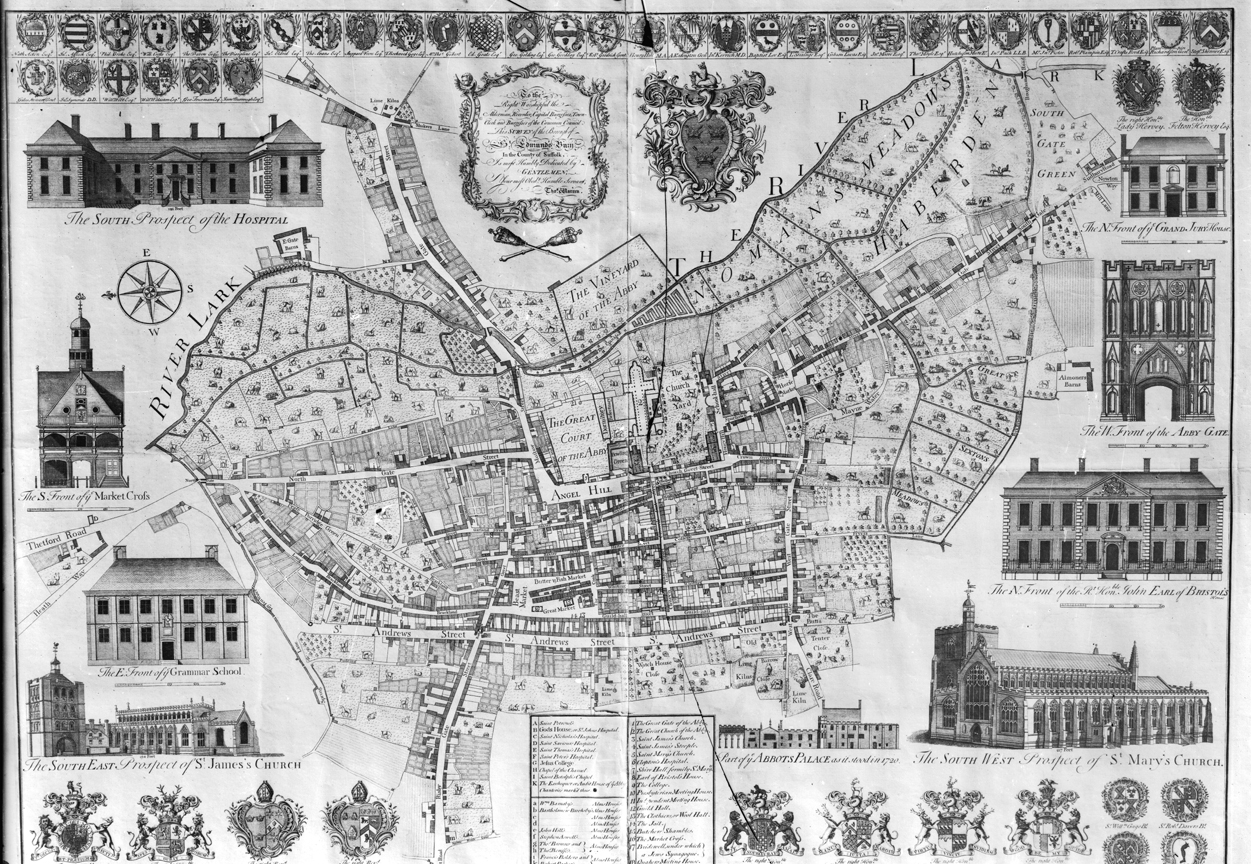
Top Image: Thomas Warren’s map of Bury St Edmunds, 1776
Subscribe to Medievalverse
Related Posts