Listening for the Vikings: Some Evidence from Etymology
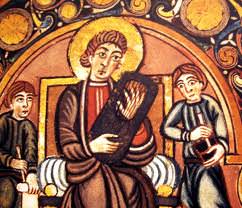
The Vikings left behind several kinds of evidence during their stay in Anglo-Saxon England. Richard Dance notes that ‘one crucial aspect is the etymological.’

Bite Me: Rude Food and the Anglo-Saxon Riddle Tradition
Andy Orchard, one of the world’s leading experts in Old English literature, presented on the tradition of early medieval riddles, and how the themes of food and sex can be found in these works.
The “Battle with the Monster”: Transformation of a Traditional Pattern in “The Dream of the Rood”
Thus, although I would not suggest that “The Dream of the Rood” was composed orally in performance, it is, I would contend, oral-derived, and it is that presumption upon which this analysis is founded. The poem, in other words, straddles both worlds, having ties to both textuality and orality.
Wonders and Wisdom: Anglo-Saxons and the East
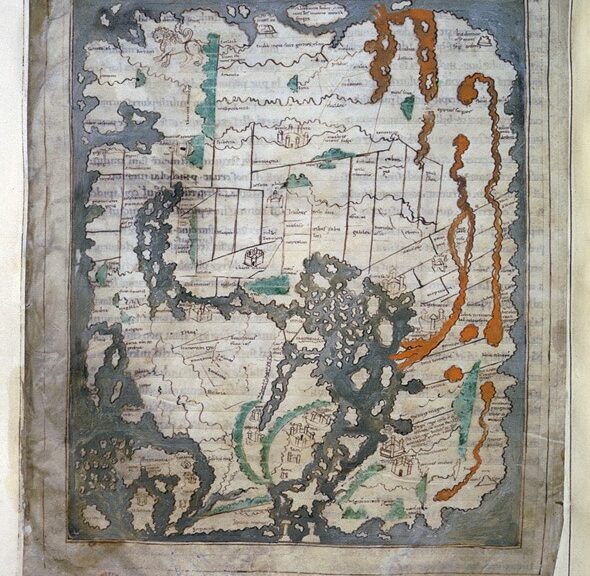
What the Anglo-Saxons ‘knew’ about Moslems and Jews, and about Babylon and Egypt and India, depended upon Biblical exegesis, saints’ lives, and other texts derived from Latin sources. Numerous Old English texts, as well as Latin versions that circulated and were copied in Anglo-Saxon England, concern Asia; these are quite varied in genre and in content.
A Feminist Critique of Beowulf: Women as Peace-Weavers and Goaders in Beowulf’s Courts
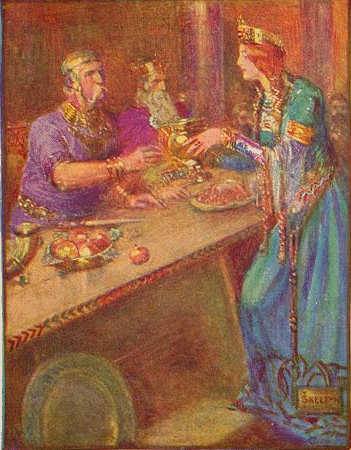
This thesis will examine the fundamental roles of women in the societies described in Beowulf, paying specific attention to the function as peace-weavers and goaders.
Old English and the lexicography of Old High German
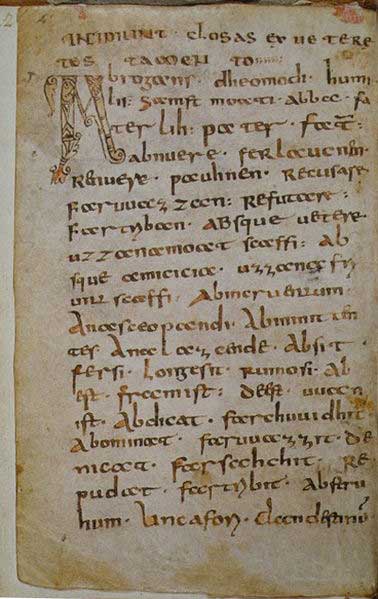
In this lecture I will focus on how Old English affected the early German written record and on the difficulties of its lexicographical description.

Heorot and the Plundered Hoard: A Study of Beowulf
Time and again the Beowulf poet’s choice of words and details reveals that he practised his craft within a tradition in which his creativeness was bound and disciplined by the objectiveness of a particular structure of images. We perceive in all the rich variety of his work the unifying effect of the typological imagination. It is in the typological mode of Beowulf that the key to its meaning and artistry is to be found.
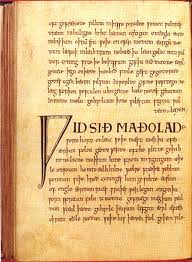
The Sexual Riddles of the Exeter Book
Among the Exeter Book riddle collection there is a group more or less explicitly of riddles which deals sex.
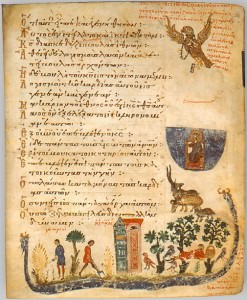
The Old English Rune Poem – Semantics, Structure, and Symmetry
The later runic alphabets do, of course, follow the basic pattern of the earlier Germanic Fupark though considerably modified by the late eighth century, decreasing in the number of runes in Scandinavia whilst increasing in number in the runic alphabets of England.

The Scandinavian element beyond the Danelaw
The present paper concentrates on the Scandinavian element present in Eng- lish in the area beyond the Danelaw, i.e. in the West Midlands and Southern parts of the country.
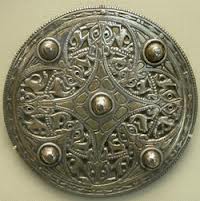
A Christological reading of The Ruin
We should be aware that the semantic scope of each word may vary drastically and that the reader is influenced by many variables in attaching the meaning to a given word. The question becomes trickier if we take the allegorical viewpoint, because polysemy is concerned with the entire text, not with just a word. Thus, we should not consider the surface meaning of the words, but look more carefully for the covert meanings.

The Cross as Tree: The Wood-of-the-Cross Legends in Middle English and Latin Texts in Medieval England
The wood-of-the-cross legend is actually a group of narratives that trace the pre- history of the wood used to make Christ’s cross back to Old Testament figures, or in some cases back to paradise itself.
The History of English in Ten Minutes
Learn where words like house, loaf, bishop, font, drag, die, jury, justice, swine, mutton, pork, eyeball and alligator came from!

Tolkien’s Heroic Criticism: A Developing Application of Anglo-Saxon Ofermod to the Monsters of Modernity
The structure of this study follows the development of Tolkien’s social criticism and heroic aesthetic. The study begins by looking at some biographical elements of Tolkien’s life and how those elements shaped the creation of Tolkien’s anti-hero, the Hobbit.
”Beowulf” and the Influence of Old English on J.R.R. Tolkien’s The Lord of the Rings
The Lord of the Rings is set in the fictional but incredibly vast and detailed universe of Middle-Earth. Tolkien has put great effort in developing an impossibly gigantic realm peopled by many diverse races. Of the immeasurable number of characters and locations present in Tolkien’s work, many bear a name deeply rooted in Old English.
A Single Leaf: Tolkien’s Visual Art and Fantasy
With such a model in mind, then, we have entered into a discussion of art, myth‐making, and the Primary World from a combined academic and artistic perspective.

The Knighting of Henry, son of William the Conqueror, in 1086
This paper was part of SESSION VIII: Power & Politics in the Long Twelfth Century, at the Haskins Conference at Boston College.

Medieval Book History Week Lecture: “Practical Latin and Formal English in the 14th-15th Centuries”
This lecture is part of Medieval Book History Week. Renown Professor Jeremy Catto spoke about literacy and language in England during the later Middle Ages at the Pontifical Institute of Mediaeval Studies at the University of Toronto.
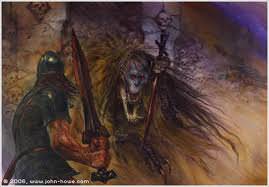
Monstrosity in Old English and Old Icelandic Literature
In medieval Europe belief in monsters allowed for corresponding acceptance of the possibility of humans transforming into monsters. In medieval Iceland and Anglo-Saxon England the mixture of Christian and pagan world views and beliefs create a situation where the boundaries are not merely fluid but can be transgressed, in either direction.
Riddles, Runes and Tolkien in the “At-Risk” 8th Grade Classroom
The Hobbit, perhaps more so than Lord of the Rings, is clearly indebted in part to Old English literature and culture, notably in its use of runic writing in the map illustrations and in the story itself, and in the important role of riddles in Bilbo’s confrontation with Gollum
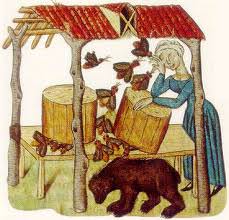
“A Swarm in July”: Beekeeping Perspectives on the Old English Wið Ymbe Charm
At the same time, however, their differing responses to the remedy attest both to the variation of beekeeping practices and the multivalence of Wið Ymbe itself. The fact that two beekeepers interviewed within two days and two hundred miles of each other can respond differently to the charm’s advice on swarms suggests that we reevaluate unilateral assertions regarding what the text might have meant across the hundreds of years that we now know as the Anglo-Saxon period.
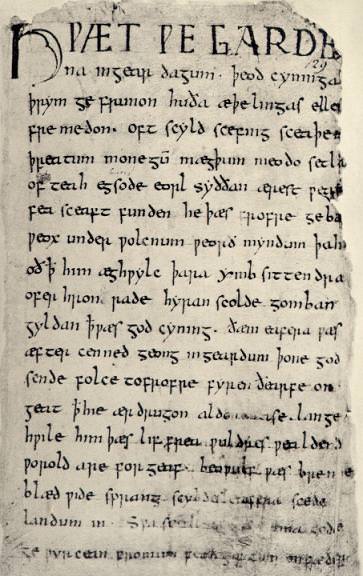
Beowulf and Hygelac: Problems for Fiction in History
In Beowulf, the key historical figure with whom the hero interacts is Hygelac, and Arthur G. Brodeur has convincingly demonstrated that their relationship is central to the entire poem.

Hopkins and Early English Riddling: Solving The Windhover?
In this article I will demonstrate that The Windhover has strong formal similarities with early English riddling. This genre, which has very little in common with modern riddles, has a range of distinctive formal conventions which, I argue, are also present in The Windhover, including an “entitled solution,” “kennings” and the use of formulae.

Beowulf: a heroic tale of fact or fiction?
The Old English epic Beowulf is under discussion in this essay and the idea of the truth embedded in the poem. As no concrete evidence exists on the provenance of the poem, its authorship, date or truth of content, all statements from published writers on the subject are mere conjectures