A major exhibition in the German city of Paderborn is using rare manuscripts and archaeology to revisit a turning point in early medieval European history: the moment Charlemagne established a royal base in the region during his long, bitter wars against the Saxons.
The exhibition—titled “775 – Westphalia”—is currently being held at the LWL Museum in the Imperial Palace (Kaiserpfalz) in Paderborn and runs until 1 March 2026.
Why 775 Matters
The exhibition’s starting point is the year 775, when the Royal Frankish Annals describe Charlemagne’s campaign against the Saxons. In the historical framing of this anniversary, the defeat of the Westphalians by the Franks is treated as the first time the Westphalian name appears in the written record—marking exactly 1,250 years of “Westphalia.”
Charlemagne returned to the region the following year and, at the source of the Lippe River, ordered the construction of a fortified camp described as a castrum. This was far more than a military outpost; it served as a religious and political beachhead where medieval sources describe “numerous Saxons, including women and children,” gathering to be baptized into the Christian faith.
From “Karlsburg” to Paderborn
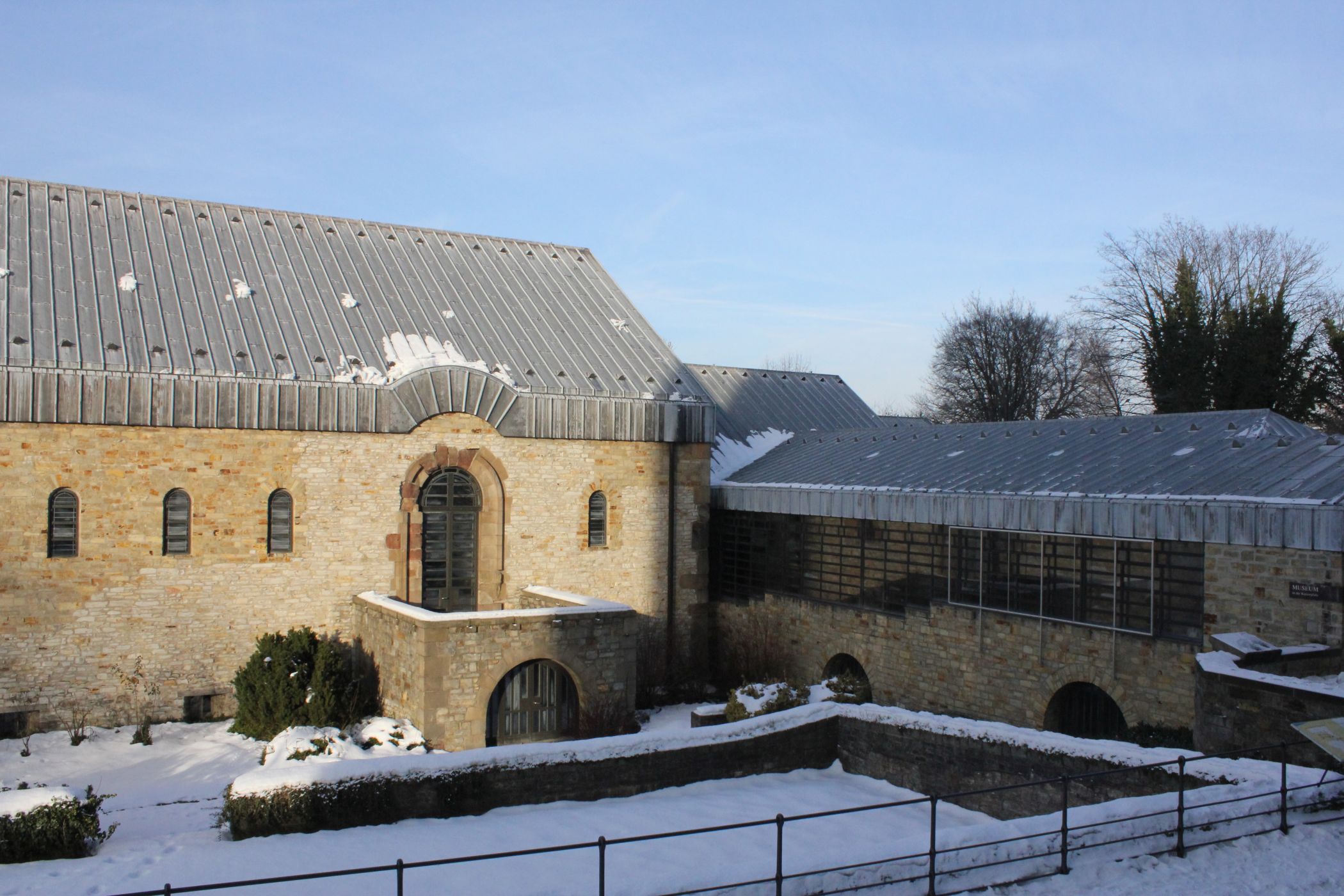
Paderborn, The royal palaces in front of St. Bartholomew’s Chapel. The palace in Paderborn was founded in 776. Photo: LWL / K. Noltenhans
One of the most intriguing threads of the exhibition is how contemporaries originally named Charlemagne’s new foundation. Contemporary sources report that Charlemagne gave his new foundation a name. The Annales Petaviani refer to an “Urbs Karoli,” while the Annales Mosellani report that Charlemagne “built a city or castle, which was called Karlsburg.” Museum director Dr. Martin Kroker explains, “With this, the Frankish king consciously placed himself in the tradition of ancient rulers such as Alexander the Great and the Christian Emperor Constantine, who founded Constantinople.”
However, the name was short-lived. By 777, when Charlemagne returned to hold a massive imperial assembly, the royal name had vanished from the records. Chroniclers began referring to the place as “Patresbrunn”—the origin of the modern name Paderborn. At this assembly, the site truly entered the world stage as envoys from distant lands, bishops, and high-ranking nobles gathered to meet the King of the Franks.
Archaeology: The Nucleus of the Palace
Archaeology plays a central role in the exhibition, providing a physical link to these 1,200-year-old texts. Excavations led by Wilhelm Winkelmann beginning in 1963 located the original site of this early complex.
This 776 foundation—the original “Karlsburg”—formed the nucleus of the later imperial palace in Paderborn. Visitors can see significant finds from these palatinate excavations, including:
Carolingian wall paintings and ornate capitals.
Stained-glass windows and mosaic tiles that hint at the site’s former splendor.
Tools and everyday items used by the craftsmen who built the complex.
A film reconstruction showing how the site would have looked at the close of the eighth century.
Rare Manuscripts on Display
The Lorsch Annals are an important contemporary document on the early history of Paderborn and the coronation of Charlemagne as Roman Emperor in 800, and are currently on display in the Westphalia exhibition. Photo: LWL / S. Wolf
The exhibition is a rare opportunity to see landmark medieval documents in one place. Alongside the Royal Frankish Annals, a manuscript of the Annales Laureshammenses (Lorsch Annals) is a headline feature. This document, which traveled to Paderborn from a library in Austria, illustrates how deeply Paderborn’s history is woven into the origins of Westphalia and the wider Carolingian world.
Later texts in the exhibition show the town’s continued growth, describing a church of “wondrous size” and documenting the historic visit of Pope Leo III in 799.
Looking Toward 2027
The timing of “775 – Westphalia” is a deliberate prelude to another milestone. The city of Paderborn is planning its own 1,250th-anniversary celebrations in 2027 to mark its first recorded mention.

A major exhibition in the German city of Paderborn is using rare manuscripts and archaeology to revisit a turning point in early medieval European history: the moment Charlemagne established a royal base in the region during his long, bitter wars against the Saxons.
The exhibition—titled “775 – Westphalia”—is currently being held at the LWL Museum in the Imperial Palace (Kaiserpfalz) in Paderborn and runs until 1 March 2026.
Why 775 Matters
The exhibition’s starting point is the year 775, when the Royal Frankish Annals describe Charlemagne’s campaign against the Saxons. In the historical framing of this anniversary, the defeat of the Westphalians by the Franks is treated as the first time the Westphalian name appears in the written record—marking exactly 1,250 years of “Westphalia.”
Charlemagne returned to the region the following year and, at the source of the Lippe River, ordered the construction of a fortified camp described as a castrum. This was far more than a military outpost; it served as a religious and political beachhead where medieval sources describe “numerous Saxons, including women and children,” gathering to be baptized into the Christian faith.
From “Karlsburg” to Paderborn
One of the most intriguing threads of the exhibition is how contemporaries originally named Charlemagne’s new foundation. Contemporary sources report that Charlemagne gave his new foundation a name. The Annales Petaviani refer to an “Urbs Karoli,” while the Annales Mosellani report that Charlemagne “built a city or castle, which was called Karlsburg.” Museum director Dr. Martin Kroker explains, “With this, the Frankish king consciously placed himself in the tradition of ancient rulers such as Alexander the Great and the Christian Emperor Constantine, who founded Constantinople.”
However, the name was short-lived. By 777, when Charlemagne returned to hold a massive imperial assembly, the royal name had vanished from the records. Chroniclers began referring to the place as “Patresbrunn”—the origin of the modern name Paderborn. At this assembly, the site truly entered the world stage as envoys from distant lands, bishops, and high-ranking nobles gathered to meet the King of the Franks.
Archaeology: The Nucleus of the Palace
Archaeology plays a central role in the exhibition, providing a physical link to these 1,200-year-old texts. Excavations led by Wilhelm Winkelmann beginning in 1963 located the original site of this early complex.
This 776 foundation—the original “Karlsburg”—formed the nucleus of the later imperial palace in Paderborn. Visitors can see significant finds from these palatinate excavations, including:
Rare Manuscripts on Display
The exhibition is a rare opportunity to see landmark medieval documents in one place. Alongside the Royal Frankish Annals, a manuscript of the Annales Laureshammenses (Lorsch Annals) is a headline feature. This document, which traveled to Paderborn from a library in Austria, illustrates how deeply Paderborn’s history is woven into the origins of Westphalia and the wider Carolingian world.
Later texts in the exhibition show the town’s continued growth, describing a church of “wondrous size” and documenting the historic visit of Pope Leo III in 799.
Looking Toward 2027
The timing of “775 – Westphalia” is a deliberate prelude to another milestone. The city of Paderborn is planning its own 1,250th-anniversary celebrations in 2027 to mark its first recorded mention.
For more details about “775 – Westphalia”, please visit the LWL Museum website.
Top Image: Paderborn, the palace in winter. This year the Imperial Palace celebrates its 1250th anniversary. Photo: LWL / C. Pluschke
Subscribe to Medievalverse
Related Posts