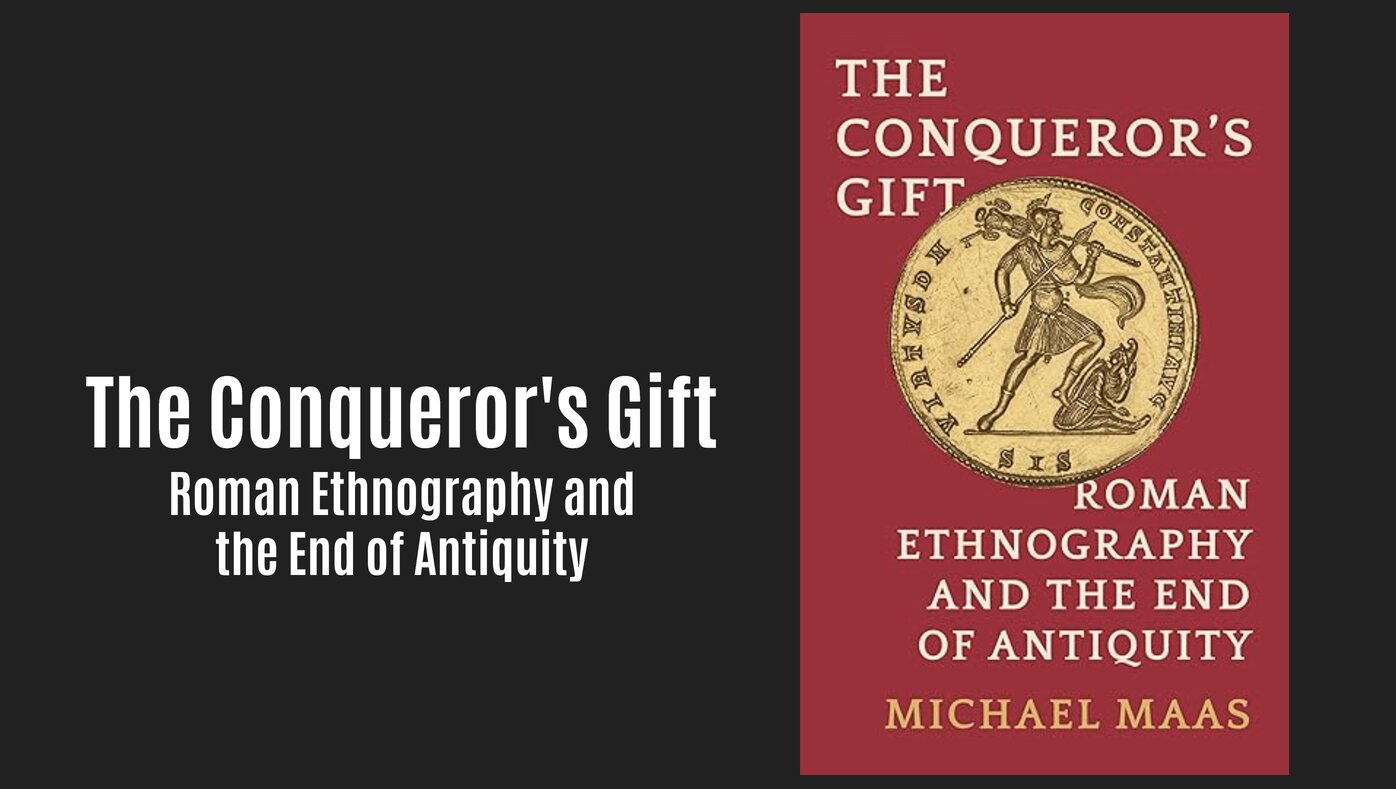
The Conqueror’s Gift: Roman Ethnography and the End of Antiquity
By Michael Maas
Princeton University Press
ISBN: 9780691259024
The Romans were deeply connected with peoples both within and beyond their empire. This book explores how those ties shifted between the first and seventh centuries AD—especially as Christianity spread—and how these changes reshaped the Empire.
Excerpt:
Books need titles that indicate their content, fit on the cover, and catch the reader’s eye. The Conqueror’s Gift meets those requirements. Roman Ethnography and the End of Antiquity, which follows the colon, tells the subject matter and suggests a chronological development. Calling Rome’s ethnographic infrastructure “the conqueror’s gift,” however, requires some explanation. Since the appearance of Marcel Mauss’s pathbreaking essay The Gift in 1923, social scientists have recognized how gift exchange reveals complex, interactive social networks and hierarchies in different societies. The gift in the title of my book alludes to these insights and finds analogous networks and hierarchies of difference in Rome’s ethnographic infrastructure, suggesting that it was a gift in several figurative ways.
Imperial Roman ethnography was a gift the Romans made for themselves, because it embraced concepts with which they could address the great cultural diversity of their world. It was a gift that came from the conquerors, reflecting their supposition of preeminence. At the same time, Roman ethnography was a somewhat less welcome present for the many peoples who found themselves trapped in Rome’s vision, needing to find a place within it that made sense to Roman demands. For moderns, Rome’s ethnography has proven to be a mixed legacy, not always welcome, but greatly influential all the same. The different parts of Rome’s ethnographic infrastructure are discussed in the pages that follow and are summarized, with further comments about the conqueror’s gift, in chapter 9.
Who is this book for?
This book, which spans what might be called the ‘Long Late Antiquity’, offers a sweeping history across a period of profound transformation. Readers will benefit from a solid background in the Later Roman Empire before beginning. It will be of particular interest to those studying ethnography and social history within the Roman and Byzantine Empires, as well as the early development of Christianity.
“The Conqueror’s Gift does an excellent job of highlighting the very different sections of ‘the ethnographic dossier’, and in showing how contrasting models of conceptualizing the world became operative throughout late antiquity. Chapters show how power was asserted, political or demographic changes rationalized, differences between peoples explained, and all of this reconciled with scripture.” ~ review by Andy Merrills in Bryn Mawr Classical Review
“Maas has given us an ambitious and stimulating book that presents the legacies of Late Antiquity in new ways through a bold approach to the varied forms of ethnography. My suggestions of topics that might have been included reflect a wish that he had applied his insights to this material as well. Individual aspects or people will undoubtedly receive close attention and this may lead to the re-evaluation of some issues, but it is unlikely that anyone will have the knowledge and confidence to attempt such an overarching synthesis to the diversity of ethnographies in the later Roman world.” ~ review by Michael Whitby in Plekos
The Author
Michael R. Maas is Professor of History Emeritus at Rice University, where he researches the periods of Late Antiquity and Early Byzantium.

The Conqueror’s Gift: Roman Ethnography and the End of Antiquity
By Michael Maas
Princeton University Press
ISBN: 9780691259024
The Romans were deeply connected with peoples both within and beyond their empire. This book explores how those ties shifted between the first and seventh centuries AD—especially as Christianity spread—and how these changes reshaped the Empire.
Excerpt:
Books need titles that indicate their content, fit on the cover, and catch the reader’s eye. The Conqueror’s Gift meets those requirements. Roman Ethnography and the End of Antiquity, which follows the colon, tells the subject matter and suggests a chronological development. Calling Rome’s ethnographic infrastructure “the conqueror’s gift,” however, requires some explanation. Since the appearance of Marcel Mauss’s pathbreaking essay The Gift in 1923, social scientists have recognized how gift exchange reveals complex, interactive social networks and hierarchies in different societies. The gift in the title of my book alludes to these insights and finds analogous networks and hierarchies of difference in Rome’s ethnographic infrastructure, suggesting that it was a gift in several figurative ways.
Imperial Roman ethnography was a gift the Romans made for themselves, because it embraced concepts with which they could address the great cultural diversity of their world. It was a gift that came from the conquerors, reflecting their supposition of preeminence. At the same time, Roman ethnography was a somewhat less welcome present for the many peoples who found themselves trapped in Rome’s vision, needing to find a place within it that made sense to Roman demands. For moderns, Rome’s ethnography has proven to be a mixed legacy, not always welcome, but greatly influential all the same. The different parts of Rome’s ethnographic infrastructure are discussed in the pages that follow and are summarized, with further comments about the conqueror’s gift, in chapter 9.
Who is this book for?
This book, which spans what might be called the ‘Long Late Antiquity’, offers a sweeping history across a period of profound transformation. Readers will benefit from a solid background in the Later Roman Empire before beginning. It will be of particular interest to those studying ethnography and social history within the Roman and Byzantine Empires, as well as the early development of Christianity.
“The Conqueror’s Gift does an excellent job of highlighting the very different sections of ‘the ethnographic dossier’, and in showing how contrasting models of conceptualizing the world became operative throughout late antiquity. Chapters show how power was asserted, political or demographic changes rationalized, differences between peoples explained, and all of this reconciled with scripture.” ~ review by Andy Merrills in Bryn Mawr Classical Review
“Maas has given us an ambitious and stimulating book that presents the legacies of Late Antiquity in new ways through a bold approach to the varied forms of ethnography. My suggestions of topics that might have been included reflect a wish that he had applied his insights to this material as well. Individual aspects or people will undoubtedly receive close attention and this may lead to the re-evaluation of some issues, but it is unlikely that anyone will have the knowledge and confidence to attempt such an overarching synthesis to the diversity of ethnographies in the later Roman world.” ~ review by Michael Whitby in Plekos
The Author
Michael R. Maas is Professor of History Emeritus at Rice University, where he researches the periods of Late Antiquity and Early Byzantium.
You can learn more about this book from the publisher’s website.
You can buy this book on Amazon.com | Amazon.ca | Amazon.co.uk
Subscribe to Medievalverse
Related Posts