What’s new in medieval studies? Here are ten open-access articles published in January, which include papers on Christianity in Ethiopia to the Templars in England.
This ongoing series on Medievalists.net highlights what has been published in journals over the last month that deal with the Middle Ages. All ten articles are Open-Access, meaning you can read them for free. Join our $10 tier on Patreon to see the full list of the 75 open-access articles we found
Fed the same way? Exploring the influence of breastfeeding, weaning, and childhood diet on adult sex ratios through stable isotope analysis of incremental dentine in Medieval Tuscany, Italy (11th–15th c. CE)
By Alessio Amaro, Antonio Fornaciari, Valentina Giuffra, Sang-Tae Kim, Martin Knyf, Paul Szpak, Bonnie Kahlon and Tracy L. Prowse
PLoS One
Abstract: In this paper we investigate whether infant and childhood feeding practices influenced the imbalanced adult sex ratio reported in medieval Europe from historical and osteological evidence. First, we examine hypotheses for the observed imbalanced sex ratios in Europe and the evidence presented to support these hypotheses. We then use stable isotope analysis (δ13C and δ15N) of incremental dentine in 64 first molars from adults at three medieval sites (Aulla, Badia Pozzeveri, and Montescudaio) in north-western Tuscany (11th-15th c. CE) to investigate the timing and pattern of breastfeeding and weaning.
Our results show that males were exclusively breastfed for a shorter period and were weaned earlier than females in all three samples (Aulla M: 2.2 yrs, F: 2.6 yrs; Badia Pozzeveri M: 2.3 yrs, F: 3.0 yrs; Montescudaio M: 2.2 yrs, F: 2.9 yrs). In addition, both males and females consumed an isotopically similar diet early in life with greater variability during the post-weaning years. We explore how gender differences in the social roles of young males and females may have influenced infant and childhood feeding practices. It appears that these practices did not significantly disadvantage young females. In addition, we do see evidence for changing patterns of breastfeeding and weaning over time.
Christianity in Ethiopia: The Quest for When and by Whom It was Introduced?
By Yeshambel Kindie Bayu
Journal of Ethiopian Studies
Abstract: The introduction of Christianity into Ethiopia was heralded first by an Ethiopian eunuch known by the name Bakos. It happened soon after the Resurrection of Jesus Christ, and this makes Ethiopia the second country in the world next to Palestine. The evangelical activities of Bakos were subsequently supported by several apostles of Jesus Christ. Among them were St. Matthew, St. Thomas, St. Bartholomew, St. Matthias, and St. Andrew. Matthew preached the new faith to the people of Ethiopia, and henceforth he wrote the Gospel known by his name for Ethiopians in their own tongue.
Unfortunately, this historical fact remains concealed, and above all, there is a general misunderstanding that Christianity was introduced by Frumentius in the fourth century after the Council of Nicaea. This paper attempts to examine both ancient and medieval documents, and it avers to reconstruct that Christianity was a first-century phenomenon in Ethiopia.
Towards an ecology of medieval mining towns: linking social and environmental changes
By Paweł Cembrzyński
Archaeological Dialogues
Abstract: This paper proposes an ecological framework for understanding medieval mining towns as dynamic socio-ecological systems shaped by flows of matter, energy, capital and information. Drawing on concepts from human and political ecology, it examines how mining, technology and power structures interacted to produce feedback loops and tipping points that transformed both society and the environment.
A case study of Kutná Hora (Czechia) illustrates these mechanisms, showing how the discovery of silver triggered cycles of population growth, technological innovation and capital accumulation, whilst also causing deforestation, pollution and social stratification.
The study highlights how medieval mining towns functioned as adaptive, self-organizing systems embedded in global economic networks, revealing early forms of extractive capitalism and environmental change. This ecological perspective offers a heuristic model for analysing historical urban environments and their long-term sustainability, bridging archaeology, history and environmental science.
The commercialization of labour markets: Evidence from wage inequality in the Middle Ages
By Jordan Claridge, Vincent Delabastita and Spike Gibbs
The Economic History Review
Abstract: This paper moves beyond the focus on ‘average’ wage trends in pre-industrial economies by examining the broad diversity of pay rates and forms of remuneration across occupations and regions in medieval England. We find that whilst some workers enjoyed substantial growth in wage rates after the Black Death, there was a large group who experienced no real increases.
We argue that wage inequality in post-Black Death England reflects the uneven penetration of market forces across occupations and regions, with deep-rooted customary structures continuing to shape remuneration. Its findings suggest that a more nuanced approach is essential for understanding the complexities and continuities of pre-industrial labour dynamics.
Medical Interchanges between Ancient China and the Ancient Middle East from 7th to 15th Century
By Qiuyi Liang and Min Zheng
Chinese Medicine and Culture
Abstract: The Silk Road witnessed the exchange, integration, and innovation of medicine between ancient China and the ancient Middle East. This article outlines a panoramic historical picture of medical interchanges between ancient China and the ancient Middle East along the Silk Road by multilingual literature research, textual criticism and scientific methods. Through the exchange of medicinal materials, the supplement of prescriptions, the reference of dosage forms, and the absorption of medical concepts, the two major medical systems along the Silk Road have interacted and integrated.
Anchored in the political cooperation, sustained by translation network, and promoted by commercial intercourse, this medical dialogue shows the openness and adaptability of traditional medicine. This interchange history provides a historical paradigm for the modernization of traditional medicine, cross-cultural collaboration, and the building of the Silk Road of Health.
Urban rebels in medieval Connacht: the revolt of Galway, 1388–9
By Patrick McDonagh
Irish Historical Studies
Abstract: The topic of urban revolt in medieval Ireland has been overlooked by wider scholarship. This article offers the first detailed analysis of a revolt which occurred in Galway in the late fourteenth century. The basis of this study is a twentieth-century transcription made of an extract from a plea roll of the king’s bench in Ireland before the latter’s destruction in 1922, which records the judicial proceedings taken against one of the town’s rebels and provides an under-exploited (and not entirely reliable) narrative of the key facts of this rebellion.
This article locates the actions of Galway townspeople within a wider European pattern of protest and rebellion in the second half of the fourteenth century and, more specifically, places the revolt in the context of contemporary political events in Ireland and England. The events in Galway should be viewed as a genuinely ‘popular’ revolt, challenging assumptions about the presumed loyalty of towns and cities in medieval Ireland to the English crown and its local representatives.
Toil and Trouble: The Labour, Duties and Rights of Women in Alpine Communities in the Late Middle Ages and Early Modern Period
By Joschka Sergej Meier
Journal of Medieval History
How were women perceived and treated in Alpine communities in the late Middle Ages? This study explores this question by using sources ranging from the fourteenth up to the sixteenth century and from Valais to Tyrol to investigate practices of gender-based inclusion and exclusion in three interconnected areas: language, communal work projects, and legal proceedings. As the findings presented in this article show, Alpine communities depended heavily on the labour and knowledge of women.
This dependence led to a pragmatic acknowledgement of the contribution of female labour and knowledge. In some cases, this even led to their inclusion in civic duties and rights which were (nominally) reserved for men. Nominally because, as this analysis also shows, the language in sources from the rural Alpine area can be heavily distorted by the widespread use of generic masculine terms, which conceal the presence of women in the past.
The Inventories, Accounts, and Records of Debts for the Templars’ Estates in England and Wales, 1308-1313, as a Source for the Everyday Lives of the Templars
By Helen Nicholson
Ordines Militares Colloquia Torunensia Historica. Yearbook for the Study of the Military Orders
Abstract: Although the inventories, accounts, and records of debts payable and receivable produced for King Edward II of England’s government after the arrests of the Templars in England at the beginning of 1308 are incomplete, they preserve some information on the Templars’ built environment and material culture, the persons living in or associated with Templar properties, religious observance, estate management, and transactions with outsiders.
This article uses these data to reconstruct details of the day-to-day lives of the Templars in England just before their arrests, and particularly their relations with non-Templars. Given that the charges brought against the Templars in 1307 alleged that the brothers acted secretly and that non-Templars were unaware of their daily behaviour, evidence they were in fact in daily contact with outsiders undermines the charges and adds to the increasing volume of evidence that the Templars were not guilty as charged. The information from these documents presents a picture of busy communities in which the Templars formed a minority and whose immediate concerns were focused on local matters, such as employing a priest to support a chantry for a wealthy donor, rather than the distant Holy Land.
Wealhtheow’s Revenge and the Germanic Heroic Tradition: Failed Conflict Resolution in Beowulf
By Thijs Porck
The Explicator
Introduction: Beowulf depicts a world filled with conflict, ranging from supernatural battles between man and monster to large-scale, multigenerational feuds between various peoples. Intra-family struggles also appealed to the Beowulf poet, who had a particular interest in fratricide as well as the potential friction between uncles and nephews. The poet’s fascination with feuds has not gone unnoticed, though relatively few scholars have commented on the fact that Beowulf also puts a spotlight on conflict resolution.
Genetic and isotopic analyses of medieval skeletons (1150–1349) at St. Peter’s churchyard, Berlin/Cölln, Germany
By Kristin Rath, Marion Tichomirowa, Alexandra Käßner, Jessica Rothe, Kristina Killgrove, Martin Bodner, Sascha Willuweit, Claudia Melisch and Marion Nagy
Forensic Science International: Genetics
Abstract: The medieval market Berlin, nucleus and starting point of what eventually became Germany’s capital, was mirrored by another medieval settlement named Cölln (Lat. colonia) on the opposite side of the Spree River. In Cölln, St. Peter’s cemetery was in use from about 1150–1717.
In this study we investigated individuals from the earliest graves of this cemetery regarding their geographic origin using genetic analyses on bones and teeth as well isotopic analyses on dental enamel. Genetic analysis of 96 individuals was done for 16 autosomal STRs as well as the amelogenin marker for sex determination.
We identified 54 unrelated males, who were typed for 27 Y-chromosomal STRs and assigned to 12 different Y-haplogroups. The Y-haplogroup distribution of St. Peter’s showed a high similarity to the population of present-day Germany with high amounts of both R1a (31.5 %) and R1b (44.4 %) as well as I1 (11.1 %) and I2a (7.4 %).
Geographic ancestry prediction, using AMOVA analysis, revealed a high genetic similarity between the populations of St. Peter’s and the present-day German population. Significant differences could be detected for neighboring western and eastern European populations.
MtDNA typing for all 96 individuals using coding region SNPs demonstrated a characteristic European distribution with haplogroups H (46.9 %), U (17.7 %), T (12.5 %), J (7.3 %) and K (8.3 %). Further typing for 48 individuals was done by sequencing the full mtDNA control region, revealing only trace amounts of Slavic-associated haplogroups. The strontium and oxygen isotope analysis of 66 of the earliest graves showed that most individuals came from the Berlin-Brandenburg area and the adjacent regions, with signs of migration limited to a few individuals.

What’s new in medieval studies? Here are ten open-access articles published in January, which include papers on Christianity in Ethiopia to the Templars in England.
This ongoing series on Medievalists.net highlights what has been published in journals over the last month that deal with the Middle Ages. All ten articles are Open-Access, meaning you can read them for free. Join our $10 tier on Patreon to see the full list of the 75 open-access articles we found
Fed the same way? Exploring the influence of breastfeeding, weaning, and childhood diet on adult sex ratios through stable isotope analysis of incremental dentine in Medieval Tuscany, Italy (11th–15th c. CE)
By Alessio Amaro, Antonio Fornaciari, Valentina Giuffra, Sang-Tae Kim, Martin Knyf, Paul Szpak, Bonnie Kahlon and Tracy L. Prowse
PLoS One
Abstract: In this paper we investigate whether infant and childhood feeding practices influenced the imbalanced adult sex ratio reported in medieval Europe from historical and osteological evidence. First, we examine hypotheses for the observed imbalanced sex ratios in Europe and the evidence presented to support these hypotheses. We then use stable isotope analysis (δ13C and δ15N) of incremental dentine in 64 first molars from adults at three medieval sites (Aulla, Badia Pozzeveri, and Montescudaio) in north-western Tuscany (11th-15th c. CE) to investigate the timing and pattern of breastfeeding and weaning.
Our results show that males were exclusively breastfed for a shorter period and were weaned earlier than females in all three samples (Aulla M: 2.2 yrs, F: 2.6 yrs; Badia Pozzeveri M: 2.3 yrs, F: 3.0 yrs; Montescudaio M: 2.2 yrs, F: 2.9 yrs). In addition, both males and females consumed an isotopically similar diet early in life with greater variability during the post-weaning years. We explore how gender differences in the social roles of young males and females may have influenced infant and childhood feeding practices. It appears that these practices did not significantly disadvantage young females. In addition, we do see evidence for changing patterns of breastfeeding and weaning over time.
Click here to read this article
Christianity in Ethiopia: The Quest for When and by Whom It was Introduced?
By Yeshambel Kindie Bayu
Journal of Ethiopian Studies
Abstract: The introduction of Christianity into Ethiopia was heralded first by an Ethiopian eunuch known by the name Bakos. It happened soon after the Resurrection of Jesus Christ, and this makes Ethiopia the second country in the world next to Palestine. The evangelical activities of Bakos were subsequently supported by several apostles of Jesus Christ. Among them were St. Matthew, St. Thomas, St. Bartholomew, St. Matthias, and St. Andrew. Matthew preached the new faith to the people of Ethiopia, and henceforth he wrote the Gospel known by his name for Ethiopians in their own tongue.
Unfortunately, this historical fact remains concealed, and above all, there is a general misunderstanding that Christianity was introduced by Frumentius in the fourth century after the Council of Nicaea. This paper attempts to examine both ancient and medieval documents, and it avers to reconstruct that Christianity was a first-century phenomenon in Ethiopia.
Click here to read this article
Towards an ecology of medieval mining towns: linking social and environmental changes
By Paweł Cembrzyński
Archaeological Dialogues
Abstract: This paper proposes an ecological framework for understanding medieval mining towns as dynamic socio-ecological systems shaped by flows of matter, energy, capital and information. Drawing on concepts from human and political ecology, it examines how mining, technology and power structures interacted to produce feedback loops and tipping points that transformed both society and the environment.
A case study of Kutná Hora (Czechia) illustrates these mechanisms, showing how the discovery of silver triggered cycles of population growth, technological innovation and capital accumulation, whilst also causing deforestation, pollution and social stratification.
The study highlights how medieval mining towns functioned as adaptive, self-organizing systems embedded in global economic networks, revealing early forms of extractive capitalism and environmental change. This ecological perspective offers a heuristic model for analysing historical urban environments and their long-term sustainability, bridging archaeology, history and environmental science.
Click here to read this article
The commercialization of labour markets: Evidence from wage inequality in the Middle Ages
By Jordan Claridge, Vincent Delabastita and Spike Gibbs
The Economic History Review
Abstract: This paper moves beyond the focus on ‘average’ wage trends in pre-industrial economies by examining the broad diversity of pay rates and forms of remuneration across occupations and regions in medieval England. We find that whilst some workers enjoyed substantial growth in wage rates after the Black Death, there was a large group who experienced no real increases.
We argue that wage inequality in post-Black Death England reflects the uneven penetration of market forces across occupations and regions, with deep-rooted customary structures continuing to shape remuneration. Its findings suggest that a more nuanced approach is essential for understanding the complexities and continuities of pre-industrial labour dynamics.
Click here to read this article
Medical Interchanges between Ancient China and the Ancient Middle East from 7th to 15th Century
By Qiuyi Liang and Min Zheng
Chinese Medicine and Culture
Abstract: The Silk Road witnessed the exchange, integration, and innovation of medicine between ancient China and the ancient Middle East. This article outlines a panoramic historical picture of medical interchanges between ancient China and the ancient Middle East along the Silk Road by multilingual literature research, textual criticism and scientific methods. Through the exchange of medicinal materials, the supplement of prescriptions, the reference of dosage forms, and the absorption of medical concepts, the two major medical systems along the Silk Road have interacted and integrated.
Anchored in the political cooperation, sustained by translation network, and promoted by commercial intercourse, this medical dialogue shows the openness and adaptability of traditional medicine. This interchange history provides a historical paradigm for the modernization of traditional medicine, cross-cultural collaboration, and the building of the Silk Road of Health.
Click here to read this article
Urban rebels in medieval Connacht: the revolt of Galway, 1388–9
By Patrick McDonagh
Irish Historical Studies
Abstract: The topic of urban revolt in medieval Ireland has been overlooked by wider scholarship. This article offers the first detailed analysis of a revolt which occurred in Galway in the late fourteenth century. The basis of this study is a twentieth-century transcription made of an extract from a plea roll of the king’s bench in Ireland before the latter’s destruction in 1922, which records the judicial proceedings taken against one of the town’s rebels and provides an under-exploited (and not entirely reliable) narrative of the key facts of this rebellion.
This article locates the actions of Galway townspeople within a wider European pattern of protest and rebellion in the second half of the fourteenth century and, more specifically, places the revolt in the context of contemporary political events in Ireland and England. The events in Galway should be viewed as a genuinely ‘popular’ revolt, challenging assumptions about the presumed loyalty of towns and cities in medieval Ireland to the English crown and its local representatives.
Click here to read this article
Toil and Trouble: The Labour, Duties and Rights of Women in Alpine Communities in the Late Middle Ages and Early Modern Period
By Joschka Sergej Meier
Journal of Medieval History
How were women perceived and treated in Alpine communities in the late Middle Ages? This study explores this question by using sources ranging from the fourteenth up to the sixteenth century and from Valais to Tyrol to investigate practices of gender-based inclusion and exclusion in three interconnected areas: language, communal work projects, and legal proceedings. As the findings presented in this article show, Alpine communities depended heavily on the labour and knowledge of women.
This dependence led to a pragmatic acknowledgement of the contribution of female labour and knowledge. In some cases, this even led to their inclusion in civic duties and rights which were (nominally) reserved for men. Nominally because, as this analysis also shows, the language in sources from the rural Alpine area can be heavily distorted by the widespread use of generic masculine terms, which conceal the presence of women in the past.
Click here to read this article
The Inventories, Accounts, and Records of Debts for the Templars’ Estates in England and Wales, 1308-1313, as a Source for the Everyday Lives of the Templars
By Helen Nicholson
Ordines Militares Colloquia Torunensia Historica. Yearbook for the Study of the Military Orders
Abstract: Although the inventories, accounts, and records of debts payable and receivable produced for King Edward II of England’s government after the arrests of the Templars in England at the beginning of 1308 are incomplete, they preserve some information on the Templars’ built environment and material culture, the persons living in or associated with Templar properties, religious observance, estate management, and transactions with outsiders.
This article uses these data to reconstruct details of the day-to-day lives of the Templars in England just before their arrests, and particularly their relations with non-Templars. Given that the charges brought against the Templars in 1307 alleged that the brothers acted secretly and that non-Templars were unaware of their daily behaviour, evidence they were in fact in daily contact with outsiders undermines the charges and adds to the increasing volume of evidence that the Templars were not guilty as charged. The information from these documents presents a picture of busy communities in which the Templars formed a minority and whose immediate concerns were focused on local matters, such as employing a priest to support a chantry for a wealthy donor, rather than the distant Holy Land.
Click here to read this article
Wealhtheow’s Revenge and the Germanic Heroic Tradition: Failed Conflict Resolution in Beowulf
By Thijs Porck
The Explicator
Introduction: Beowulf depicts a world filled with conflict, ranging from supernatural battles between man and monster to large-scale, multigenerational feuds between various peoples. Intra-family struggles also appealed to the Beowulf poet, who had a particular interest in fratricide as well as the potential friction between uncles and nephews. The poet’s fascination with feuds has not gone unnoticed, though relatively few scholars have commented on the fact that Beowulf also puts a spotlight on conflict resolution.
Click here to read this article
Genetic and isotopic analyses of medieval skeletons (1150–1349) at St. Peter’s churchyard, Berlin/Cölln, Germany
By Kristin Rath, Marion Tichomirowa, Alexandra Käßner, Jessica Rothe, Kristina Killgrove, Martin Bodner, Sascha Willuweit, Claudia Melisch and Marion Nagy
Forensic Science International: Genetics
Abstract: The medieval market Berlin, nucleus and starting point of what eventually became Germany’s capital, was mirrored by another medieval settlement named Cölln (Lat. colonia) on the opposite side of the Spree River. In Cölln, St. Peter’s cemetery was in use from about 1150–1717.
In this study we investigated individuals from the earliest graves of this cemetery regarding their geographic origin using genetic analyses on bones and teeth as well isotopic analyses on dental enamel. Genetic analysis of 96 individuals was done for 16 autosomal STRs as well as the amelogenin marker for sex determination.
We identified 54 unrelated males, who were typed for 27 Y-chromosomal STRs and assigned to 12 different Y-haplogroups. The Y-haplogroup distribution of St. Peter’s showed a high similarity to the population of present-day Germany with high amounts of both R1a (31.5 %) and R1b (44.4 %) as well as I1 (11.1 %) and I2a (7.4 %).
Geographic ancestry prediction, using AMOVA analysis, revealed a high genetic similarity between the populations of St. Peter’s and the present-day German population. Significant differences could be detected for neighboring western and eastern European populations.
MtDNA typing for all 96 individuals using coding region SNPs demonstrated a characteristic European distribution with haplogroups H (46.9 %), U (17.7 %), T (12.5 %), J (7.3 %) and K (8.3 %). Further typing for 48 individuals was done by sequencing the full mtDNA control region, revealing only trace amounts of Slavic-associated haplogroups. The strontium and oxygen isotope analysis of 66 of the earliest graves showed that most individuals came from the Berlin-Brandenburg area and the adjacent regions, with signs of migration limited to a few individuals.
Click here to read this article
We found 75 open-access articles from January – you can get the full list by joining our Patreon.
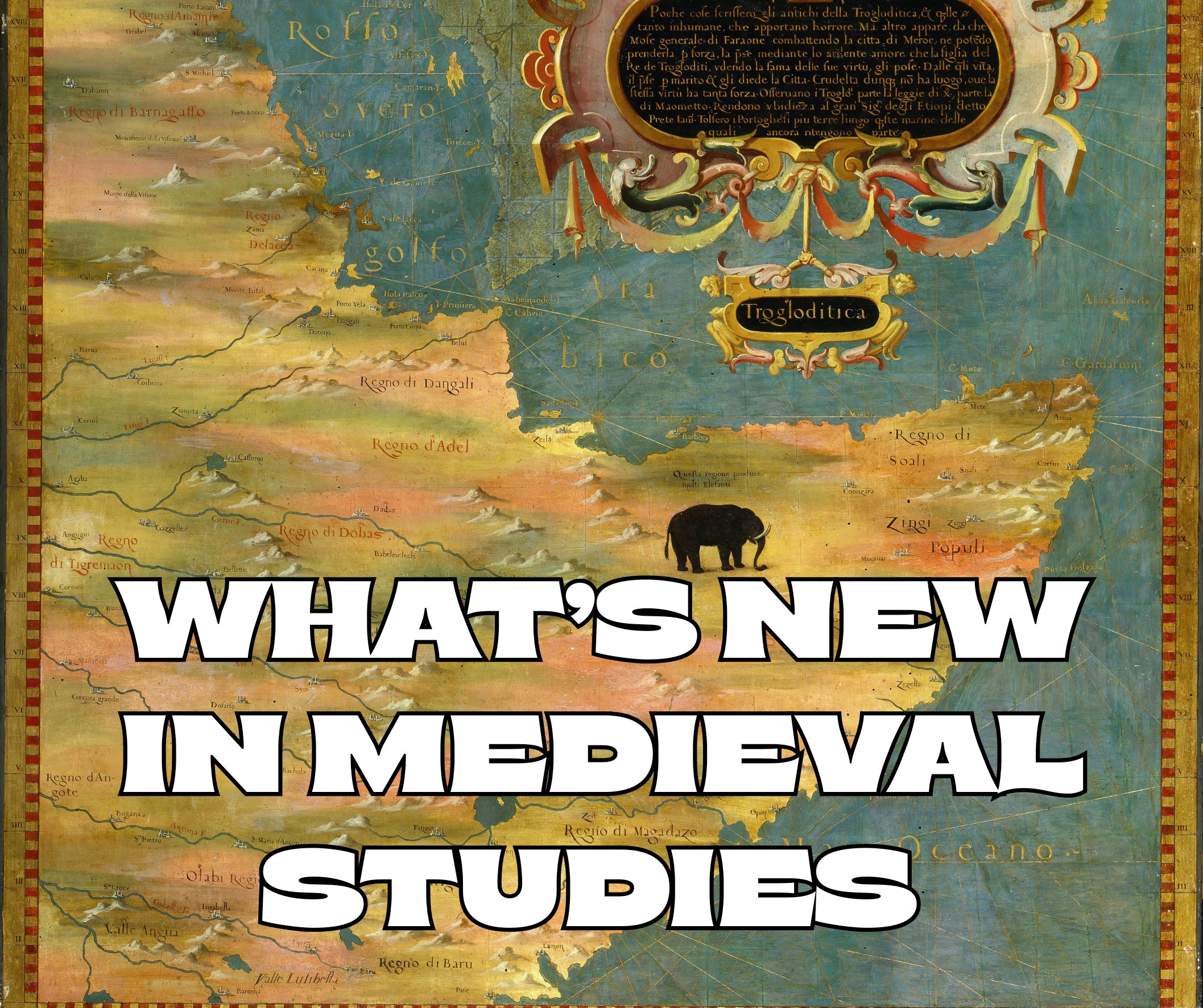
Top Image: Stefano Bonsignori’s 16th century map of the Horn of Africa- Ethiopia and Somalia – Wikimedia Commons
Subscribe to Medievalverse
Related Posts