This book guides historians in working with Pipe Rolls, the English government’s financial records that date back to the twelfth century. These documents reveal a great deal about how England’s administration functioned during the Middle Ages.
Excerpt:
At its simplest, a pipe roll was a list of debts to the medieval English government, together with any payments towards these debts. This sounds straightforward, but reading and understanding pipe rolls can be a daunting prospect at first. There is no point in pretending otherwise: pipe rolls can seem quite forbidding, whether you meet them in person, in print, or online. But they are really not as bad as they look. They are for the most part formulaic and repetitive; this means that, once you have got used to the set terminology and scribal habits, they can be read quite easily. The language is generally simple, and there is a limited repertoire of conventional abbreviations. The difficult part is becoming accustomed to the basic elements which make up the rolls. From then on, much of the content of pipe rolls will fall into place as no more than a series of repetitions of familiar phrases. The printed transcripts at least take care of the abbreviations, but they still leave the reader with the problems of language and accounting conventions.
Who is this book for?
One of our top books of 2025, this is an exceptionally useful guide. Anyone planning to work with Pipe Rolls in their research will want to keep it close at hand. It will be invaluable not only for those studying thirteenth-century England, but also for anyone interested in the workings of medieval government.
The Author
Richard Cassidy holds a PhD in medieval history from King’s College London and researches government finance and administration in the British Isles during the thirteenth century.

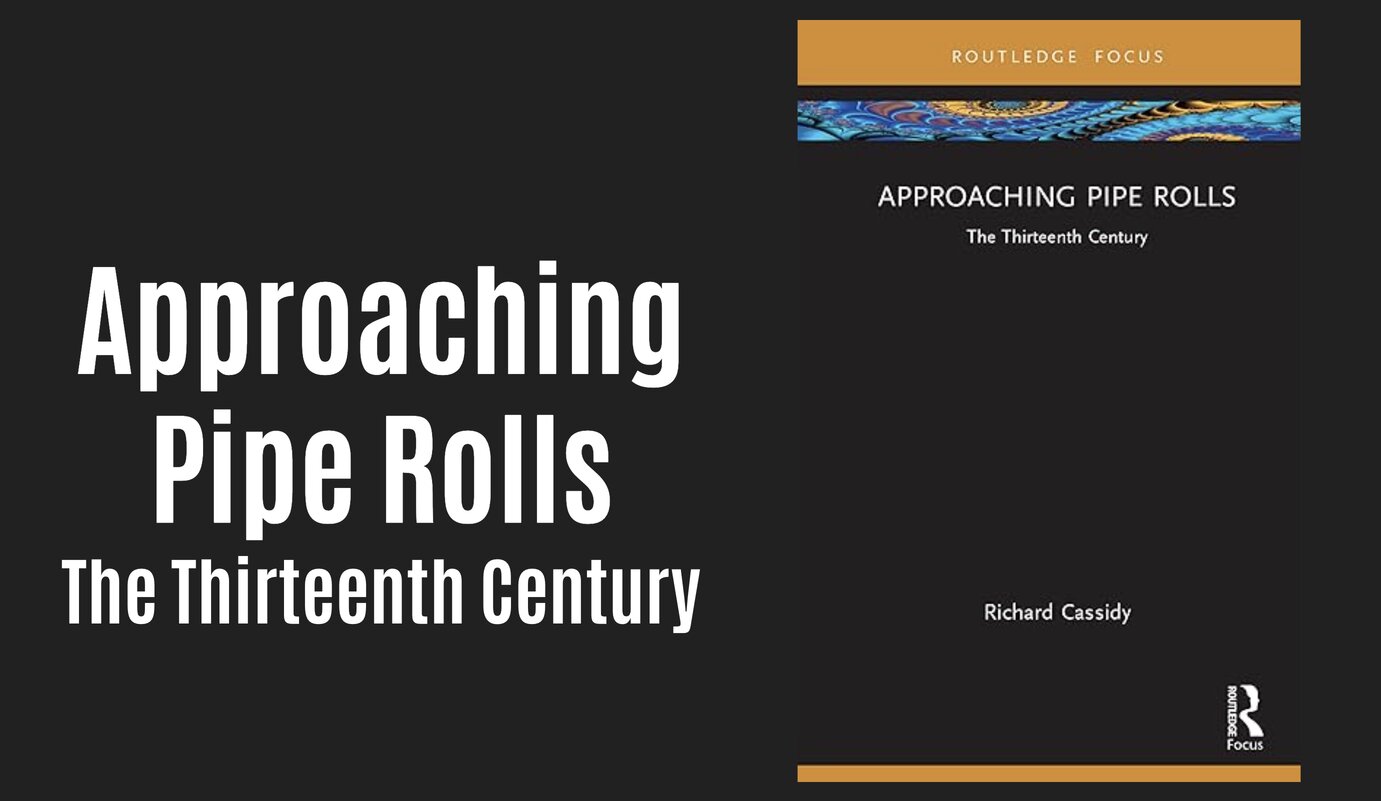
Approaching Pipe Rolls: The Thirteenth Century
By Richard Cassidy
Routledge
ISBN: 978-1-032-31336-8
This book guides historians in working with Pipe Rolls, the English government’s financial records that date back to the twelfth century. These documents reveal a great deal about how England’s administration functioned during the Middle Ages.
Excerpt:
At its simplest, a pipe roll was a list of debts to the medieval English government, together with any payments towards these debts. This sounds straightforward, but reading and understanding pipe rolls can be a daunting prospect at first. There is no point in pretending otherwise: pipe rolls can seem quite forbidding, whether you meet them in person, in print, or online. But they are really not as bad as they look. They are for the most part formulaic and repetitive; this means that, once you have got used to the set terminology and scribal habits, they can be read quite easily. The language is generally simple, and there is a limited repertoire of conventional abbreviations. The difficult part is becoming accustomed to the basic elements which make up the rolls. From then on, much of the content of pipe rolls will fall into place as no more than a series of repetitions of familiar phrases. The printed transcripts at least take care of the abbreviations, but they still leave the reader with the problems of language and accounting conventions.
Who is this book for?
One of our top books of 2025, this is an exceptionally useful guide. Anyone planning to work with Pipe Rolls in their research will want to keep it close at hand. It will be invaluable not only for those studying thirteenth-century England, but also for anyone interested in the workings of medieval government.
The Author
Richard Cassidy holds a PhD in medieval history from King’s College London and researches government finance and administration in the British Isles during the thirteenth century.
You can learn more about this book from the publisher’s website.
You can buy this book on Amazon.com | Amazon.ca | Amazon.co.uk
Subscribe to Medievalverse
Related Posts