This paper asks: how and why has modernity laughed at the Middle Ages, and what are the ethical stakes of this laughter?
It is a truism that what a society collectively laughs at discloses its ethical aspirations, norms, and boundaries. There has been a strong focus recently on the ethics of humour as an instrument of social tolerance or exclusion, with humour scholars attempting to calibrate the social dynamics between the subject of the comic text, its object, and its audience, in an attempt to identify the line between humour and offense. There is broad consensus that humour operates diversely: it can express social norms, or, conversely, function as reflexive meditations on those norms. But whatever the intention, humour, and the response to it via laughter, are both reflective practices that lay bare the complex intersubjective nature of social experience. Humour and laughter are inherently ethical practices that can have direct and even urgent ramifications for the coherent functioning of the social body.
One aspect of this social operation that is overlooked, however, is the way societies use laughter to reflect on the historical dimension of what Helmuth Plessner calls their ‘eccentric positionality’, and how this is expressed via humour that takes the historical past as its object. This paper addresses this oversight by examining a range of comic medievalist texts, exploring their intricate dynamic of historical ridicule and empathy, and considering how laughing at the Middle Ages discloses later societies’ self-understandings and cultural values.
Louise D’Arcens is Associate Professor in English Literatures at the University of Wollongong. You can learn more about research, including:

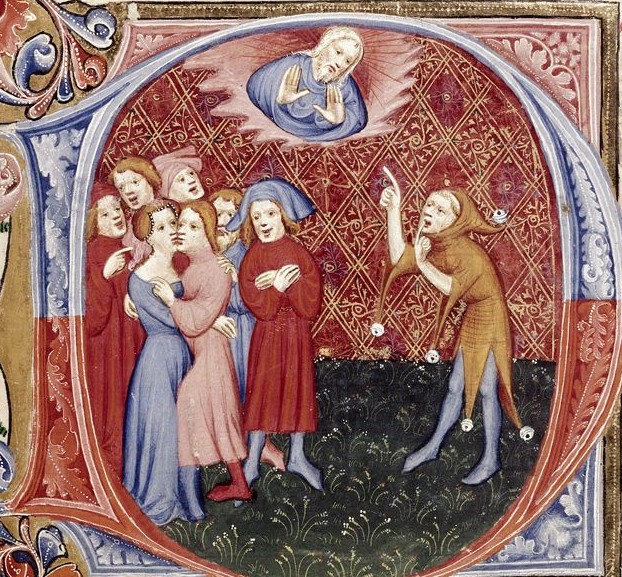
Laughing at the Middle Ages: The Ethics of Historicist Humour
Lecture by Louise D’Arcens
Paper given at the Ethics of Empathy Symposium in Sydney, Australia, on October 22, 2014
Broadcast live streaming video on Ustream
This paper asks: how and why has modernity laughed at the Middle Ages, and what are the ethical stakes of this laughter?
It is a truism that what a society collectively laughs at discloses its ethical aspirations, norms, and boundaries. There has been a strong focus recently on the ethics of humour as an instrument of social tolerance or exclusion, with humour scholars attempting to calibrate the social dynamics between the subject of the comic text, its object, and its audience, in an attempt to identify the line between humour and offense. There is broad consensus that humour operates diversely: it can express social norms, or, conversely, function as reflexive meditations on those norms. But whatever the intention, humour, and the response to it via laughter, are both reflective practices that lay bare the complex intersubjective nature of social experience. Humour and laughter are inherently ethical practices that can have direct and even urgent ramifications for the coherent functioning of the social body.
Louise D’Arcens is Associate Professor in English Literatures at the University of Wollongong. You can learn more about research, including:
Her interview on Medievally Speaking
Her article You Had to Be There: Anachronism and the Limits of Laughing at the Middle Ages
This interview with the ARC Centre of Excellence for the History of Emotions
Subscribe to Medievalverse
Related Posts